Book a demo

Try “replan”, “SAFe”, “budget cuts” or “public sector”. Press / to search from any page.

  1. Home
  2. Initiatives
  3. Divestitures & carve-outs

Divestitures & carve-outs

One portfolio becomes two.Plan the split before it happens.

A carve-out separates teams, systems and projects against a closing date while both businesses keep delivering. One live plan holds the separation work, the transition services and business as usual, so each side sees what it can still commit to.

Explainer · 1:02Divestitures and carve-outs: one portfolio becomes twoMore on aangine TV

The challenge

The deal gets a plan. The portfolio rarely does.

Divestitures get careful attention on price and terms, and far less on the portfolio. Yet when part of the business is sold, one portfolio becomes two. Shared teams have to be divided, shared systems separated, and every project in flight needs an owner on one side or the other. Both businesses must keep delivering while it happens, all against a closing date.

Separation work is easy to underestimate: data separation, application cloning, contract splits, exits from transition services. It needs the same people who run the business and deliver the strategy. Planned on a track of its own, it hides what it displaces. Strategic work waits quietly, and leadership learns the real cost of separation at the closing table instead of in the plan.

The remaining company often finds it has handed over more capacity than expected. A shared platform team moves with the divested unit. The expertise behind key systems goes with it, and the projects that depended on that expertise are suddenly exposed. Transition services then keep the seller’s teams busy supporting a business it no longer owns, sometimes for longer than anyone planned.


“…from wishes & guesses to discussions based on facts and real possibilities.”

Gartner Peer Insights — 5-Star Review
Head of Transformation & Programs, Telecommunications

How aangine helps

Separation work and business as usual, in one plan

Separation projects, transition services and the running portfolio sit in one live plan, built from your existing tools and spreadsheets, with capacity modeled before and after the split.

Lock the closing-critical work

Put separation projects into the same plan as everything else and lock the ones tied to closing and transition dates. Locked work never moves. One click replans the rest around it and shows leadership what separation really costs in strategic work that now waits, and which team or budget ran out.

Plan transition services as capacity

Transition services keep the divested business running while it builds its own capabilities, and they tie up the seller’s teams. Plan that support as run work for named teams and roles, next to operations and projects, so the seller’s roadmap reflects the time it really has. When the agreement ends early or runs long, replan.

Model day one in advance

Run a scenario with post-separation capacity by team, role and skill, then replan. See what remains achievable, where new hires or delivery partners would be needed and which projects may need to stop, while there is still time to act rather than after transition services end.

One plan for both sides

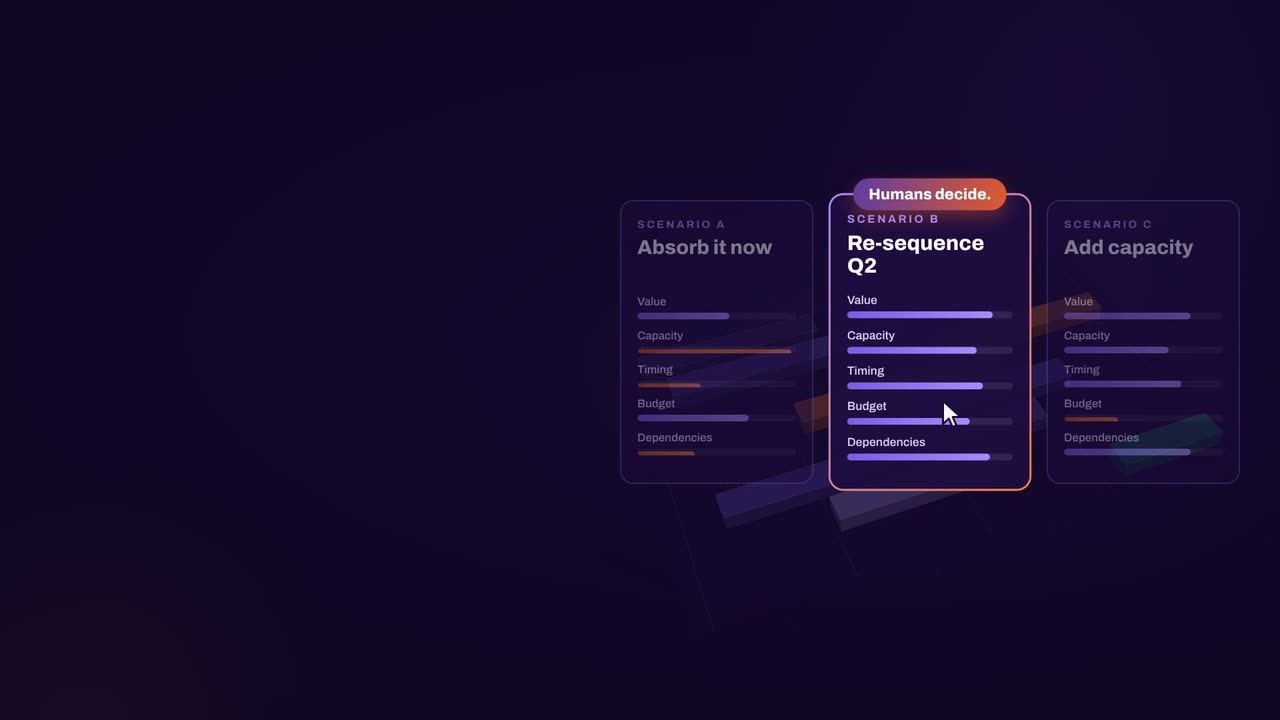
Which teams transfer with the business, and which projects are finished first, handed over or stopped? Those conversations go better when everyone works from the same plan and the same assumptions. Compare options side by side on cost, capacity, value and timing, within what the deal rules allow.

In practice

From announcement to day one

A separation plan does not have to wait for clean data or a final deal structure. Start with the estimates you have and refine them as the separation takes shape.

  1. Map the shared portfolio

    Import projects, teams and budgets from your PPM, delivery tools and spreadsheets. Decide which side each project and team belongs to, and flag what is still shared.

  2. Add the separation work

    Load separation projects and transition support into the same plan. Lock the closing-critical milestones, then replan the rest of the portfolio around them in one click.

  3. Compare post-split scenarios

    Model capacity before and after the split by team, role and skill. Compare the scenarios side by side and see which commitments each side can still keep.

  4. Approve and track

    Approve the scenario, set a baseline and push the plan back to your delivery tools. Track plan against actual, and replan when the transition timeline shifts.

How aangine works

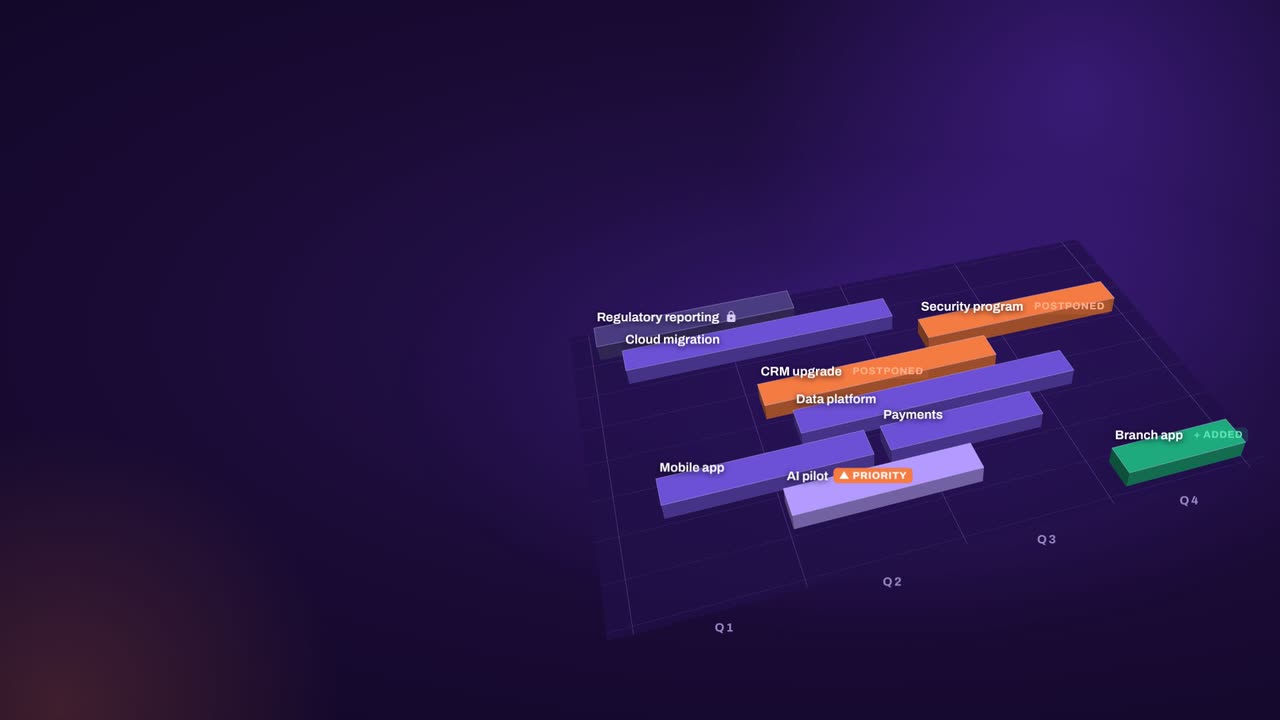
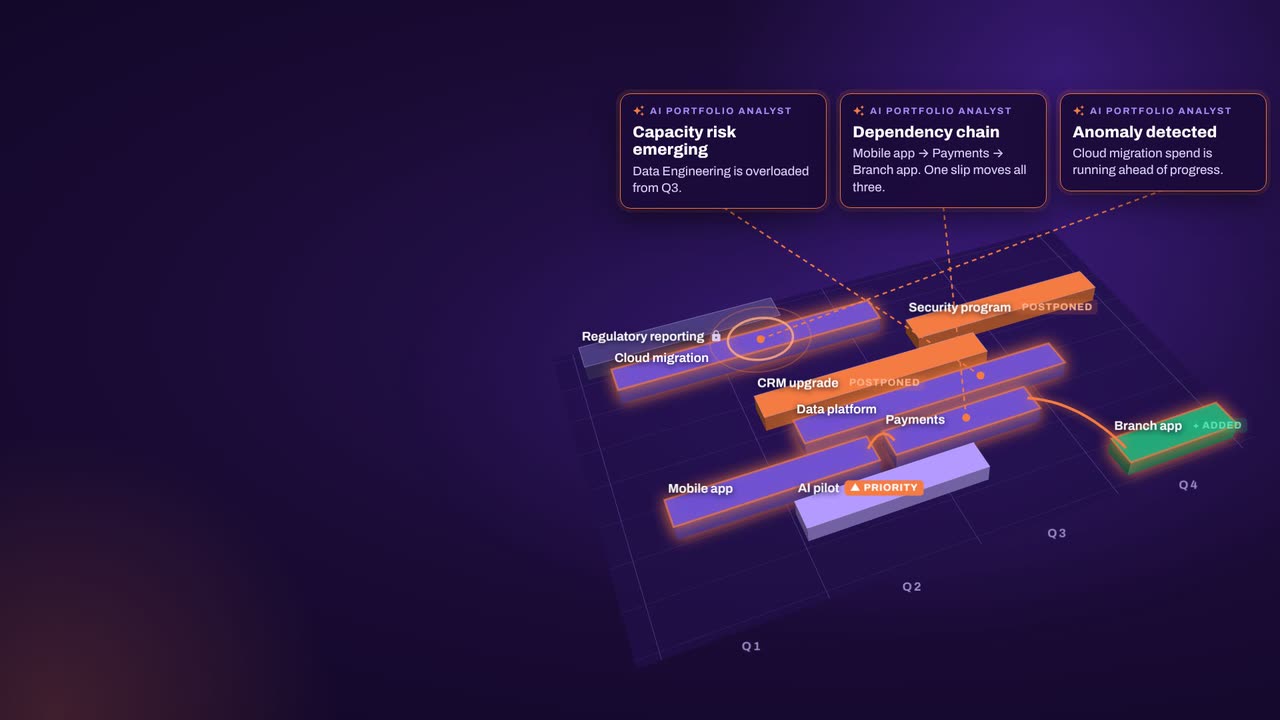
Algorithms calculate and optimize; AI discovers and highlights; humans decide.

aangine is the decision layer above the tools you already use. No rip & replace: it imports your plans, replans them in one click and pushes the approved plan back.

Algorithmscalculate and optimize
AIdiscovers and highlights
Humansdecide

The result: faster, clearer decisions when it matters most.

100xfaster portfolio decisions
9%budget savings
30%shorter product cycles
22%more strategic outcomes
80+%projects delivered on time

What our customers report in their case studies. Read the customer results

Book a demo

A clean breakneeds a clear plan.

Book a demo and bring your separation plan: the shared teams, the transition services you will provide and the commitments each side has to keep. We will talk through your carve-out.

Every Plan Meets Changeaangine in a minute · 58 seconds · sound on · captions

Transcript

Your plan is perfect. For about five minutes. Then change crashes the party! The CEO wants a new project… That big milestone? Two months late. Your best team? Fighting fires. And priorities? Flipped! Cue days of rework, and yet another final-final deck. Now watch what aangine does. One click. Done! The whole plan just rebalanced. Next time the CEO asks, can we do it? You’ll know. In seconds. Algorithms calculate and optimize. AI discovers and highlights. Humans decide. The result: faster, clearer decisions when it matters most. aangine is the decision layer. Keep your tools. Even your spreadsheets! No rip and replace! A hundred times faster portfolio decisions. Nine percent budget savings. Five stars on Gartner Peer Insights. Change will come. Be ready to decide. Scan the code. See it live! aangine.

Book your assessment