Book a demo

Try “replan”, “SAFe”, “budget cuts” or “public sector”. Press / to search from any page.

  1. Home
  2. Initiatives
  3. Mergers & acquisitions

Mergers & acquisitions

Two portfolios, one capacity.Merge decisions before tools.

Integration is a portfolio problem: two sets of initiatives, overlapping teams and integration targets with dates. With aangine, both portfolios come into one plan as they are, so the integration office can decide what to merge, stop or sequence before any tool migration.

Explainer · 1:02Mergers and acquisitions: two portfolios, one targetMore on aangine TV

The challenge

Two plans cannot answer one question

On day one after a merger, leadership inherits two portfolios: two lists of critical initiatives, two sets of teams already at full stretch, two planning processes and often two PMOs with their own tools. The first integration question is rarely what to build. It is what to stop, merge or sequence so the combined company can deliver at all.

The common reflex is to standardize the tools first: pick one PPM, migrate the other side, retrain everyone and plan once the data is clean. Meanwhile, the integration targets keep their dates. Every target is a capacity question in disguise. Consolidating two platforms takes specific teams, skills and months, from people who are also running the business and finishing what each company committed to before the deal.

Integration plans built in finance models without a capacity view are optimistic by design. In the steering committee, every sponsor is sure their initiative is essential, and one side plans in quarters while the other plans in sprints. Without a shared plan, each decision turns into a debate about whose numbers are right.


“…from wishes & guesses to discussions based on facts and real possibilities.”

Gartner Peer Insights — 5-Star Review
Head of Transformation & Programs, Telecommunications

How aangine helps

One decision layer for both companies

Sitting above both companies’ tools, aangine connects to both sides as they are: Planview on one side and Jira plus Excel on the other is fine. Plan the combined portfolio now and push approved plans back to each side’s delivery tools. No rip & replace, even when two companies become one.

Both portfolios, as they are

Import both portfolios into one plan, whatever their tools, spreadsheets or maturity. Combined demand appears against combined capacity by team, role and skill, including the operations work that keeps both businesses running. Start with the data you have; project type and total effort are enough for a credible first plan.

Targets tested against capacity

Integration initiatives, the people and skills they need, the budget lines and the dates sit in one plan. If a target does not fit, you see why, which team or budget ran out, and what it would take to make it fit. Better to know early in the integration than late in it.

Scenarios for the steering committee

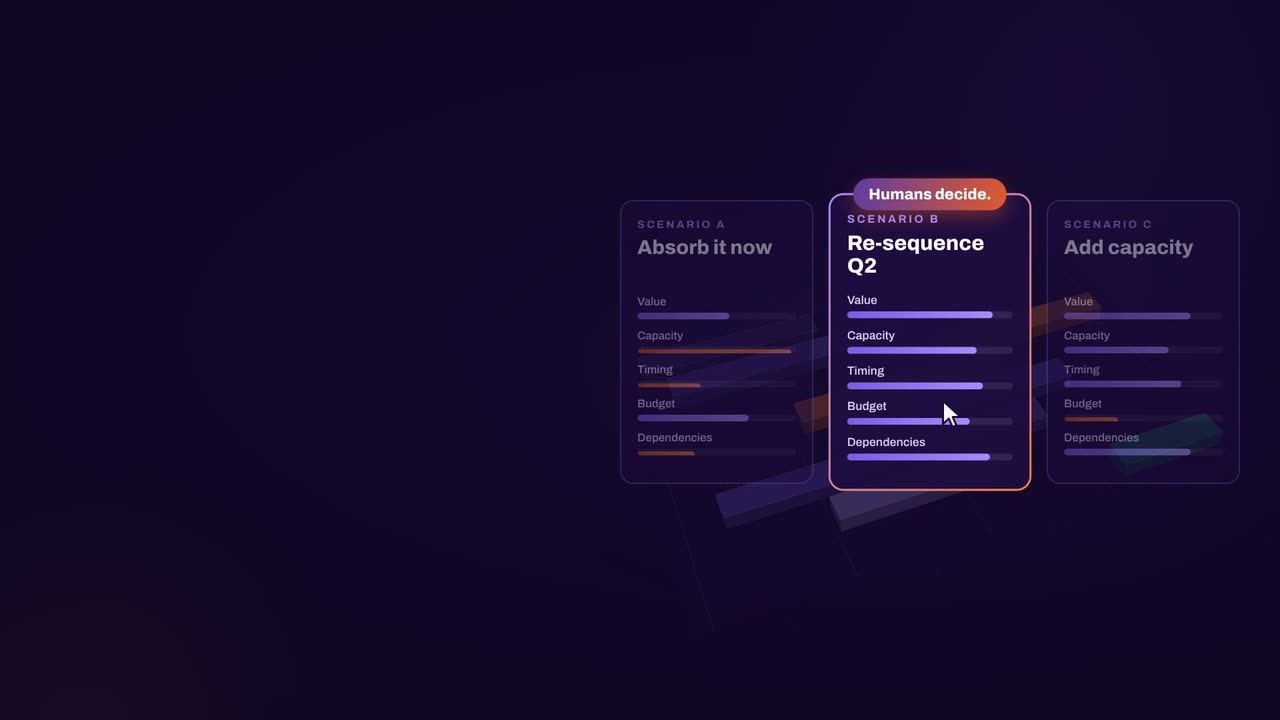
Put the options side by side: what each keeps, stops and delays, and what it does to capacity, budget and value timing. Mandatory items, such as regulatory work and anything critical from day one, are locked so no scenario moves them. The people in the room decide.

The same rules for both sides

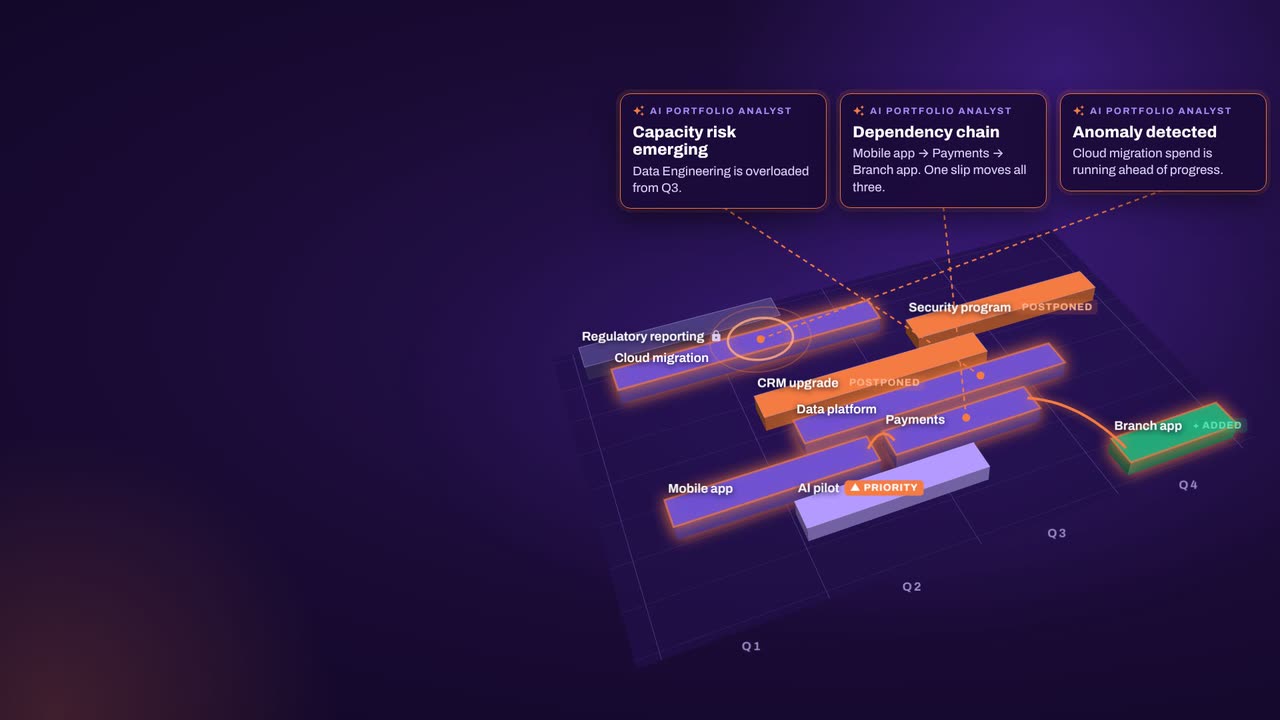
A neutral decision layer applies the same rules to both companies’ data. The conversation moves from “your numbers are wrong” to “which scenario do we choose?”, while the AI Portfolio Analyst highlights connections, risks and anomalies across the combined portfolio for leaders to review.

In practice

Build the overlap list

A practical first step for any integration office, and one that needs neither perfect data nor a common toolset.

  1. Import both portfolios

    Bring every initiative from both companies into one plan, whatever tool it comes from, and map both workforces by role and skill, including how much of each team is free after the day job.

  2. Tag every initiative

    Mark each initiative keep, merge, stop or sequence later. Lock the mandatory items, such as regulatory and day-one critical work, so no scenario can move them.

  3. Run the scenarios

    Test which combination fits combined capacity and meets the integration targets on time. Each scenario shows its cost, capacity, value and timing, and which team or budget runs short.

  4. Decide and push back

    Integration leaders choose in the steering committee, set the baseline and push the approved plan to each side’s delivery tools. The algorithms calculate; your leaders make the calls.

How aangine works

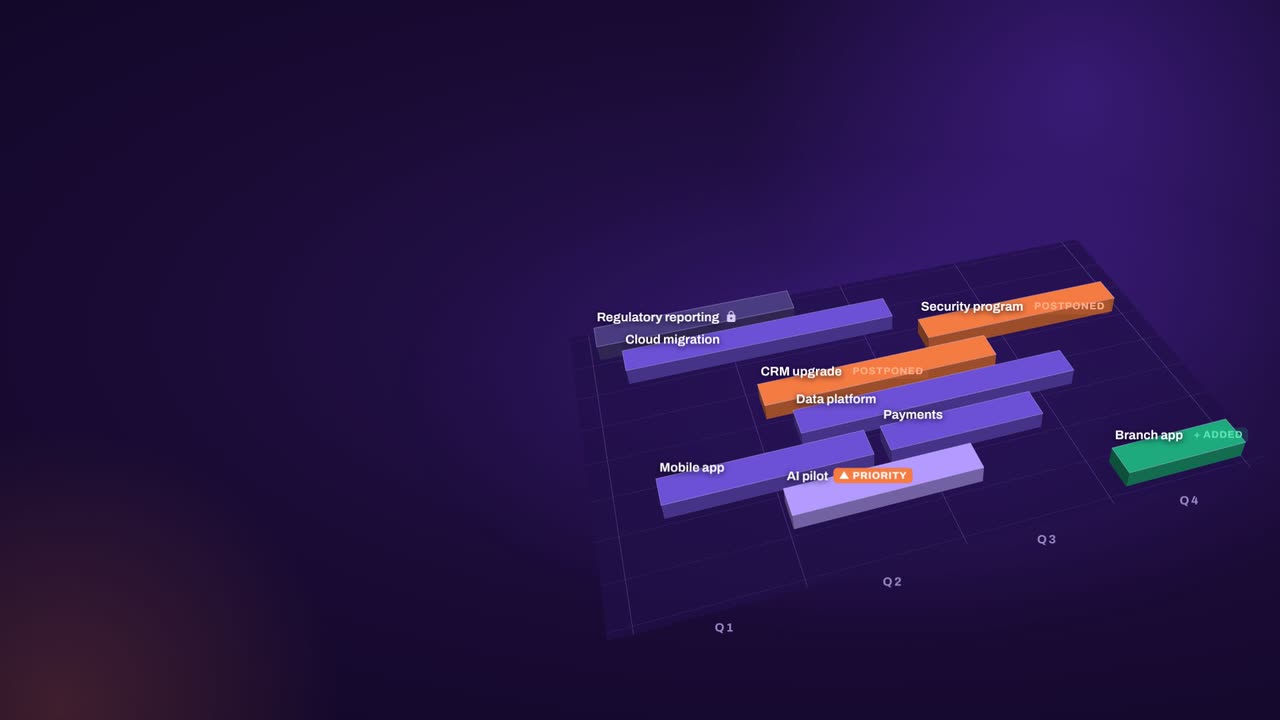
Algorithms calculate and optimize; AI discovers and highlights; humans decide.

aangine is the decision layer above the tools you already use. No rip & replace: it imports your plans, replans them in one click and pushes the approved plan back.

Algorithmscalculate and optimize
AIdiscovers and highlights
Humansdecide

The result: faster, clearer decisions when it matters most.

100xfaster portfolio decisions
9%budget savings
30%shorter product cycles
22%more strategic outcomes
80+%projects delivered on time

What our customers report in their case studies. Read the customer results

Book a demo

Bring both portfolios.Decide what to merge first.

Book a demo to talk through your integration: the two portfolios and toolsets you are combining, the overlap between them and the integration targets your teams must meet.

Every Plan Meets Changeaangine in a minute · 58 seconds · sound on · captions

Transcript

Your plan is perfect. For about five minutes. Then change crashes the party! The CEO wants a new project… That big milestone? Two months late. Your best team? Fighting fires. And priorities? Flipped! Cue days of rework, and yet another final-final deck. Now watch what aangine does. One click. Done! The whole plan just rebalanced. Next time the CEO asks, can we do it? You’ll know. In seconds. Algorithms calculate and optimize. AI discovers and highlights. Humans decide. The result: faster, clearer decisions when it matters most. aangine is the decision layer. Keep your tools. Even your spreadsheets! No rip and replace! A hundred times faster portfolio decisions. Nine percent budget savings. Five stars on Gartner Peer Insights. Change will come. Be ready to decide. Scan the code. See it live! aangine.

Book your assessment