The challenge
New priorities, the same people
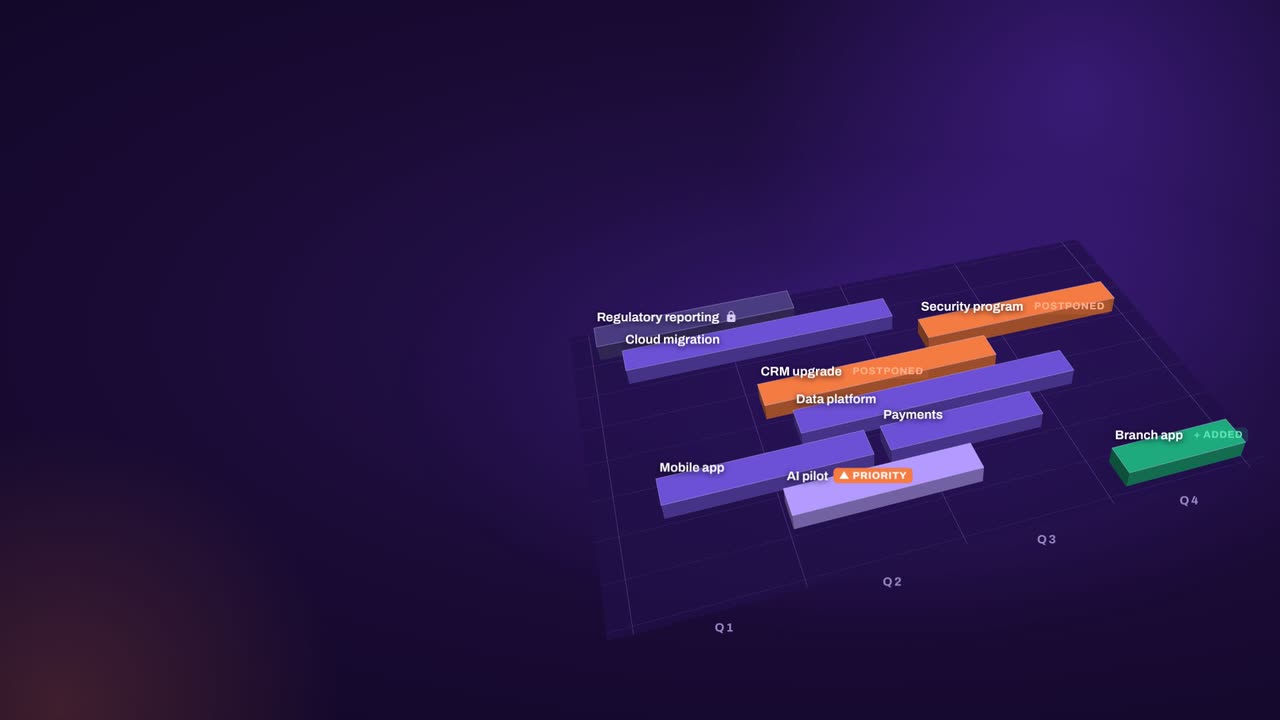
A new CEO or CIO arrives with fresh priorities and a short window to show direction. What they find is a portfolio built by someone else: many initiatives, some already late, teams that are fully booked and sponsors who expect their projects to carry on through the transition. The first question is simple. What do we actually have?
Often the honest answer is a spreadsheet: many tabs, formulas nobody fully understands, colors that once meant something. Nobody is to blame for it. PPM tools manage execution well, but planning across the whole portfolio tends to end up in Excel, because it is the only place flexible enough to try scenarios. It is also fragile and slow to change.
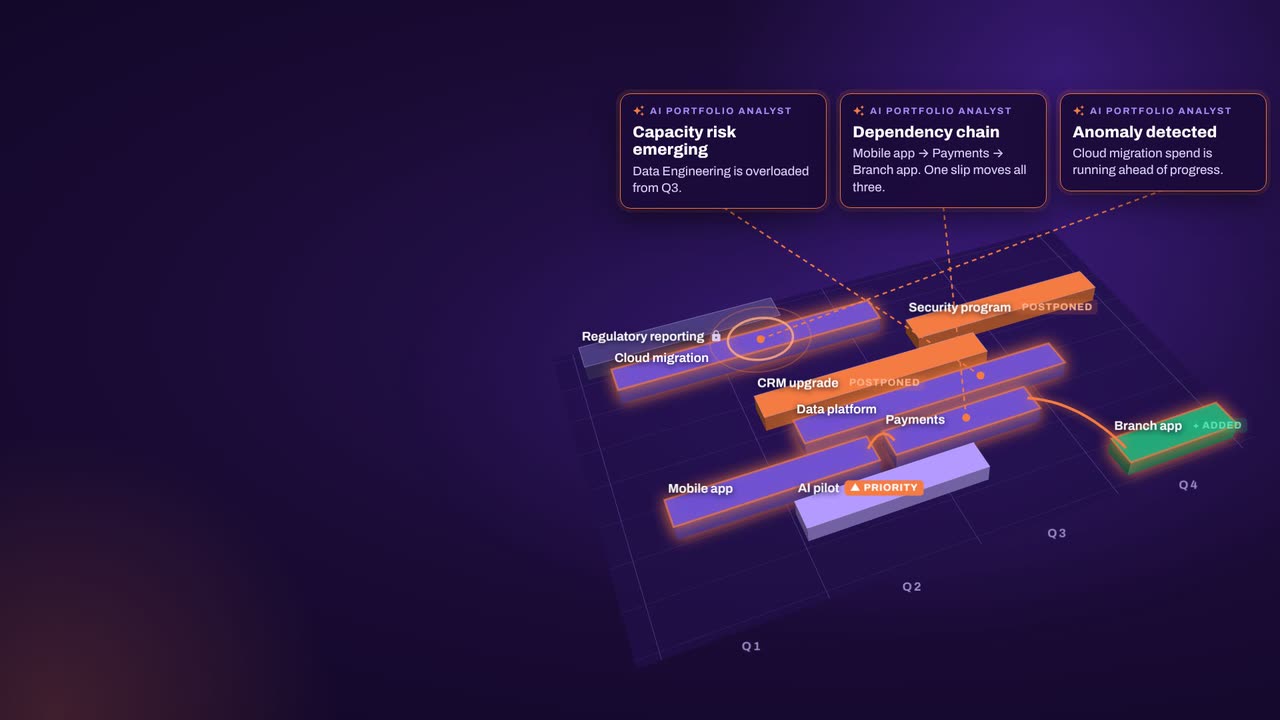
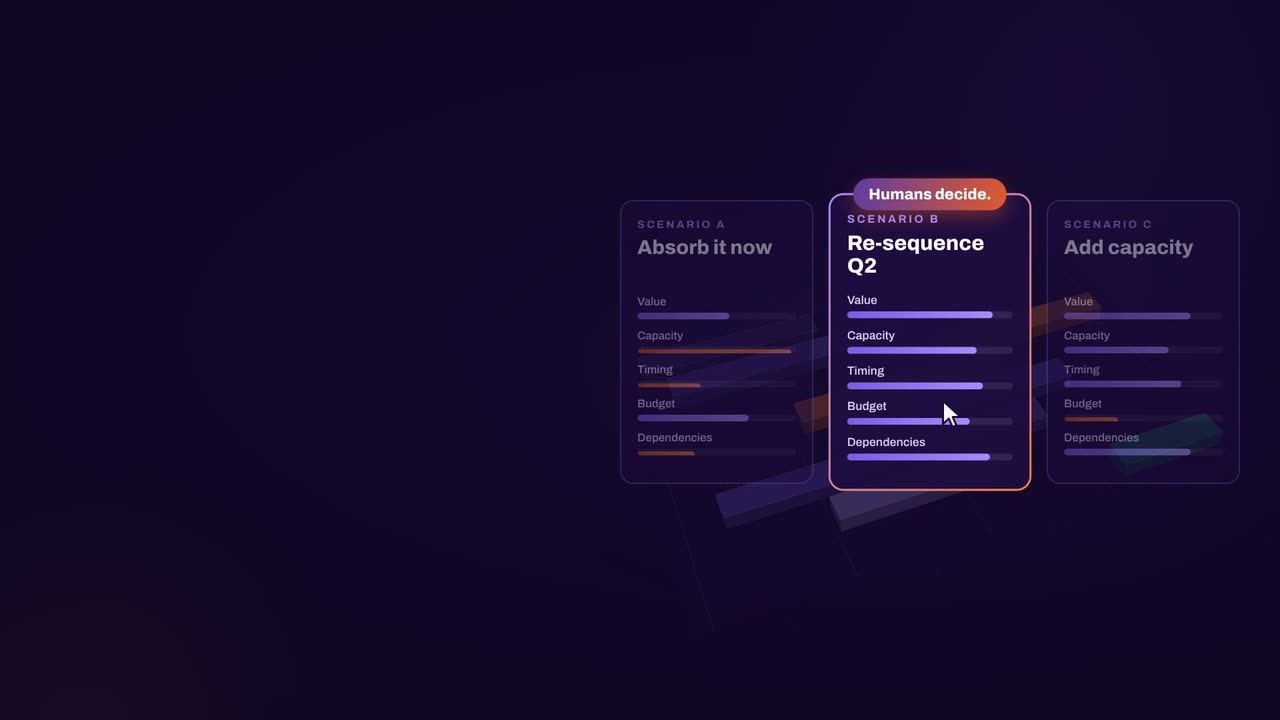
The second question is harder: what would it take to do what we want? New priorities draw on the same people who were busy yesterday. Without a plan that shows what stops to make room, the answer becomes “nothing stops, everything slows down,” and a good strategy fades quietly. The usual planning sprint takes weeks and produces a deck that is outdated on arrival.