The challenge
Roadmaps rarely break. They erode.
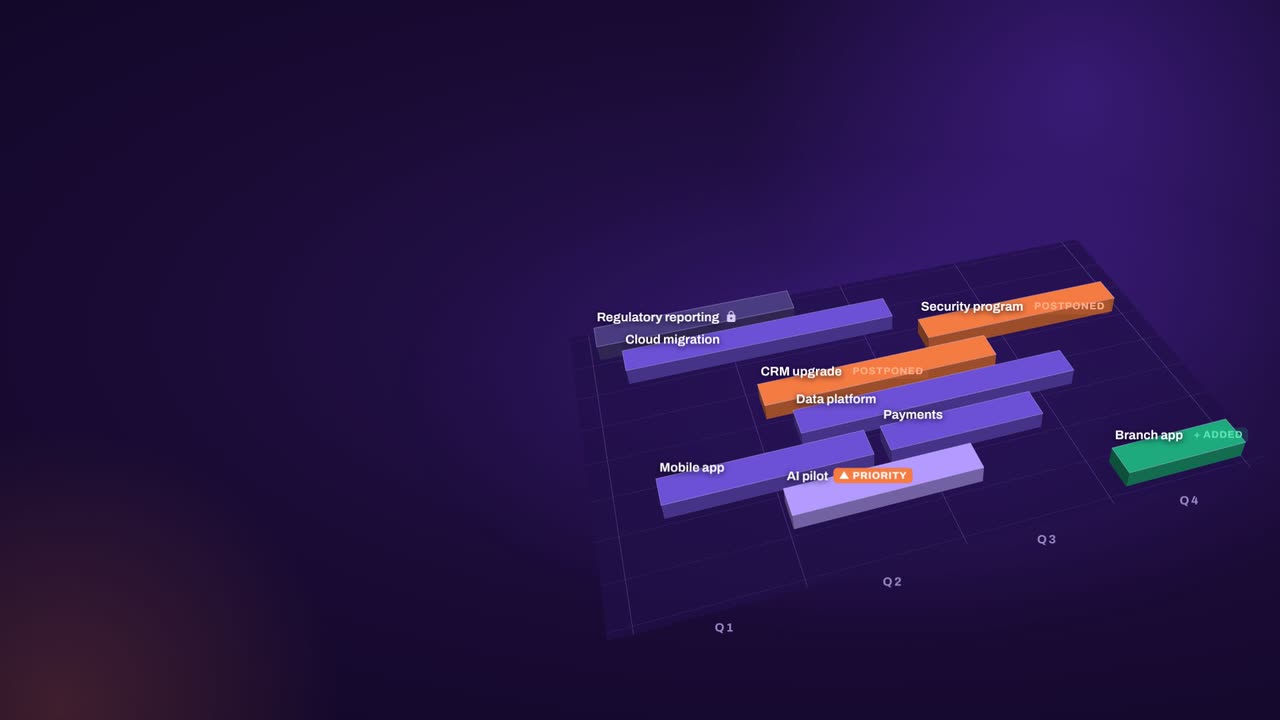
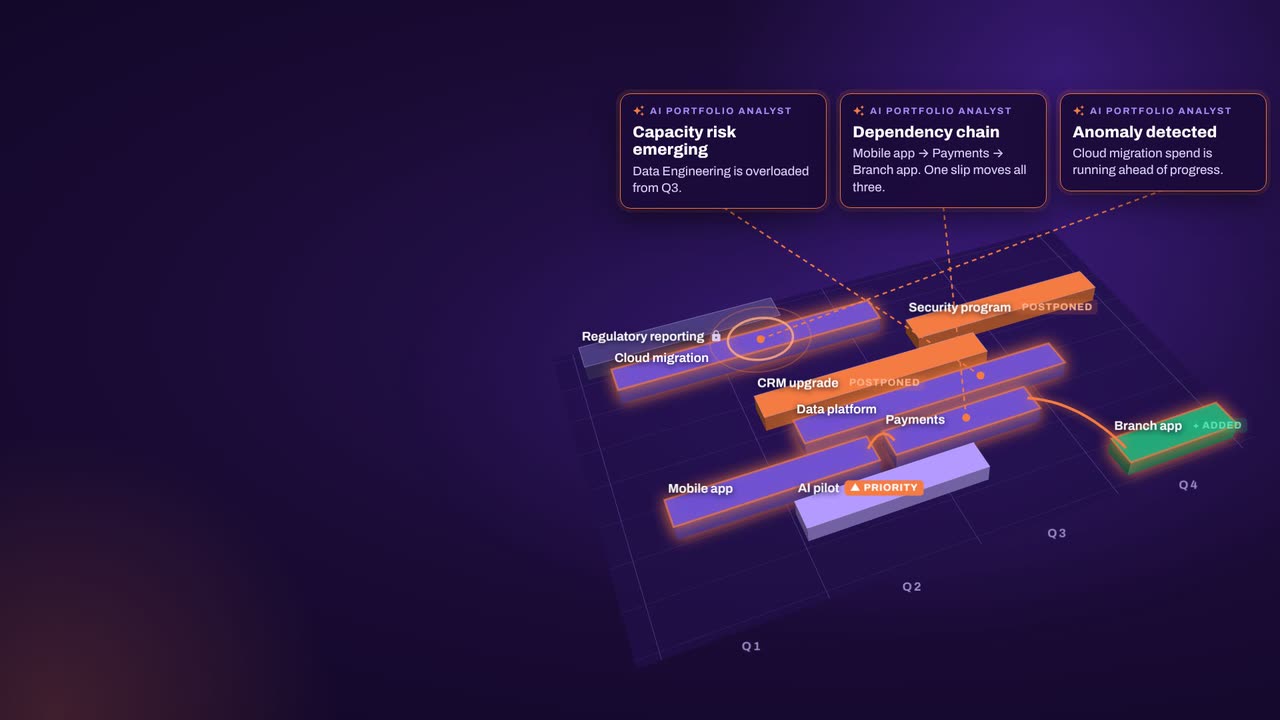
Every transformation starts with a sequenced, approved roadmap. Then reality arrives: a key program slips, the team you counted on is pulled into operations, a new regulation jumps the queue, the CEO adds a priority, a budget is reset. The roadmap rarely breaks in one dramatic moment. It erodes, one unrecorded change at a time, until the board reviews a plan that no longer describes what the organization is doing.
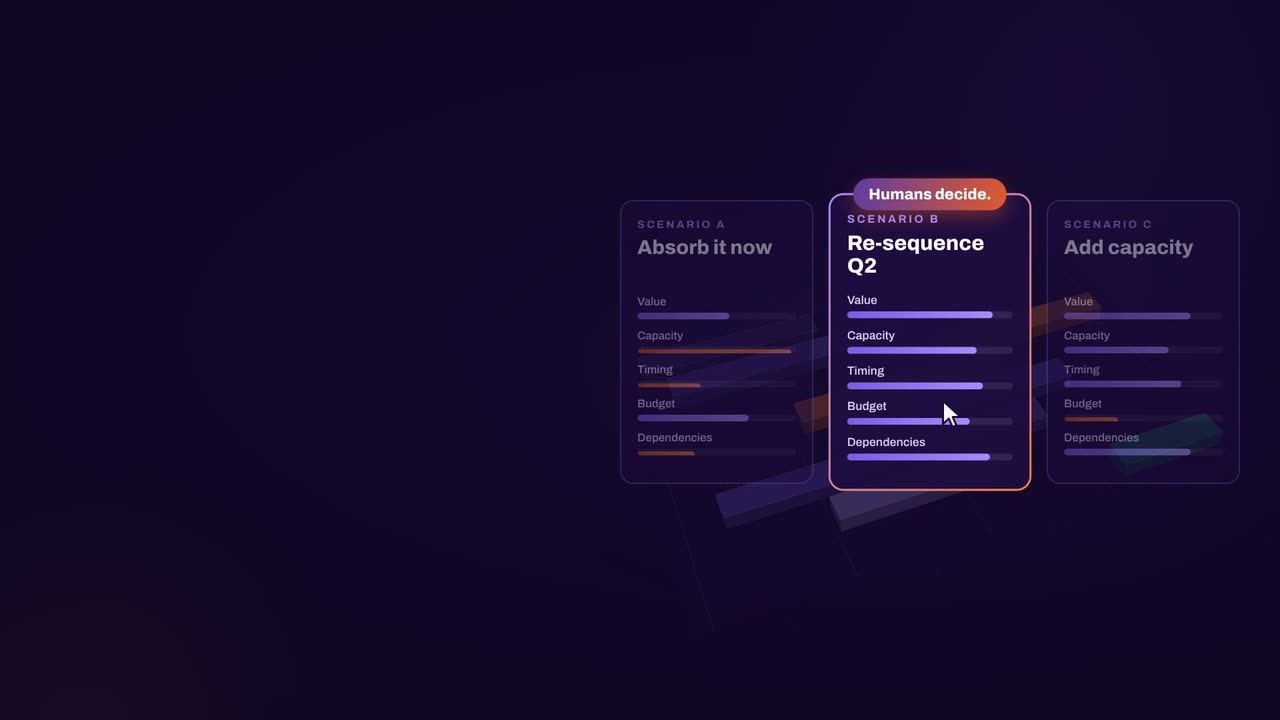
Often the cause is not bad strategy but different assumptions. Finance has one capacity number, the PMO another, and each business unit its own priority list. Every steering committee starts by reconciling and ends before deciding. Without a shared plan, persuasion becomes the only tool left, and resources tend to go to the loudest sponsor or the best slide. That is nobody’s fault.
Each change then triggers the same routine: rebuild the scenario, reconcile several systems, schedule another meeting. We call this the Hidden Decision Tax, paid in time, in cost and in lost value while leadership waits. In a transformation, change is the plan doing its job. The real problem is how long it takes to understand what a change means.