Book a demo

Try “replan”, “SAFe”, “budget cuts” or “public sector”. Press / to search from any page.

  1. Home
  2. Roles
  3. Chief Executive Officer

For the Chief Executive Officer

When the board asks “can we?”,answer with a plan.

One live view of what the organization has promised, what it costs and what a new priority would displace. Your leadership team tests a move in minutes and decides together, instead of waiting weeks for a reworked plan.

Book a demo

The challenge

Strategy is decided in one room. The portfolio lives in another.

Every CEO gets asked what’s going to change, by the board, by the market and by the organization itself. An honest answer depends on what the company is already committed to: initiatives in flight, teams fully booked, promises made to customers, regulators and investors. Most of that commitment is scattered across project tools, spreadsheets and business-unit priority lists, so nobody can see the whole of it at once.

The result shows up in the rooms where you decide. Executive meetings spend much of their time reconciling numbers: finance has one view of the change budget, operations another of capacity. A board member asks what accelerating one program does to another, and the honest reply is “we’ll come back to you.” Weeks of rework later, the answer arrives already out of date.

Then the plan changes anyway. A deal is signed and two portfolios must become one. A competitor moves, or the largest program slips, and the effect ripples through shared teams, dependencies, budgets and customer dates. If it takes weeks to see everything that moves, the organization reacts after the moment to decide has passed.


“…any possible changes can be made directly at the meeting with our business stakeholders.”

Gartner Peer Insights — 5-Star Review
Project Portfolio Manager, Telecommunications

How aangine helps

One live plan for the whole leadership team

The decision layer under your strategy: one live plan connecting demand, capacity, budget and strategy, built from the tools your organization already uses. No rip & replace.

See everything you’re committed to

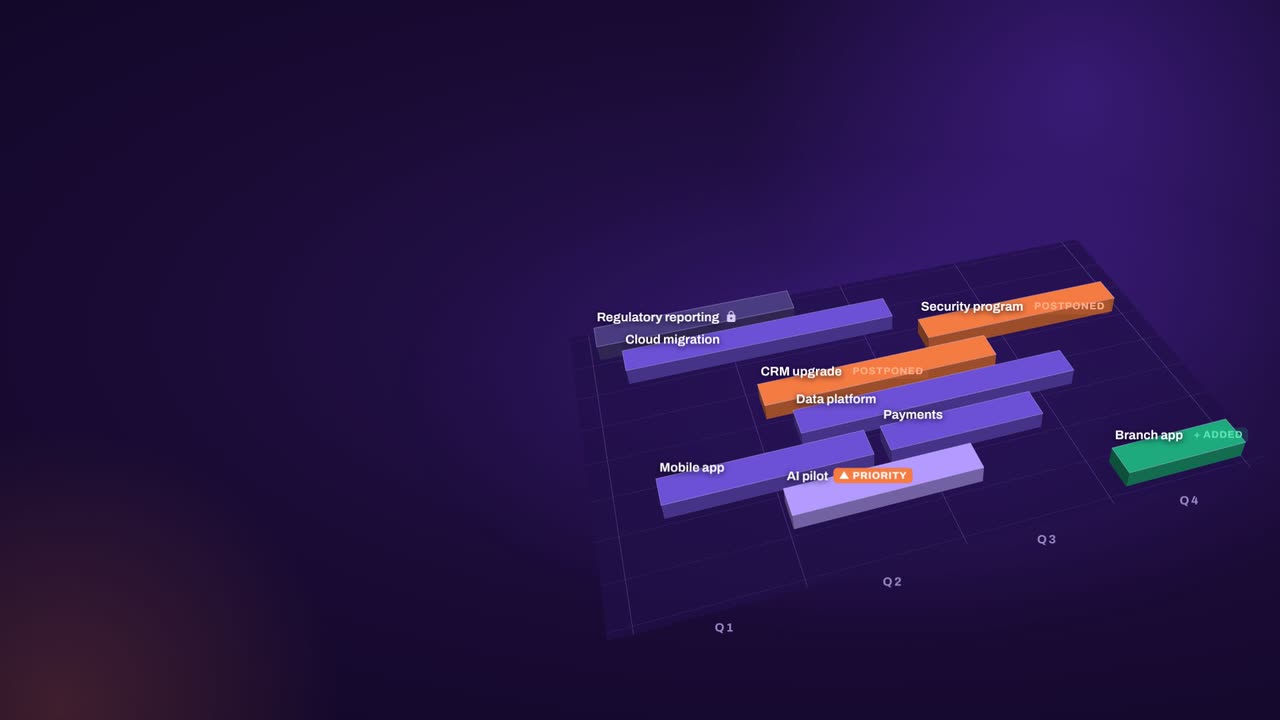
Bring the whole portfolio into one view, built from the PPM, Jira, Excel and the other tools your teams already use. See what’s running, what it costs, which priority it serves and where it’s at risk, before you commit to new priorities in public.

Run the scenario in the room

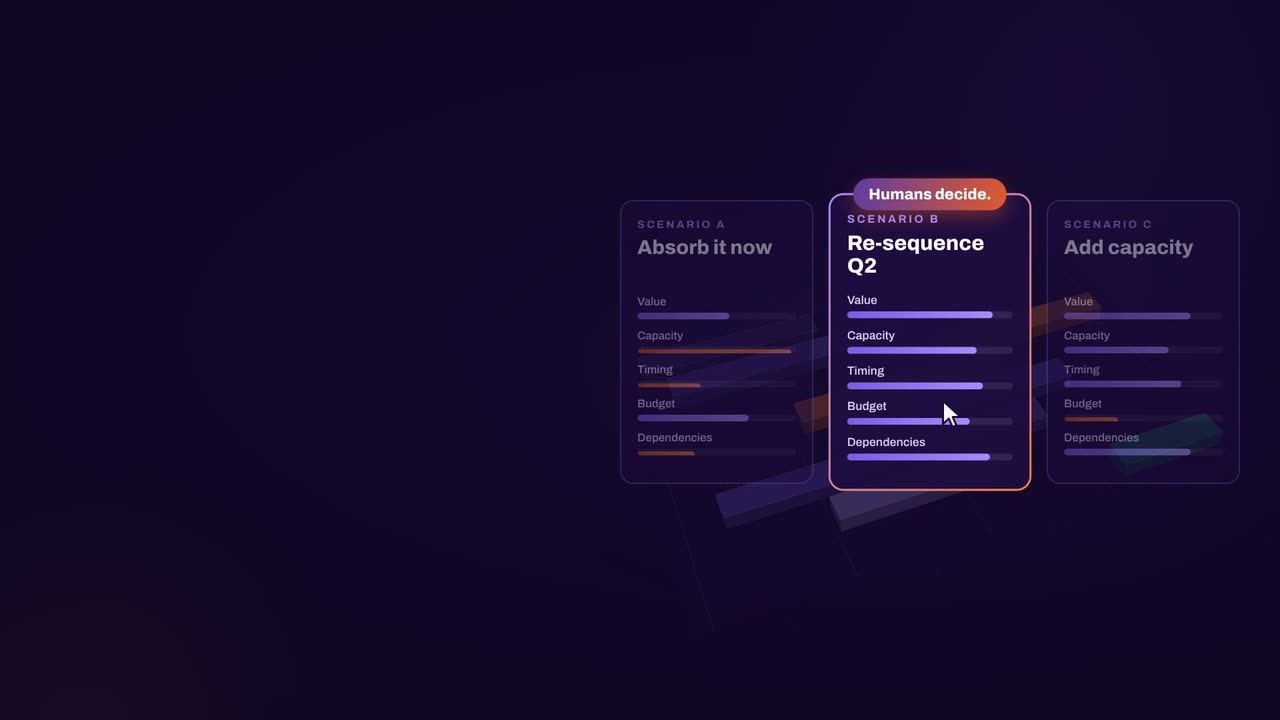
Put the board’s question on the screen as a scenario: accelerate one program, protect another, and see what moves, what slips and what it would take. Compare options side by side on cost, capacity, value and timing while everyone is still at the table.

Decide from one set of facts

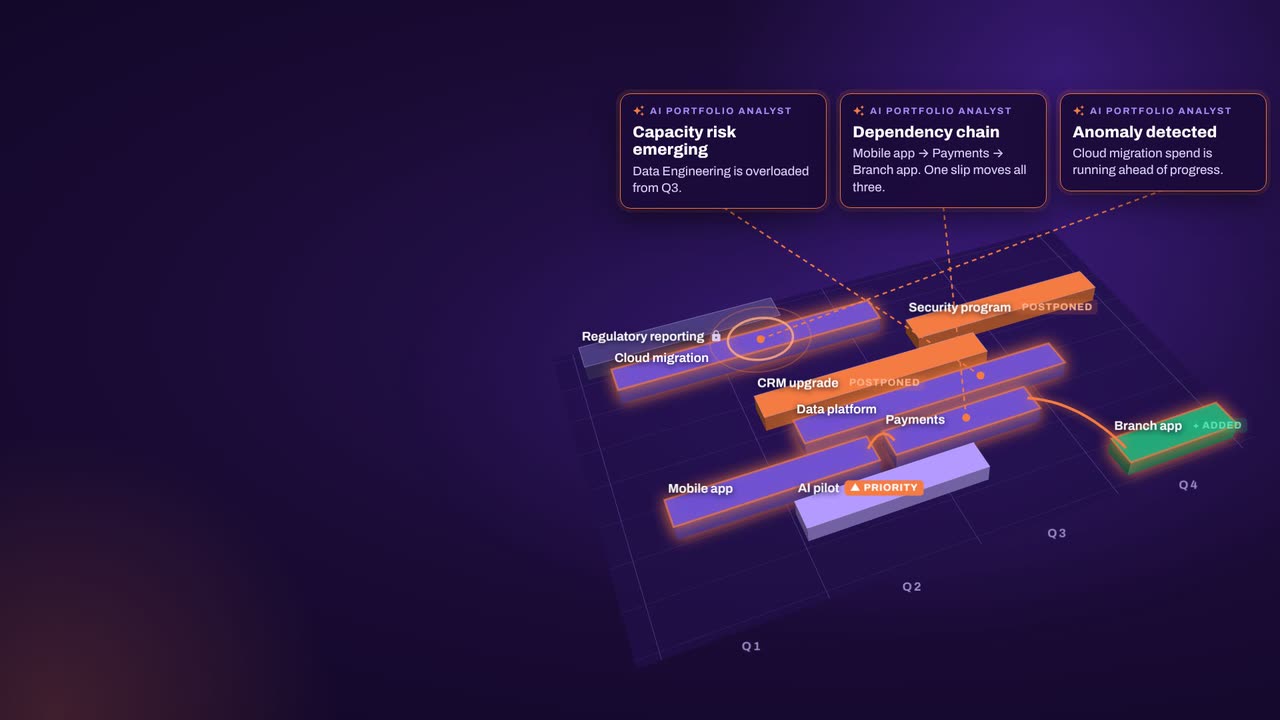
Finance, operations and every business unit see the same data, scenarios and trade-offs. When a major program slips or a priority changes, the algorithms calculate the knock-on effects across the portfolio, and the AI Portfolio Analyst highlights what deserves your attention.

Absorb the deal, then standardize

After an acquisition, bring both portfolios into one plan as they are, whatever tools each side uses. See combined demand against combined capacity and test what to merge, stop or sequence before the integration targets fall due. Decide first; standardize tools later.

In practice

Bring the live plan to the strategy offsite

Offsites are good at producing priorities and less good at changing what teams do the week after. The gap closes when the portfolio that has to make room for those priorities is in the room too.

  1. Set the new priorities

    Enter the priorities the leadership team just agreed and replan in one click. The algorithms rebalance the portfolio around real capacity, budgets, dependencies and deadlines.

  2. See what they displace

    See which initiatives the new strategy pushes out and which teams it overloads. When something no longer fits, the plan shows which team or budget ran out.

  3. Lock and compare

    Lock mandatory work so it never moves, then put the competing scenarios next to each other and narrow them down until the room converges on one.

  4. Leave with a plan

    The leadership team chooses. The chosen scenario becomes the new baseline and goes back to the delivery tools, so the offsite ends with a plan, not a list.

How aangine works

Algorithms calculate and optimize; AI discovers and highlights; humans decide.

aangine is the decision layer above the tools you already use. No rip & replace: it imports your plans, replans them in one click and pushes the approved plan back.

Algorithmscalculate and optimize
AIdiscovers and highlights
Humansdecide

The result: faster, clearer decisions when it matters most.

100xfaster portfolio decisions
9%budget savings
30%shorter product cycles
22%more strategic outcomes
80+%projects delivered on time

What our customers report in their case studies. Read the customer results

Book a demo

Bring your hardest trade-off.Leave with a plan behind it.

Book a demo to talk through your situation, whether it’s a new mandate, an offsite, a board question or an integration, and see how your leadership team would decide it from one live plan.

Every Plan Meets Changeaangine in a minute · 58 seconds · sound on · captions

Transcript

Your plan is perfect. For about five minutes. Then change crashes the party! The CEO wants a new project… That big milestone? Two months late. Your best team? Fighting fires. And priorities? Flipped! Cue days of rework, and yet another final-final deck. Now watch what aangine does. One click. Done! The whole plan just rebalanced. Next time the CEO asks, can we do it? You’ll know. In seconds. Algorithms calculate and optimize. AI discovers and highlights. Humans decide. The result: faster, clearer decisions when it matters most. aangine is the decision layer. Keep your tools. Even your spreadsheets! No rip and replace! A hundred times faster portfolio decisions. Nine percent budget savings. Five stars on Gartner Peer Insights. Change will come. Be ready to decide. Scan the code. See it live! aangine.

Book your assessment