Book a demo

Try “replan”, “SAFe”, “budget cuts” or “public sector”. Press / to search from any page.

  1. Home
  2. Initiatives
  3. Public-sector transformation programs

Public-sector transformation

From national visionto programs you can deliver

A national vision sets ambitious goals, and ministries and agencies need to show which programs deliver them, with what capacity and by when. One live plan connects objectives to programs, people and budgets, so every answer rests on facts.

Book a demo

The situation

Ambitious goals, committed teams, visible stakes

A national vision sets the direction. Ministries translate it into programs, programs become projects, and projects need people, budgets and time. Each step is planned by different teams in different tools, and the line from objective to delivery is hard to keep in view. Leaders want to know which objectives have programs and capacity behind them, and what one more project would add.

New priorities arrive while teams are already committed. Each request is legitimate, and capacity cannot be added overnight. The most useful answer is a specific one: what it would take to deliver the new priority, and what would move to make room. Digital and IT teams feel this most, with demand from every directorate competing for the same specialists.

In the public sector, the stakes are visible. When an institution commits to a program, citizens see what it delivers, and when priorities change, they change in public. That makes transparent trade-offs and careful stewardship of public funds part of planning itself, along with firm control over data, including any data that AI touches.


How aangine helps

Planning that connects objectives to delivery

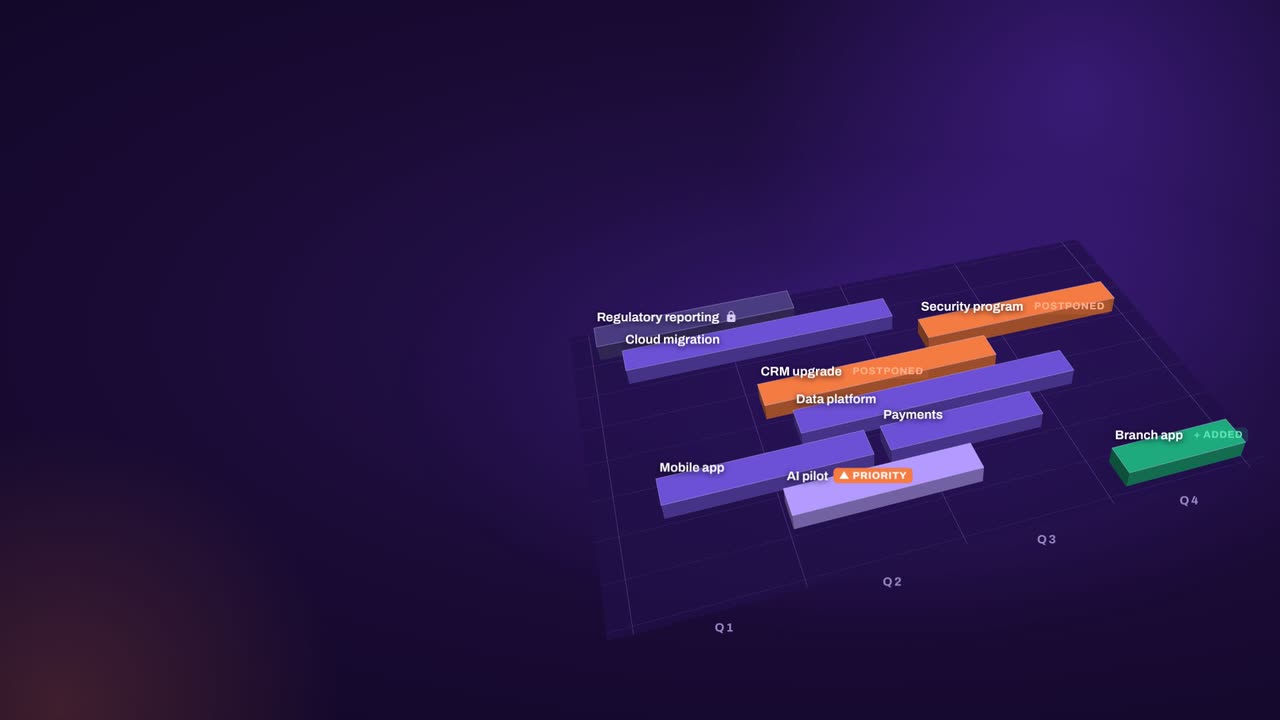
The plan sits above the tools and spreadsheets your institution already has, such as MS Project, Oracle Primavera, Jira or Excel. It imports from them, replans when priorities change and sends the agreed plan back. No rip & replace.

Strategy you can trace

Link national or institutional objectives and key results to the initiatives, programs and projects that serve them. Leaders see which objectives have the capacity and funding they need, and what adding a project would change, all the way down to teams and budget lines.

An answer in the meeting

Bring a new priority into the plan with committed and fixed-date work locked. One click rebalances the rest around capacity, dependencies and budgets, and shows the effect on every program, team and budget. The answer becomes “to deliver this, here is what we would need, and here is what would move.”

All the demand, shown openly

Load demand from every directorate against the capacity digital and delivery teams really have, run work included. Compare meeting part of it with meeting all of it, and see which initiatives don’t fit and why. The conversation turns to choices and resources rather than requests and refusals.

AI and data on your terms

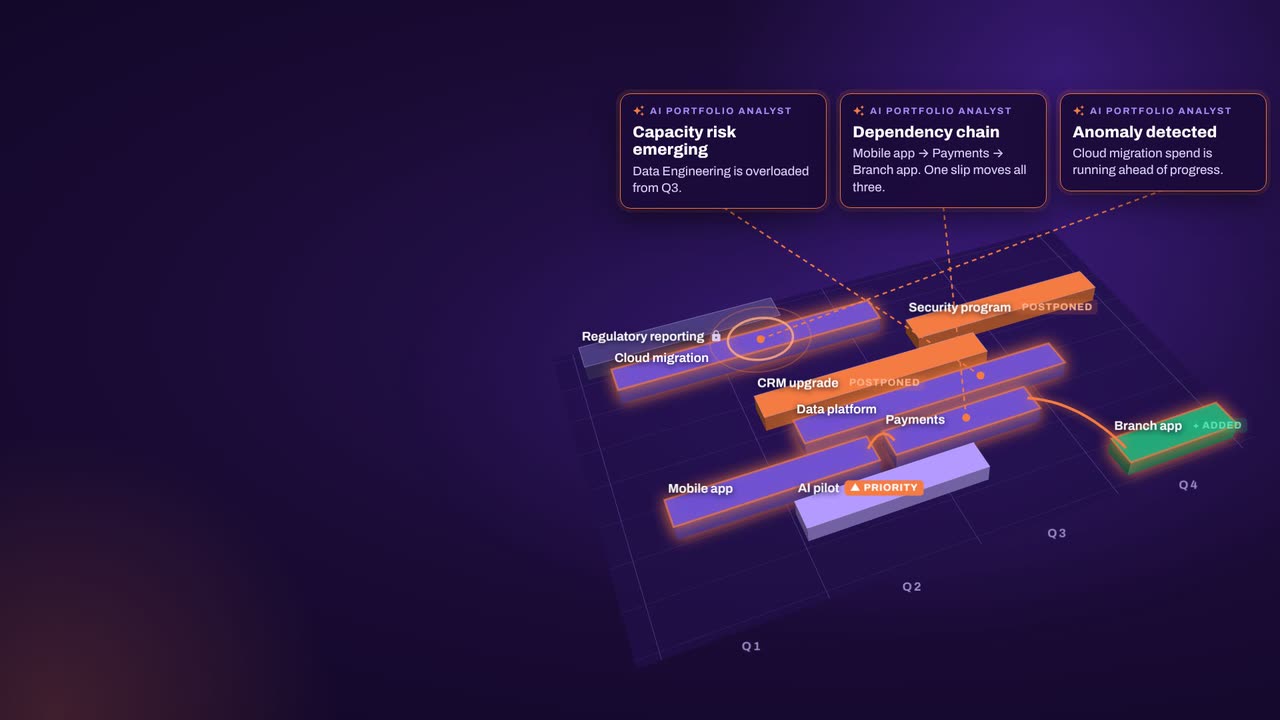
The AI Portfolio Analyst highlights risks and patterns and writes summaries. Bring your own AI, on-premises or cloud; only IDs are sent to the model, never project, person or department names. Charts come from aangine’s algorithms and real data. Deployment is SaaS, private cloud or on-premises, with SOC 2 Type 2, ISO 27001 and ISO 27701.

In practice

Start with what you have

No PPM tool yet, processes still taking shape, data in spreadsheets: none of that has to come first. Planning works at any maturity level, and data quality improves when people see their data in use.

  1. Load the portfolio

    Bring in programs and projects from spreadsheets or existing tools. A project type and an estimate of total effort are enough for a first plan.

  2. Connect it to the vision

    Link each program to the national objectives and key results it serves, and lock committed and fixed-date work so it never moves.

  3. Answer the next priority

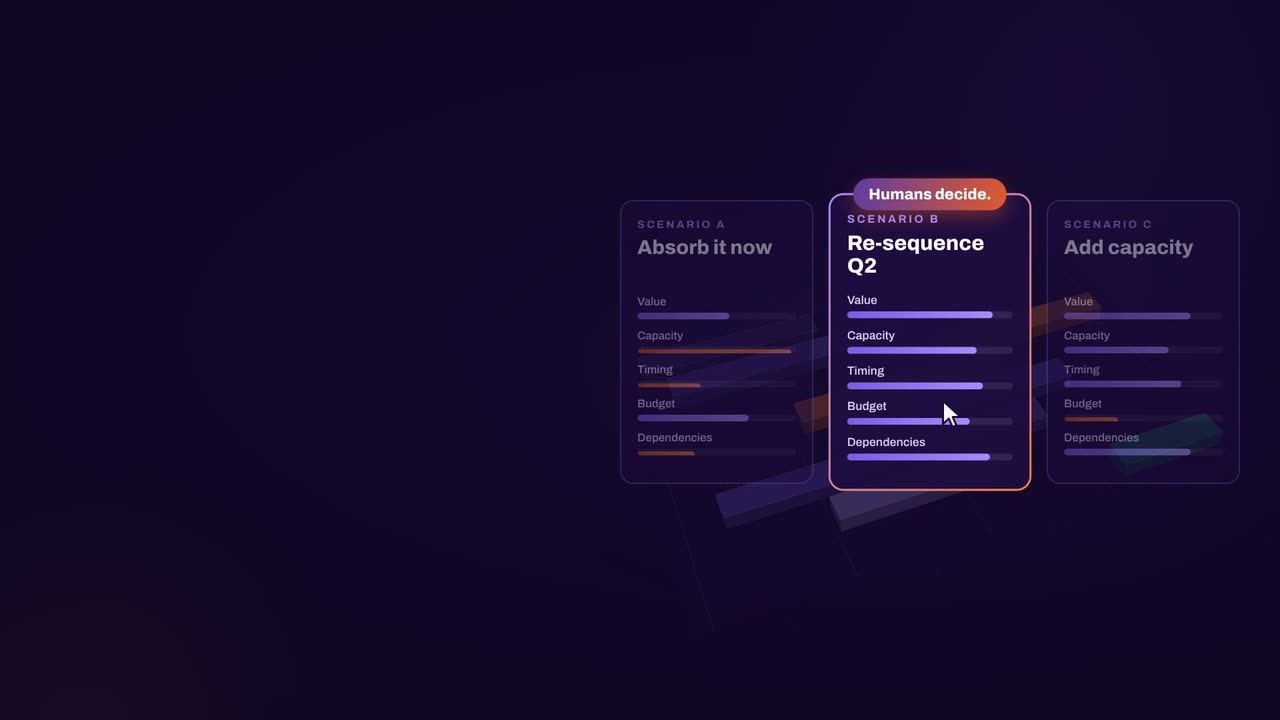
    When a new priority arrives, add it, replan in one click and compare scenarios side by side on cost, capacity, value and timing.

  4. Show progress over time

    Save the agreed plan as a baseline, push it back to delivery tools and track plan vs actual, so leaders see which objectives are on track.

How aangine works

Algorithms calculate and optimize; AI discovers and highlights; humans decide.

aangine is the decision layer above the tools you already use. No rip & replace: it imports your plans, replans them in one click and pushes the approved plan back.

Algorithmscalculate and optimize
AIdiscovers and highlights
Humansdecide

The result: faster, clearer decisions when it matters most.

Book a demo

Commitments are public.Make the trade-offs visible too.

Book a demo and bring your national or institutional objectives, the programs that serve them and the demand waiting for your teams. We’ll show them working together in one live plan.

Every Plan Meets Changeaangine in a minute · 58 seconds · sound on · captions

Transcript

Your plan is perfect. For about five minutes. Then change crashes the party! The CEO wants a new project… That big milestone? Two months late. Your best team? Fighting fires. And priorities? Flipped! Cue days of rework, and yet another final-final deck. Now watch what aangine does. One click. Done! The whole plan just rebalanced. Next time the CEO asks, can we do it? You’ll know. In seconds. Algorithms calculate and optimize. AI discovers and highlights. Humans decide. The result: faster, clearer decisions when it matters most. aangine is the decision layer. Keep your tools. Even your spreadsheets! No rip and replace! A hundred times faster portfolio decisions. Nine percent budget savings. Five stars on Gartner Peer Insights. Change will come. Be ready to decide. Scan the code. See it live! aangine.

Book your assessment