The planning gap
Clear goals, invisible capacity
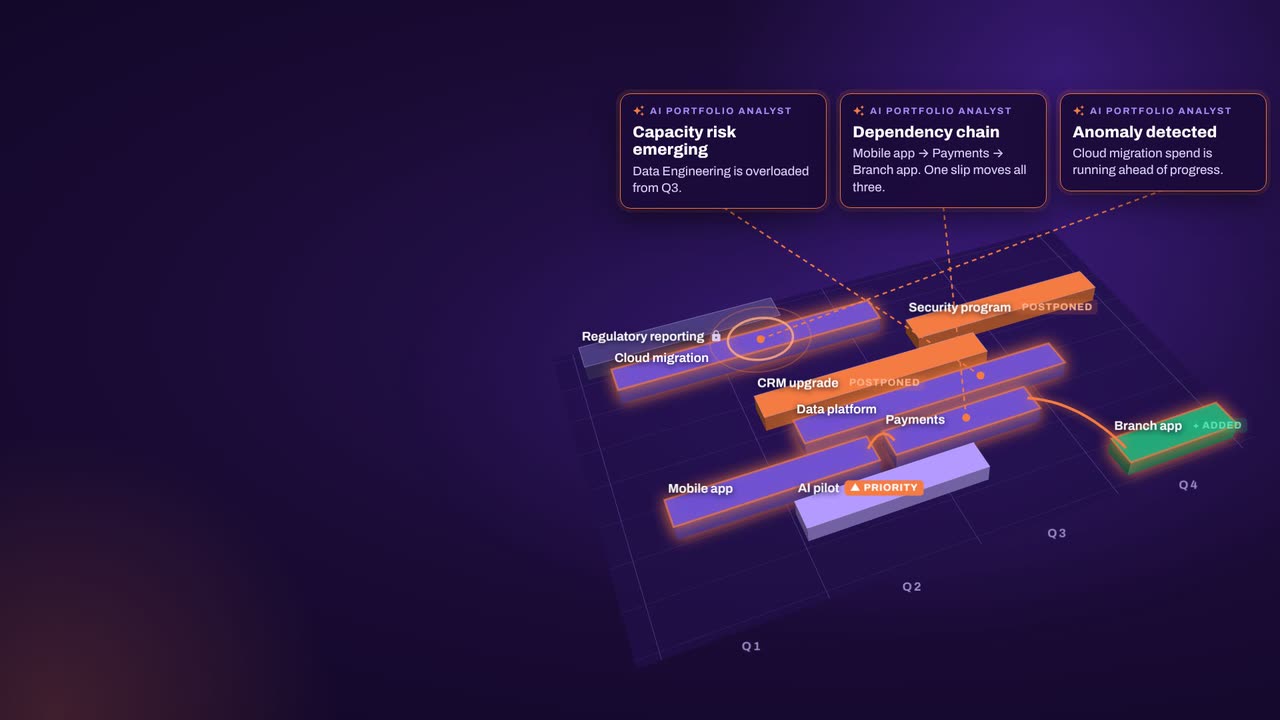
Company OKRs are often drafted at a leadership offsite: ambitious objectives, a few key results each, a clear sense of direction. Then the quarter starts, and the same teams that run the business are asked to move every key result at once. The objectives live in a slide or an OKR tool. The projects, the people and the budget live somewhere else, so nobody can see whether the set is deliverable.
Alignment adds to the load. Company objectives cascade to departments and teams, and by the time every team has written its key results, one platform team may be named under several objectives. Committed and aspirational OKRs compete for the same people on the same terms, so when something slips, nobody can say which promise is at risk.
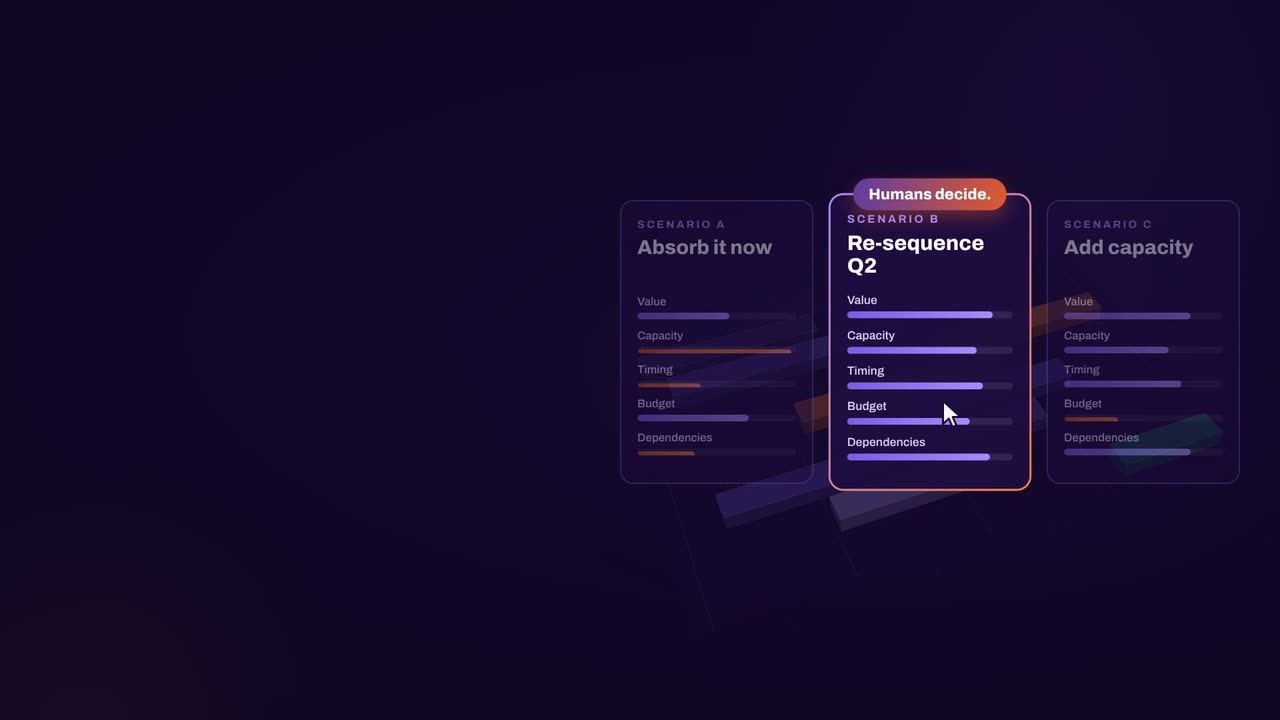
Check-ins do their job and surface problems early. The harder question comes next: if a key result needs more people, where do they come from, and which work moves to make room for a new objective? Too often the answer leaves the meeting as an action, gets rebuilt in a spreadsheet and is already out of date by the next check-in.