

A precise answer to “why not?”
Trace from the priority to the initiative to the project, and see which team ran out, which budget fell short and what it would take to fit. Then make the case with facts, or accept the trade-off knowingly.
For business-unit leaders
Prioritization the whole leadership team can see: a plan that shows what fits and why, which team or budget ran out, and a costed answer to “what would it take?” before you commit to a customer.
Why it feels political
Business-unit leaders hear “it didn’t make the cut” far more often than they hear why. Was it capacity, budget, a dependency, or a higher priority from another unit? Without an answer, prioritization feels political, and sometimes it is. The leader can neither make a better case nor accept the trade-off with confidence.
Annual planning makes it harder. Every unit submits a list, and together the lists ask for far more than the organization can deliver. The units that get what they need usually bring something different: a costed ask that says which skills they need in which quarters, and what they would give up if they can’t have everything.
Between planning cycles, the pressure turns to speed. A new market, a partnership or a large customer won’t wait for the next cycle. And when a customer asks when something will be ready, the honest date depends on teams outside the unit, shared specialists and dependencies nobody in the room can see.
How aangine helps
One live plan connects every unit’s demand to shared capacity, budgets and strategic priorities, so trade-offs between units are calculated and visible instead of negotiated in the corridor.
Trace from the priority to the initiative to the project, and see which team ran out, which budget fell short and what it would take to fit. Then make the case with facts, or accept the trade-off knowingly.
Bring your demand into the plan, see what it needs in skills, budget and timing, and compare options. The planning conversation starts from facts instead of campaigning, and your ask already shows what you would trade if you can’t have it all.
A new opportunity becomes a scenario quickly. Capacity, dependencies, budget and the impact on other units’ commitments are all visible, so leadership can say yes with eyes open, before the window closes.
Before you promise a customer a date, check where the work fits, which dependencies it waits on and what would have to move to bring it forward. Commitments to customers become commitments the whole organization can keep.
In practice
Fair doesn’t mean every unit gets what it asked for. It means every unit can see how the decision was made. A typical sequence:
Set priorities with the leadership team, or bring in scores from your PPM, so every unit’s demand is ranked on the same visible basis.
One click rebalances the plan around shared capacity, budgets, dependencies and priorities. Locked and mandatory work never moves, and every gap is explained.
For work that didn’t fit, see which team ran out or which budget fell short, and model the option that would bring it into the plan.
Compare scenarios side by side on cost, capacity, value and timing. Leadership chooses, and every unit leaves knowing the reasoning behind the plan.
How aangine works
aangine is the decision layer above the tools you already use. No rip & replace: it imports your plans, replans them in one click and pushes the approved plan back.
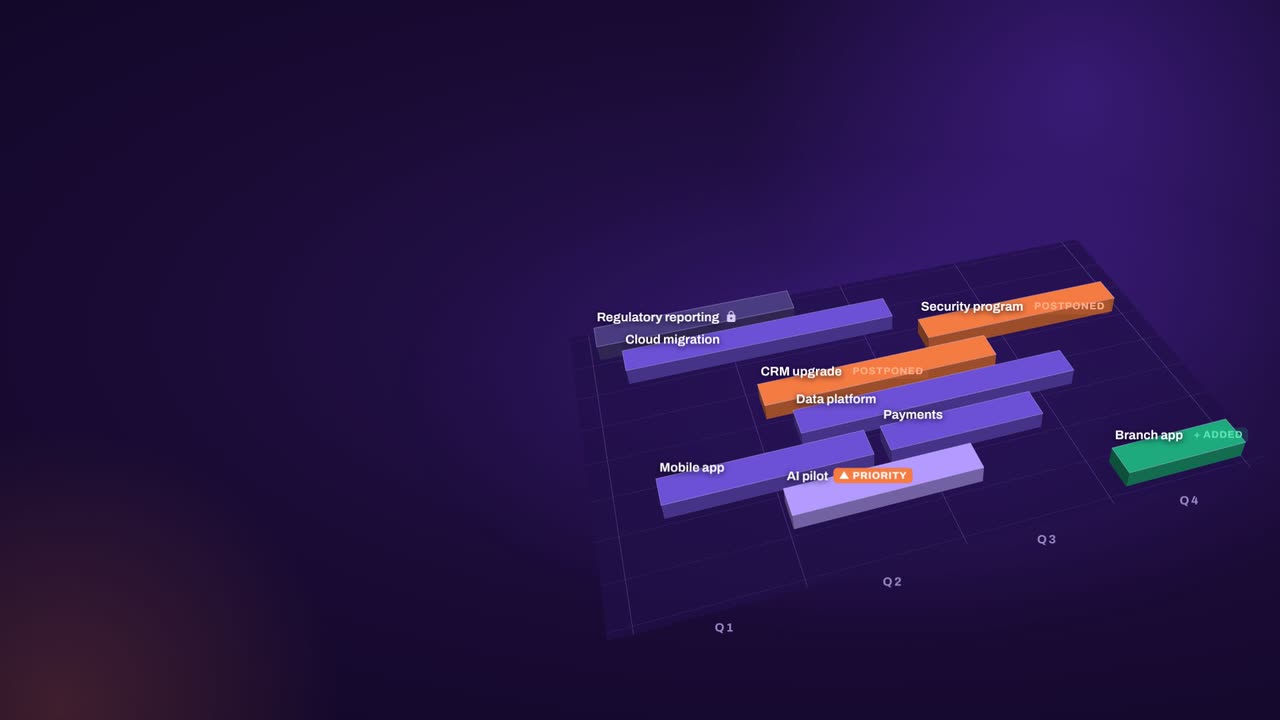
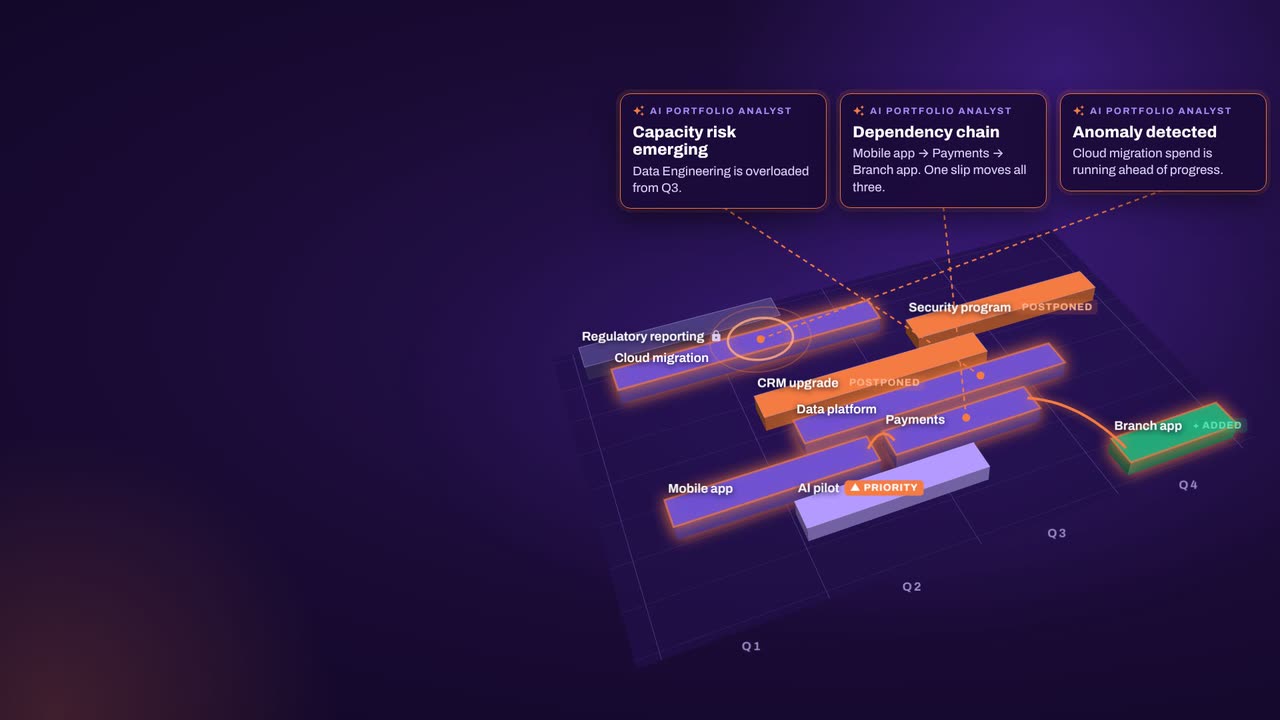
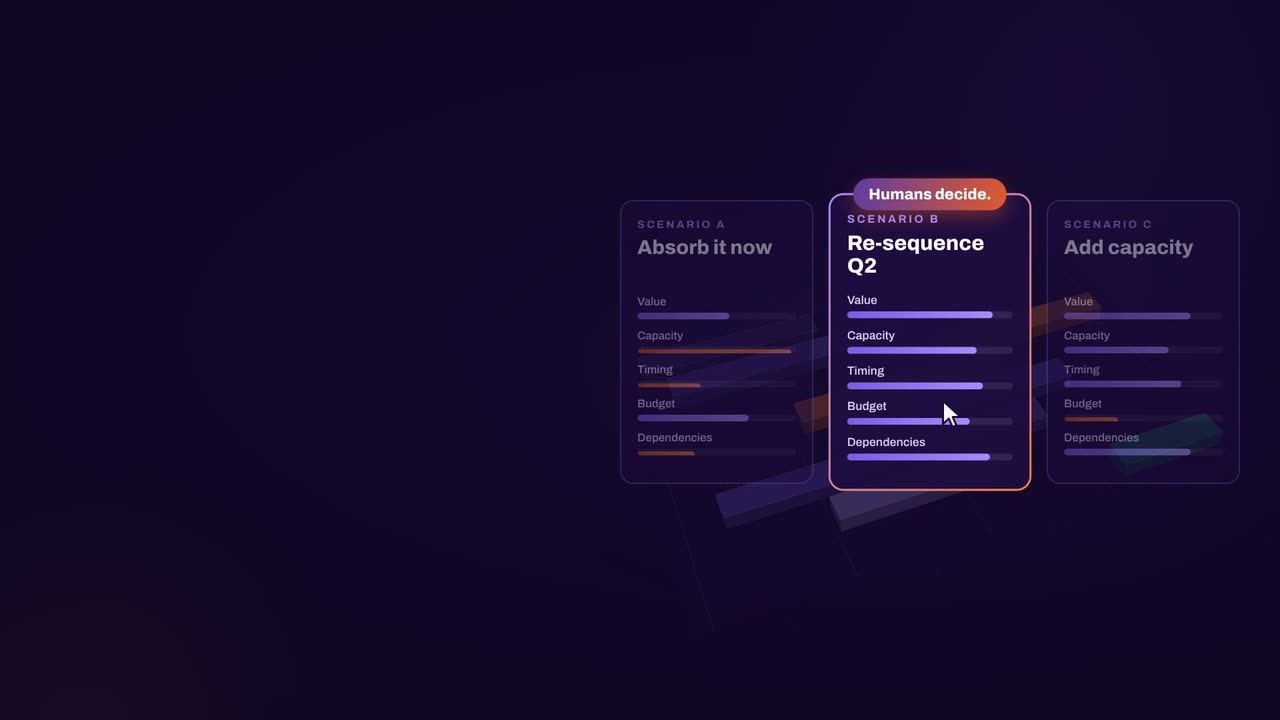
The result: faster, clearer decisions when it matters most.
What our customers report in their case studies. Read the customer results
Keep exploring
Book a demo
Book a demo to talk through your unit’s situation: the shared teams you depend on, the asks that keep missing the cut, and the customer dates you need to stand behind.