The planning gap
One page of strategy, many pages of work
OGSM’s great strength is that it fits on one page. One objective, a handful of measurable goals, a few strategies that say how, and measures that show whether each strategy is working. Everyone can read it and see the choices. The work behind the page is less tidy: each strategy turns into actions and projects that need people from marketing, supply chain, IT and finance.
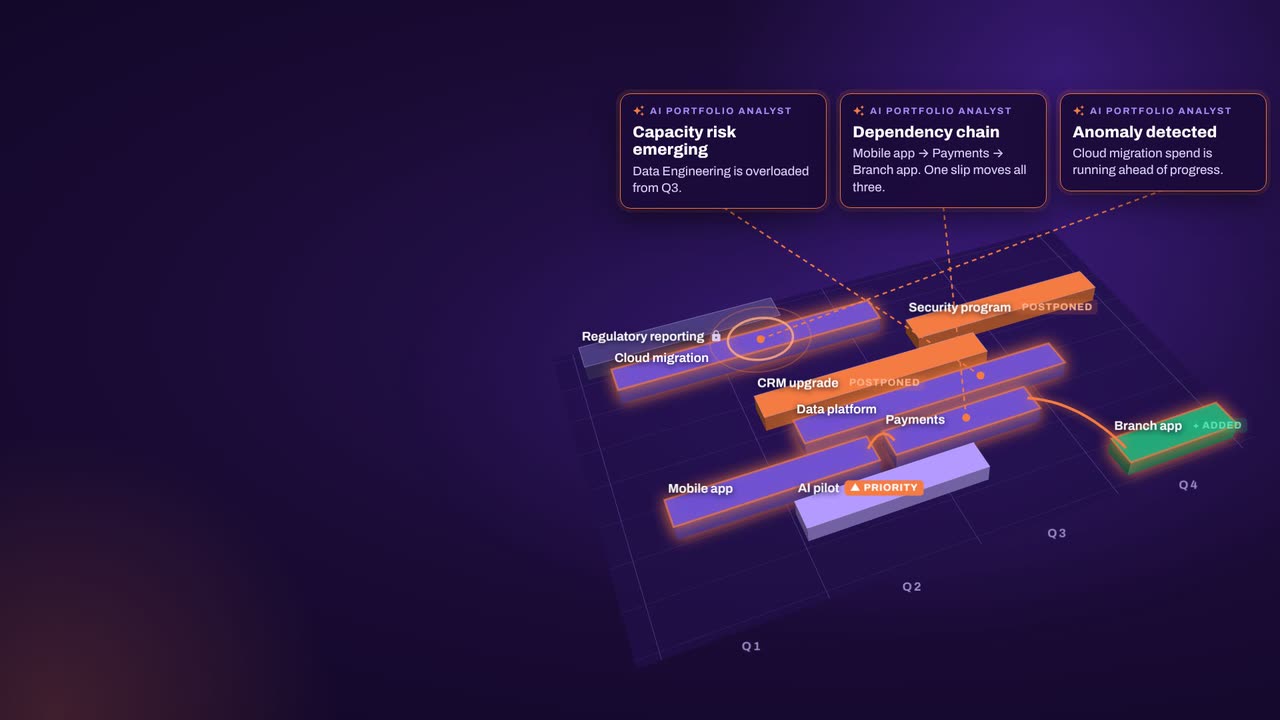
Often those are the same people for every strategy. The page may list more strategies than the capacity behind them can support, and nobody sees it until the actions start to slip. Cascading adds to it. Division and team OGSMs are built separately but share supply chain, IT and analytics teams, so a change to one is felt by the others.
Then comes the review, often quarterly. The measures show one strategy behind and another ahead, and the obvious move is to shift effort. But nobody in the room can say what the shift would cost, so it becomes an action for later, and the one page slowly drifts away from the work it describes.