

New assets as scenarios
When a deal closes or a trial reads out early, add the asset as a scenario. See in minutes what it displaces and what it would take to deliver both, with capacity planned by function, role or skill.
Pharma & life sciences
Patent cliffs, tariffs, pricing pressure and pipeline decisions all pull on the same scientific, manufacturing and digital capacity. With aangine, the portfolio around the pipeline lives in one plan, so leaders see what each move displaces before they commit.
The challenge
Loss-of-exclusivity dates are known. The responses are familiar: acquire, in-license, accelerate the pipeline, extend the lifecycle, take out cost, usually all at once. Each move pulls on the same finite capacity in clinical operations, regulatory, CMC, medical affairs, launch and digital teams. An in-licensed asset arrives with its own timeline and expects people already committed elsewhere.
Trade and pricing conditions now link portfolios that used to be planned apart. Where medicines are made is tied to commercial and pricing strategy, and every new plant or tech transfer is a multi-year set of projects competing for engineering, quality and validation experts. When pricing expectations change, so does the value of almost every program, launch and enabling project.
The analysis is not hard because the math is hard. It is hard because the plan lives in many spreadsheets and every what-if costs days of rework. When a program stops, the freed people and budget drift, and the programs that should benefit do not speed up, because nobody re-ran the plan.
“…any possible changes can be made directly at the meeting with our business stakeholders.”
How aangine helps
R&D programs, launches, deals, manufacturing projects and digital initiatives share one live plan. It plans initiatives and the capacity behind them, not clinical trials or production lines.
When a deal closes or a trial reads out early, add the asset as a scenario. See in minutes what it displaces and what it would take to deliver both, with capacity planned by function, role or skill.
Plant builds and tech transfers are planned as one system: projects, dependencies and deadlines, capacity by role or skill, budgets by CAPEX and OPEX. When a site decision or the tariff picture changes, replan in one click and see the knock-on effects first.
Change value assumptions or budgets, replan and compare the results side by side: what is in, what is out, what moved, and what each choice means for budget and capacity by department.
Algorithms calculate and optimize the plan from real data. The AI Portfolio Analyst highlights risks, over-utilized pools and recommendations ranked by severity, and people lock, accept or adjust. Bring your own AI; only IDs are sent to the model, never project, person or department names.
In practice
Stopping a program is a scientific decision. What happens next is a planning one, and it is how pipelines get faster. Four steps, worked through together in one plan:
Identify exactly which roles, skills and budget lines the stopped program releases, and from when they become available to the rest of the portfolio.
One click pulls in waiting work that now fits, higher priority first, and shows whether those programs actually need the skills that were freed.
Shared platforms, external partners and supply slots shift too. Dependencies and deadlines hold when you replan, and any remaining gaps are explained.
Present the whole reprioritized portfolio to the board, linked to priorities and objectives, not just the stopped program. Then baseline it and track plan against actual.
How aangine works
aangine is the decision layer above the tools you already use. No rip & replace: it imports your plans, replans them in one click and pushes the approved plan back.
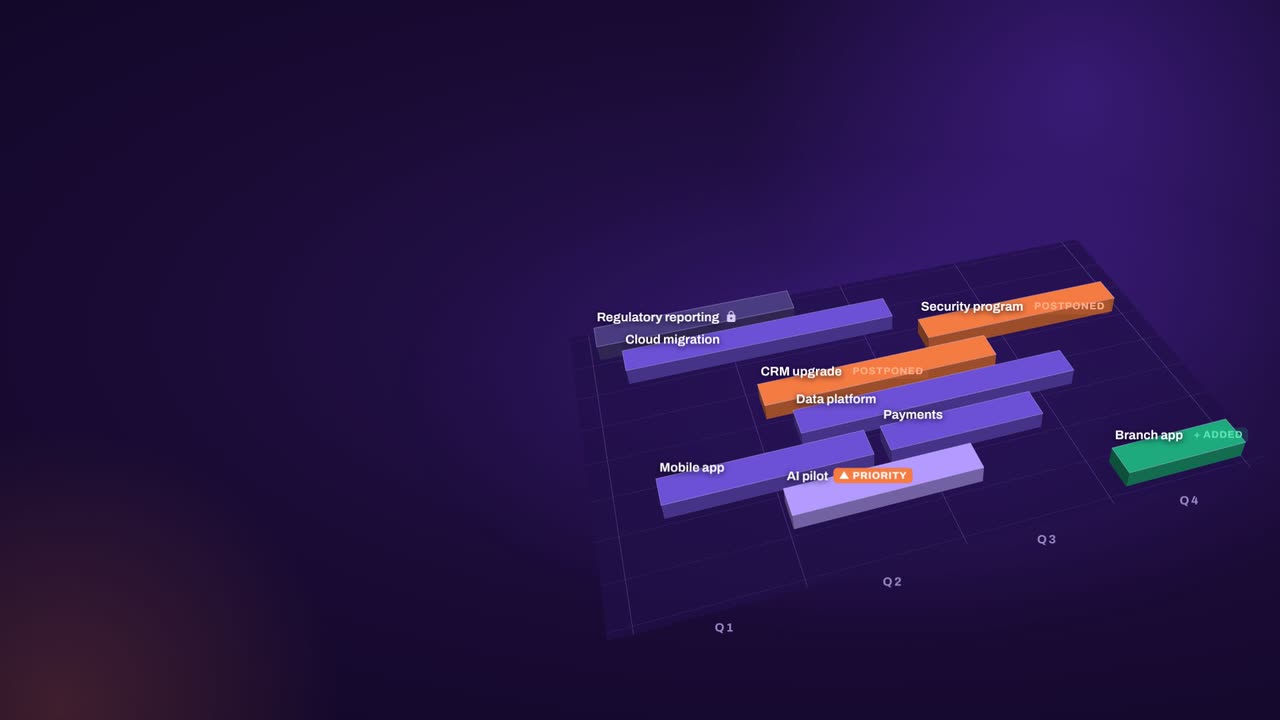
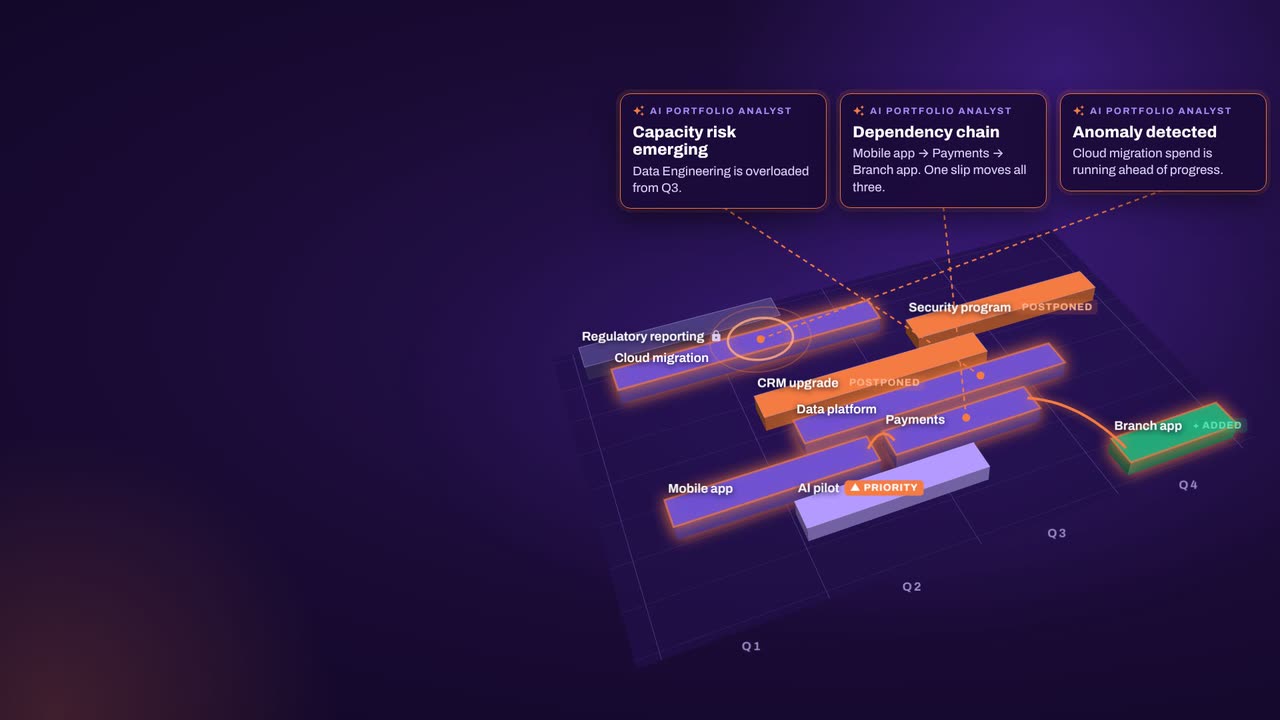
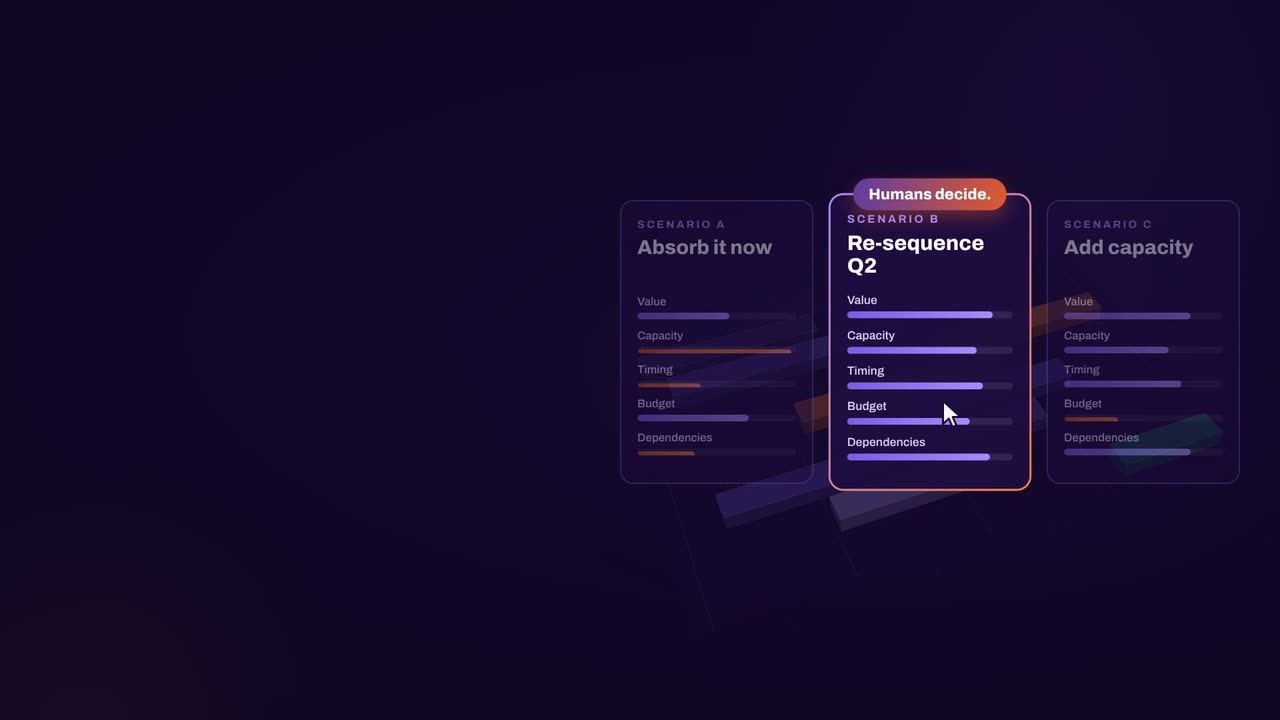
The result: faster, clearer decisions when it matters most.
What our customers report in their case studies. Read the customer results
Keep exploring
Book a demo
Book a demo to talk through the portfolio around your pipeline: the assets coming in, the programs being stopped and the manufacturing decisions that depend on both.