The challenge
The structure changed. The plan did not.
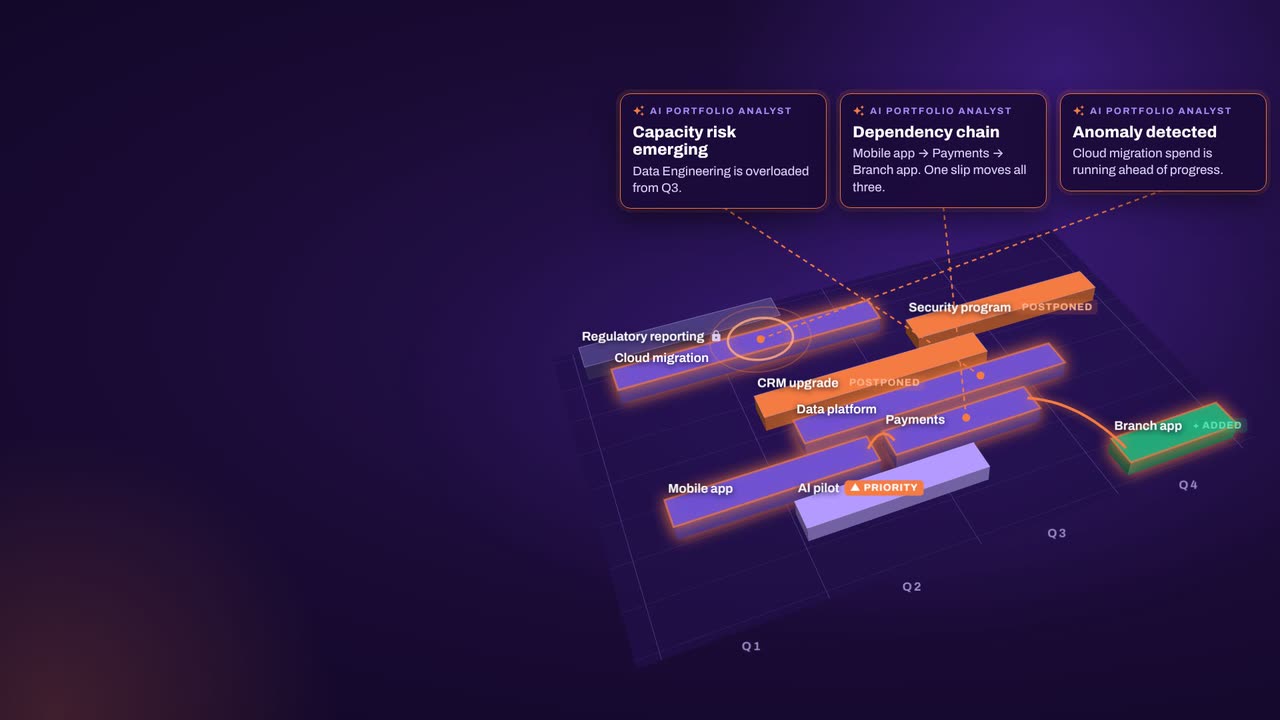
Once a reorganization is announced, people learn who their new manager is within days. The portfolio plan can point at the old structure for months: projects assigned to teams that no longer exist, skills now split across two departments, a capacity figure nobody can explain anymore. The work and the commitments are unchanged. Only the people carrying them are different.
The capacity plan that follows often assumes people work full-time on projects. They do not. Operations, service management, support and the new meetings the structure added all take their share. If the plan ignores that day job, new teams start out overcommitted before they have even met, and the dates promised to sponsors quietly stop holding.
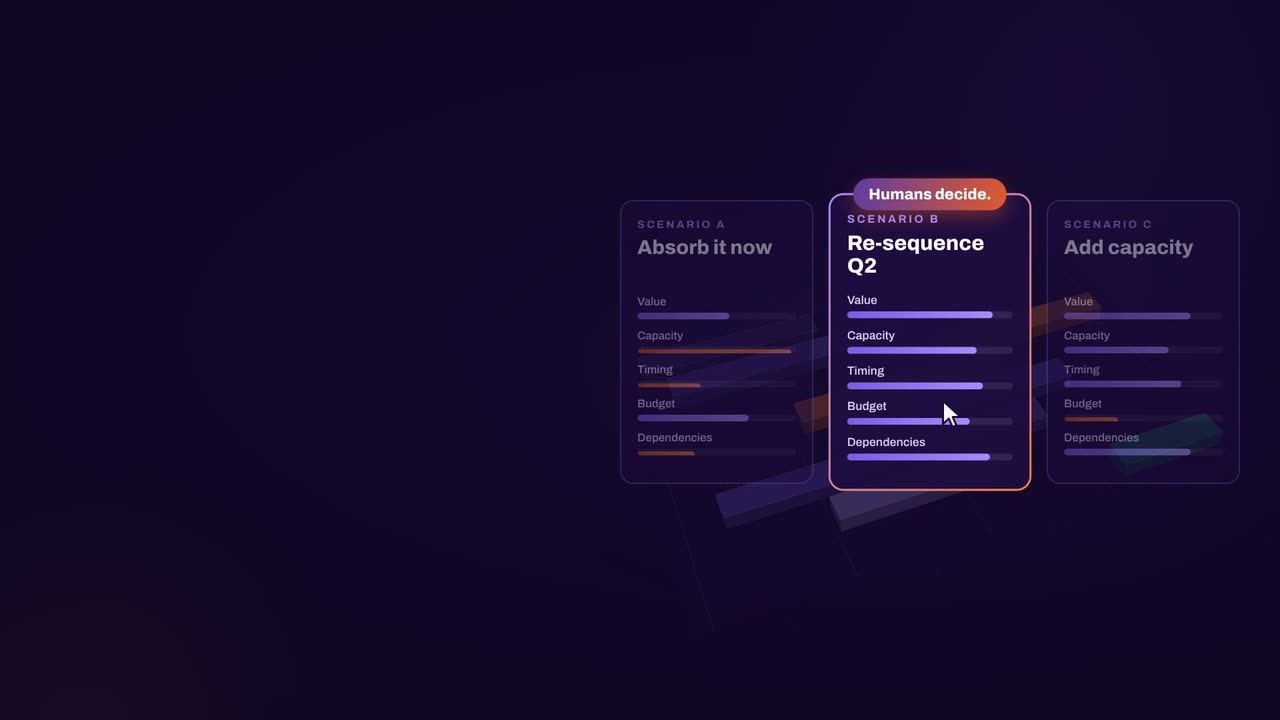
Prioritization gets harder too. New business-unit leaders want their initiatives in the plan, existing commitments still need delivering, and every list says top priority. Meanwhile people want to know whether their project continues, who decides now and whether their dates still stand. Leaders often cannot answer yet, because the plan has not caught up with the structure.