The challenge
The most visible line is rarely the right place to start
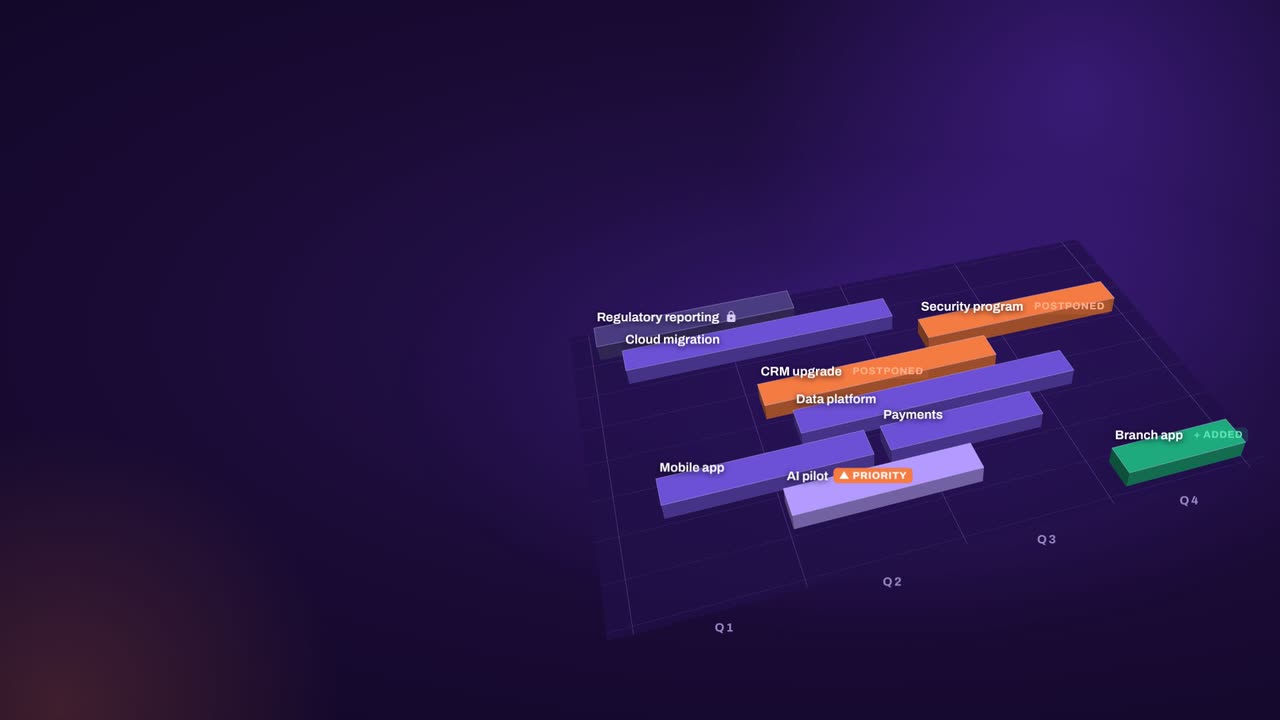
When the change budget has to come down quickly, attention goes to the number everyone can see. Headcount sits on every spreadsheet; the cost of the work itself is harder to find. Yet much of the low-value spend sits elsewhere: projects still running after their value case has expired, two units solving the same problem, and work no longer connected to any current priority.
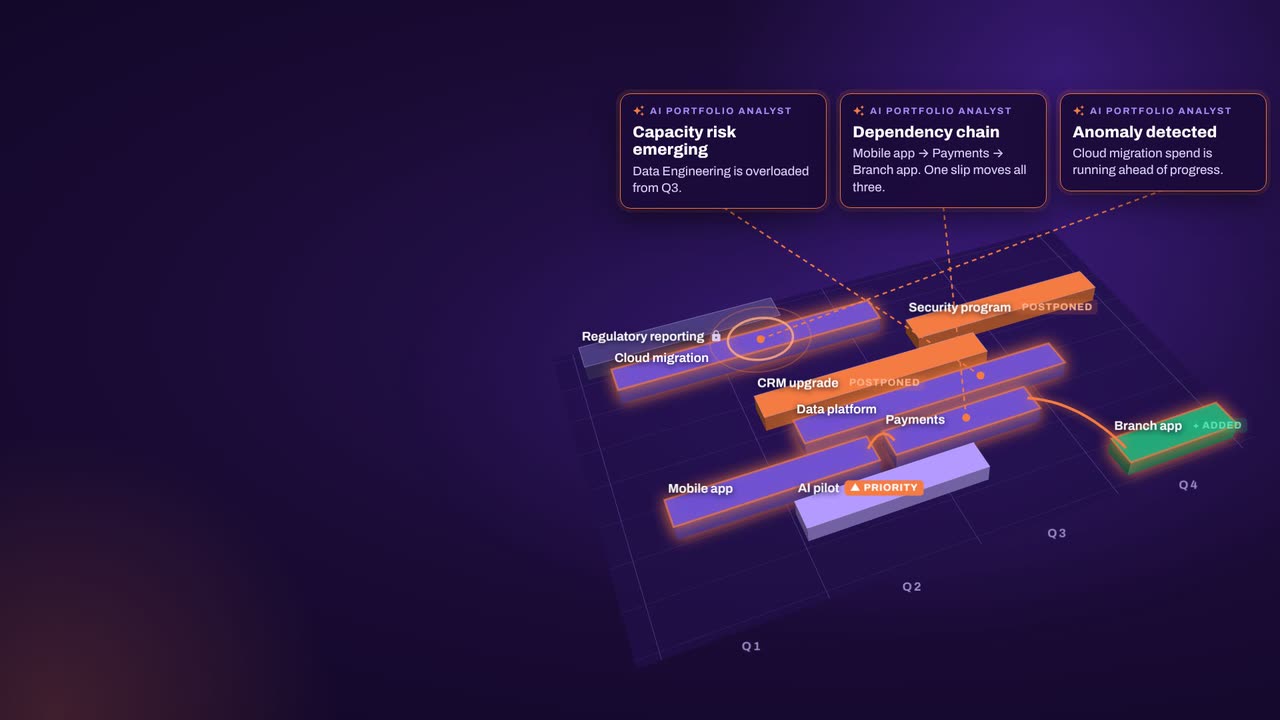
Overload is a cost too, even though it never appears as a line item. When a team is assigned to more projects than it can carry, everything takes longer, costs more and delivers value later. Context switching quietly uses capacity the organization already pays for. Taking capacity out of an overloaded portfolio tends to make this worse; taking work out makes it better.
Equal reductions for every department feel fair and are easy to calculate, which is why they are common. But they treat all work as equally valuable and leave every project running, only slower. Stopping low-value work or resequencing large programs usually protects more of the strategy, provided leaders can see value, capacity and dependencies together. In spreadsheets, that view takes weeks.