Book a demo

Try “replan”, “SAFe”, “budget cuts” or “public sector”. Press / to search from any page.

  1. Home
  2. Roles
  3. Chief Strategy Officer

For the Chief Strategy Officer

Strategy that shows upin what you fund and staff.

Trace the strategy all the way down: priorities, initiatives, objectives and key results, and the projects and people that deliver them. Underfunded objectives and orphaned projects show up in the same plan leadership uses to decide.

Book a demo

The challenge

When the strategy and the plan drift apart

Strategy is usually written in a deck, while the plan lives in a spreadsheet or a PPM. The two meet at the annual review, and by then they have drifted apart. Every objective looks important, most look on track, and few people can say which ones are actually underfunded, given the people and budget assigned to them.

OKR planning sets direction well but rarely asks who will do the work. Teams sign up for key results that compete for the same people, and the conflict surfaces when the quarter is well under way. Each strategy refresh also leaves something behind: projects funded under the old strategy that nobody stopped. They keep their budget and their people; they’re nobody’s priority, so nobody reviews them.

Then the competition moves. A rival launches early, cuts prices or enters your market, and the leadership team wants a response fast. Most responses are decided in a meeting and staffed afterward, which is where they stall. When someone asks “why can’t we do this?”, the honest answer takes weeks to assemble.


“…such tool is essential for active steering of the transformation execution.”

Gartner Peer Insights — 5-Star Review
Head of Transformation & Programs, Telecommunications

How aangine helps

Strategy inside the plan, not beside it

The strategy hierarchy sits inside the live plan, connected to the projects that deliver it. When capacity moves, you see which objectives feel it; when priorities change, the plan replans around them.

Key results with a plan

Objectives and key results connect to the projects that deliver them, and those projects to the teams and skills they need. See which key results are staffed, which compete for the same pool, and what one more project would do for a key result.

Underfunded objectives stand out

Each strategic priority is traced through initiatives and key results to the projects and capacity behind it. Objectives that look important on paper but lack people or budget in practice become visible, so a review can move capacity to where the strategy needs it.

Find room for the new strategy

Work that connects to no current priority stands out, along with the capacity it would free if it stopped. A new strategy needs room, and projects left over from the last one are usually where that room is.

A precise answer to “why not?”

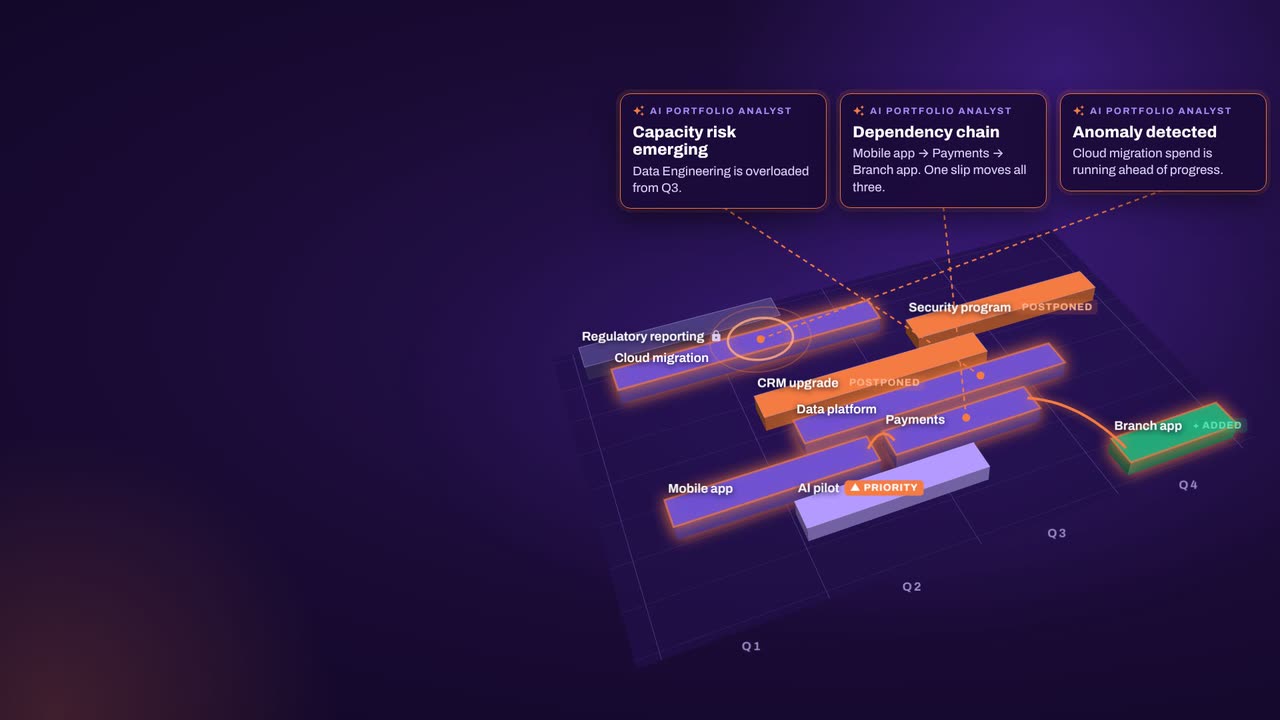
When leadership asks why an initiative can’t be done, the plan answers: the team that ran out of capacity, the budget that fell short and what would have to move to make room. The AI Portfolio Analyst highlights the conflicts and connections worth discussing; people decide.

In practice

A competitor moved. Test the response in the plan.

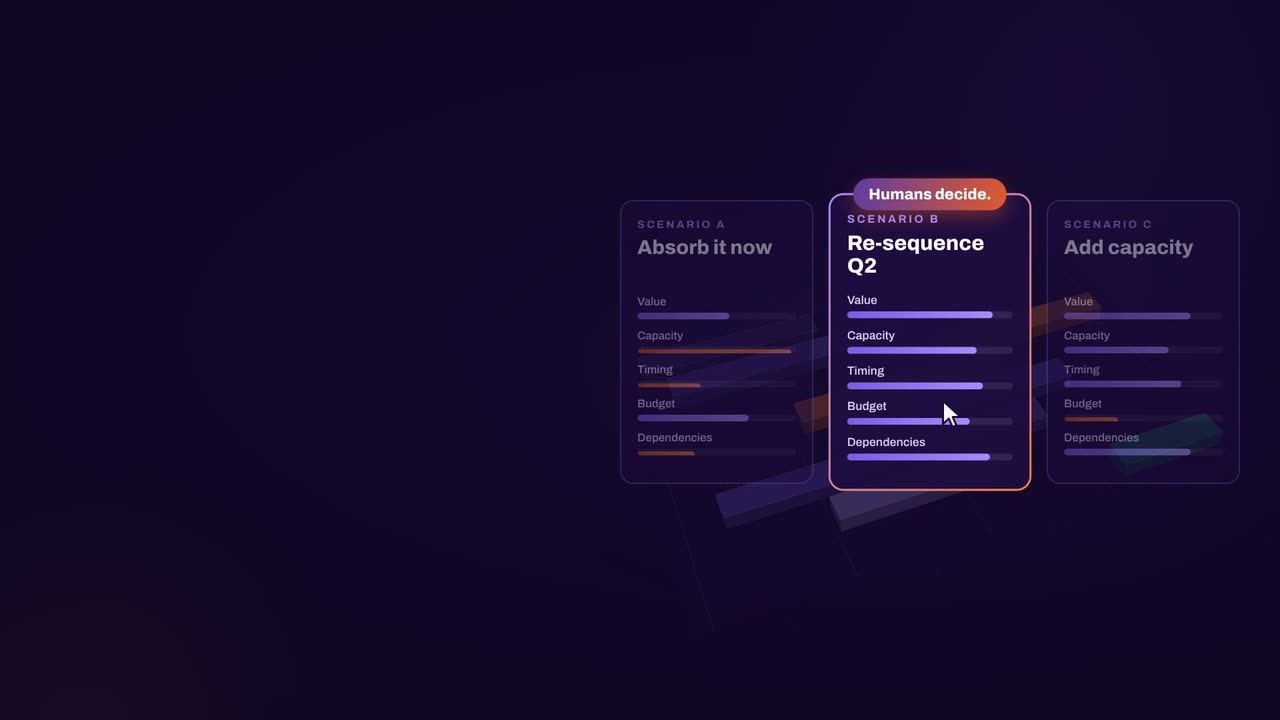
Instead of deciding the response first and staffing it later, put the options into the plan and compare them while the leadership team is still in the room.

  1. Scenario A: defend

    Protect core revenue and pause discretionary work. See which objectives lose capacity and what the pause frees for the initiatives that matter most.

  2. Scenario B: respond

    Pull forward the initiatives that answer the competitor’s move. Locked commitments stay where they are, and the plan shows what slips to make room.

  3. Scenario C: leapfrog

    Fund the bet that shifts the market in your favor, and see exactly what it displaces in capacity, budget and value timing.

  4. Decide together

    Weigh the options against each other on cost, capacity, value and timing. Leadership chooses, and the chosen response goes back to the delivery tools, ready to staff.

How aangine works

Algorithms calculate and optimize; AI discovers and highlights; humans decide.

aangine is the decision layer above the tools you already use. No rip & replace: it imports your plans, replans them in one click and pushes the approved plan back.

Algorithmscalculate and optimize
AIdiscovers and highlights
Humansdecide

The result: faster, clearer decisions when it matters most.

100xfaster portfolio decisions
9%budget savings
30%shorter product cycles
22%more strategic outcomes
80+%projects delivered on time

What our customers report in their case studies. Read the customer results

Book a demo

Make strategysomething the plan does.

Book a demo to talk through your strategy refresh, OKR cycle or competitive response, and see your objectives traced to the people and budget behind them.

Every Plan Meets Changeaangine in a minute · 58 seconds · sound on · captions

Transcript

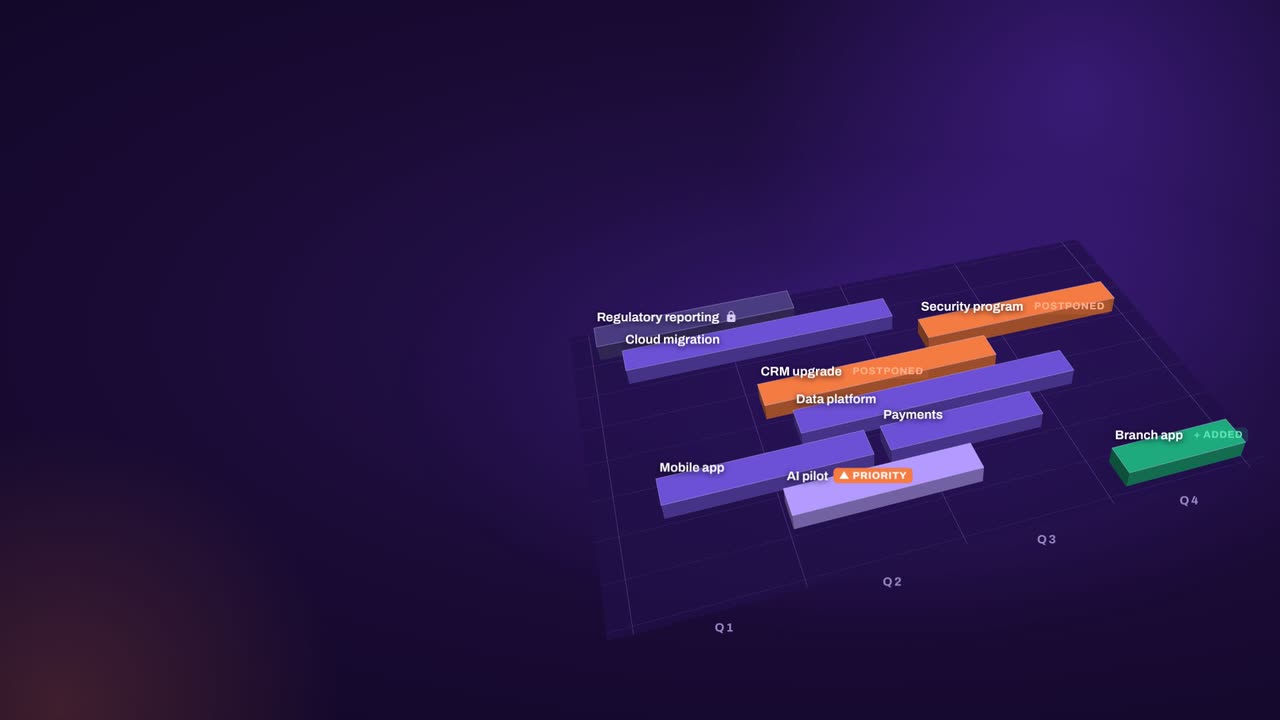
Your plan is perfect. For about five minutes. Then change crashes the party! The CEO wants a new project… That big milestone? Two months late. Your best team? Fighting fires. And priorities? Flipped! Cue days of rework, and yet another final-final deck. Now watch what aangine does. One click. Done! The whole plan just rebalanced. Next time the CEO asks, can we do it? You’ll know. In seconds. Algorithms calculate and optimize. AI discovers and highlights. Humans decide. The result: faster, clearer decisions when it matters most. aangine is the decision layer. Keep your tools. Even your spreadsheets! No rip and replace! A hundred times faster portfolio decisions. Nine percent budget savings. Five stars on Gartner Peer Insights. Change will come. Be ready to decide. Scan the code. See it live! aangine.

Book your assessment