Book a demo

Try “replan”, “SAFe”, “budget cuts” or “public sector”. Press / to search from any page.

  1. Home
  2. Initiatives
  3. Enterprise AI programs

Enterprise AI programs

Every department has an AI pilot.Decide which ones scale.

AI pilots compete for the same scarce data engineers, ML specialists and architects. Plan them like any other demand, in one plan with the rest of the portfolio, and see what scaling them would take and what it would push out.

Explainer · 1:02Enterprise AI programs: which pilots scale?More on aangine TV

The challenge

Which pilots scale is a portfolio question.

Most enterprises now run more AI pilots than anyone can easily track. Every department has one, and most look promising. They all want the same scarce people: data engineers, ML specialists and the few architects who understand the platforms. The board wants to know which pilots will scale, what that will take, and what else will wait while they do.

That is not a question about models. Scaling a pilot means funding it, staffing it and fitting it around dependencies on data platforms and work already committed. When AI initiatives are tracked apart from the rest of the portfolio, each pilot looks affordable on its own. The trade-offs surface later, as overloaded teams and programs waiting on the same specialists.

Then there is AI inside planning itself. Portfolio data is among the most sensitive information a company holds: strategy, budgets, people. Security teams rightly ask where it goes and which model sees it. And planning math is the wrong job for a language model. Ask one to replan a large portfolio around a new capacity limit and the answer will sound confident, with no way to tell whether it is right.


How aangine helps

AI initiatives planned like any other demand

AI initiatives sit in one live plan with the rest of the portfolio, each carrying value, priority, skills, budget and dependencies, so scale-up decisions are made against real capacity.

See what scaling would take

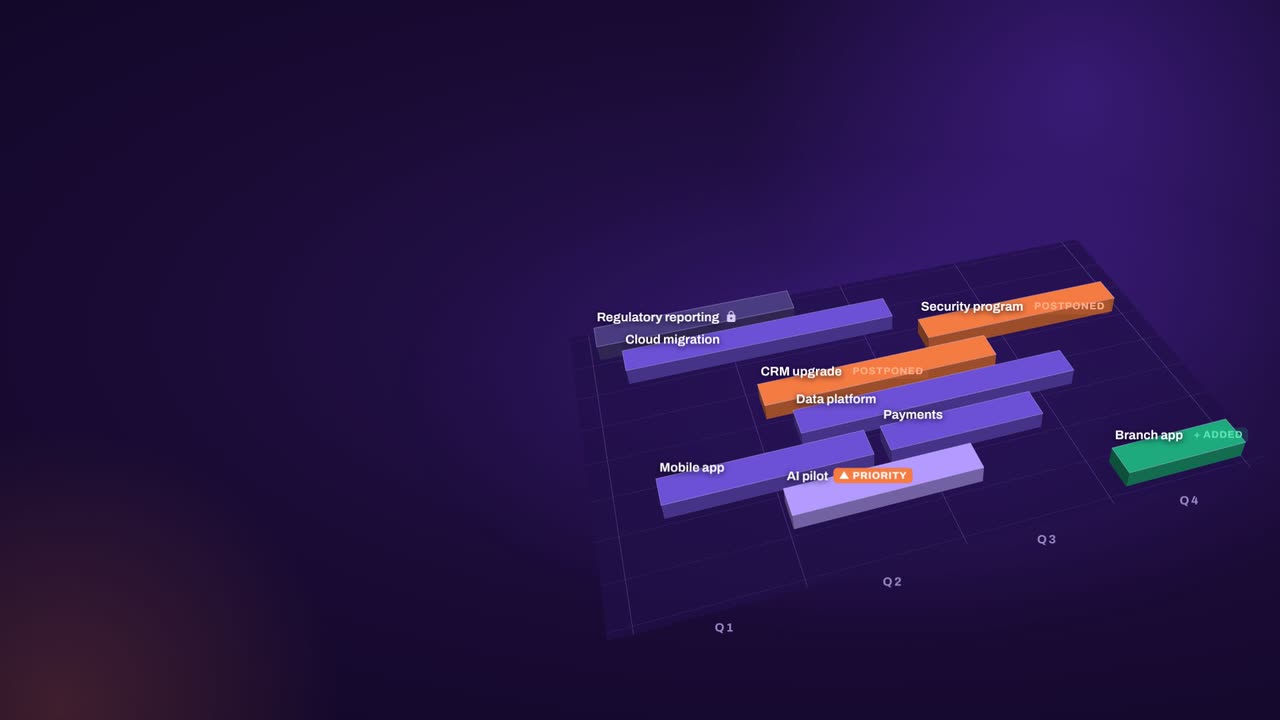
Add the pilots you want to scale and replan in one click. Algorithms rebalance the portfolio around capacity, skills, dependencies and budgets, then show which teams fall short, what moved and what no longer fits. Compare different sets of pilots side by side before anyone commits people.

Algorithms do the planning math

Planning across capacity, dependencies, deadlines and budgets is a calculation, so algorithms do it, respecting every rule every time. Dependencies are never broken and locked or mandatory work never moves.

What matters most, period by period

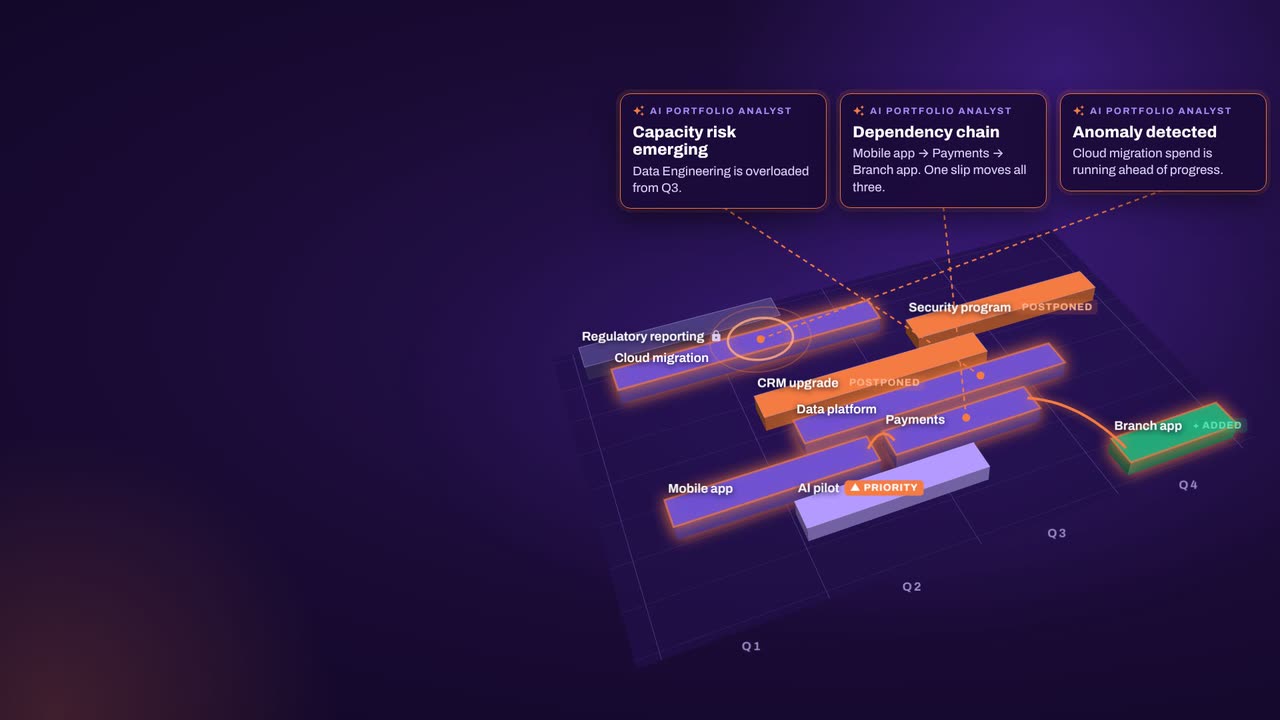
Portfolio Journey maps what matters most in your portfolio, period by period, AI pilots included. The AI Portfolio Analyst reads each time slice and flags what deserves attention: emerging risks, the critical dependency chain, teams heading for overload. It writes summaries, ranks recommendations and chooses what to highlight, but never produces the numbers. People lock, accept or adjust.

Your AI, your data

For aangine’s own AI Portfolio Analyst, bring your own AI, on-premises or cloud. Only IDs are sent to the model, never project, person or department names. Charts and numbers are built by aangine’s algorithms from your real data, not generated by the model. The aangine platform itself holds SOC 2 Type 2, ISO 27001 and ISO 27701.

In practice

From a pile of pilots to a funded portfolio

Your teams build and run the models; the portfolio they belong to is what aangine plans. Start with the estimates you have and let the data improve as you plan.

  1. Bring every pilot in

    Import AI initiatives from your delivery tools and spreadsheets, with rough estimates of value, skills, budget and dependencies on data platforms. Estimates are enough to start.

  2. Rank against strategy

    Link each initiative to objectives and priorities alongside the rest of the portfolio, so AI work competes for people and budget on the same terms as everything else.

  3. Compare scale-up scenarios

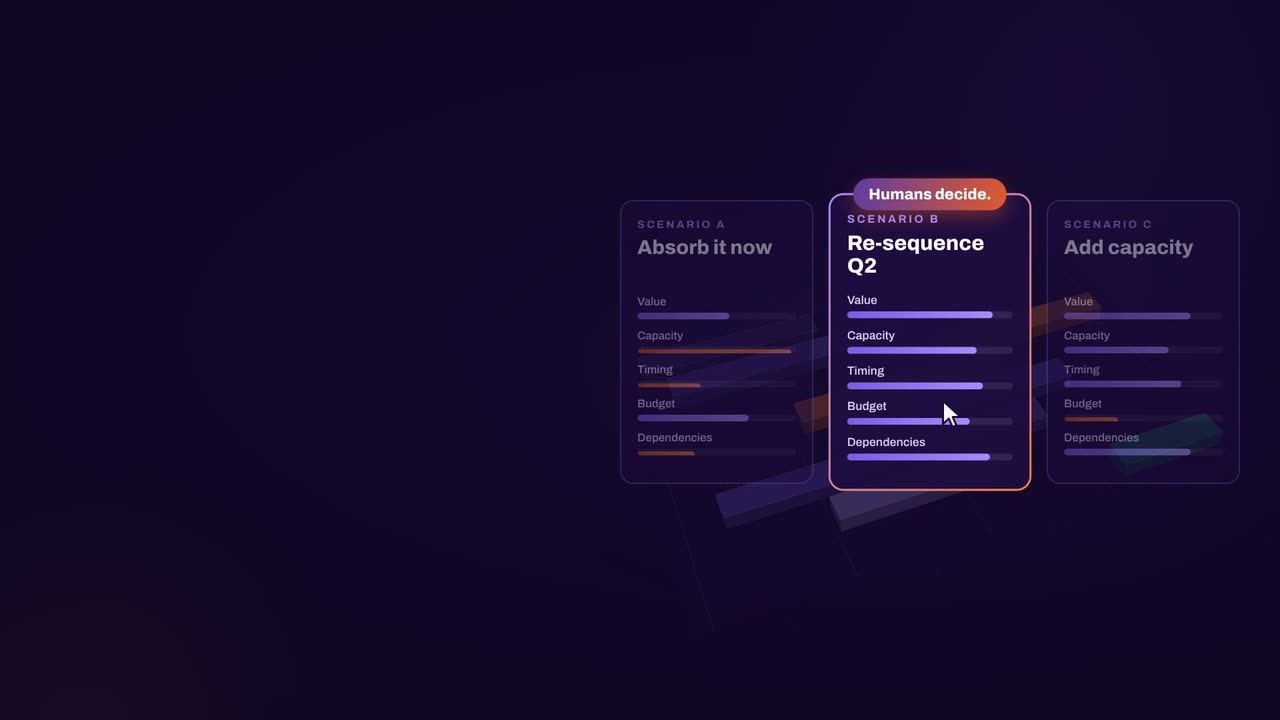
    Model scaling different sets of pilots side by side. See which teams and skills run out, what moves, and what each option costs in work that has to wait.

  4. Decide, then review

    Leaders choose, lock what matters and push the approved plan back to delivery tools. Before each review, the AI Portfolio Analyst summarizes what changed and what needs attention.

How aangine works

Algorithms calculate and optimize; AI discovers and highlights; humans decide.

aangine is the decision layer above the tools you already use. No rip & replace: it imports your plans, replans them in one click and pushes the approved plan back.

Algorithmscalculate and optimize
AIdiscovers and highlights
Humansdecide

The result: faster, clearer decisions when it matters most.

100xfaster portfolio decisions
9%budget savings
30%shorter product cycles
22%more strategic outcomes
80+%projects delivered on time

What our customers report in their case studies. Read the customer results

Book a demo

The pilots will keep coming.Fund the ones that fit.

Book a demo and bring your list of AI pilots, the scarce skills they compete for and the questions your board is asking. We will talk through how your AI portfolio fits the capacity you have.

Every Plan Meets Changeaangine in a minute · 58 seconds · sound on · captions

Transcript

Your plan is perfect. For about five minutes. Then change crashes the party! The CEO wants a new project… That big milestone? Two months late. Your best team? Fighting fires. And priorities? Flipped! Cue days of rework, and yet another final-final deck. Now watch what aangine does. One click. Done! The whole plan just rebalanced. Next time the CEO asks, can we do it? You’ll know. In seconds. Algorithms calculate and optimize. AI discovers and highlights. Humans decide. The result: faster, clearer decisions when it matters most. aangine is the decision layer. Keep your tools. Even your spreadsheets! No rip and replace! A hundred times faster portfolio decisions. Nine percent budget savings. Five stars on Gartner Peer Insights. Change will come. Be ready to decide. Scan the code. See it live! aangine.

Book your assessment