Book a demo

Try “replan”, “SAFe”, “budget cuts” or “public sector”. Press / to search from any page.

  1. Home
  2. Frameworks
  3. Balanced Scorecard and strategy maps

Balanced Scorecard

The scorecard measures strategy.The portfolio delivers it.

Strategic initiatives close the gap to each target only when they are funded and staffed. In aangine, the initiatives behind your scorecard are planned with their teams, labor cost and budget, so strategy reviews can end with a decision.

Book a demo

The planning gap

Arrows on the map, load in the plan

A strategy map is one of the clearest pictures a leadership team can draw. Learning and growth objectives support better internal processes, better processes serve customers, and customers drive financial results. Each arrow is a hypothesis about how the strategy works. What the map doesn’t show is load: two arrows can depend on the same finance, IT or operations team in the same quarter.

The Balanced Scorecard asks leaders to choose, rank and resource the strategic initiatives that close the gap to each target. Objectives, measures and targets get careful debate, while the initiatives column often comes last and starts from the projects already running. Initiatives end up underfunded, overlapping or competing for the same people, and a scorecard was never designed to show that.

Cascading adds another layer. Business units and shared services each hold their own scorecard and initiatives. When the corporate strategy shifts, every unit reworks its plan alone, the shared teams get asked twice, and the conflicts surface a quarter later as missed targets. Strategy reviews then see which objectives are behind, without the material to decide what to change.


How aangine helps

Initiatives funded and staffed against the map

Strategy map objectives can be planned in aangine’s strategy hierarchy, above the initiatives and projects that serve them. Scorecard measures, targets and KPIs stay in your performance management tool; aangine plans the initiative portfolio behind them.

Objectives traced to capacity

Each initiative carries its teams, effort, labor cost and budget lines. Drill into any objective and see which team or budget is the constraint, so leaders know whether the cause-and-effect logic on the map has the people and money to play out.

Initiative selection, scored fairly

Rank proposed initiatives with scoring questionnaires and several evaluators from finance, operations and the business, so one voice doesn’t decide. Initiatives that serve no map objective stand out. The rest are loaded against real capacity and budget, by team and by quarter.

Cascaded initiatives in one plan

Business-unit portfolios can share one plan with shared capacity pools. Each unit ranks its own initiatives, and the plan respects those rankings, every dependency and every deadline. When a corporate objective changes, one replan shows which initiatives moved and which shared team is overloaded.

Strategy reviews that decide

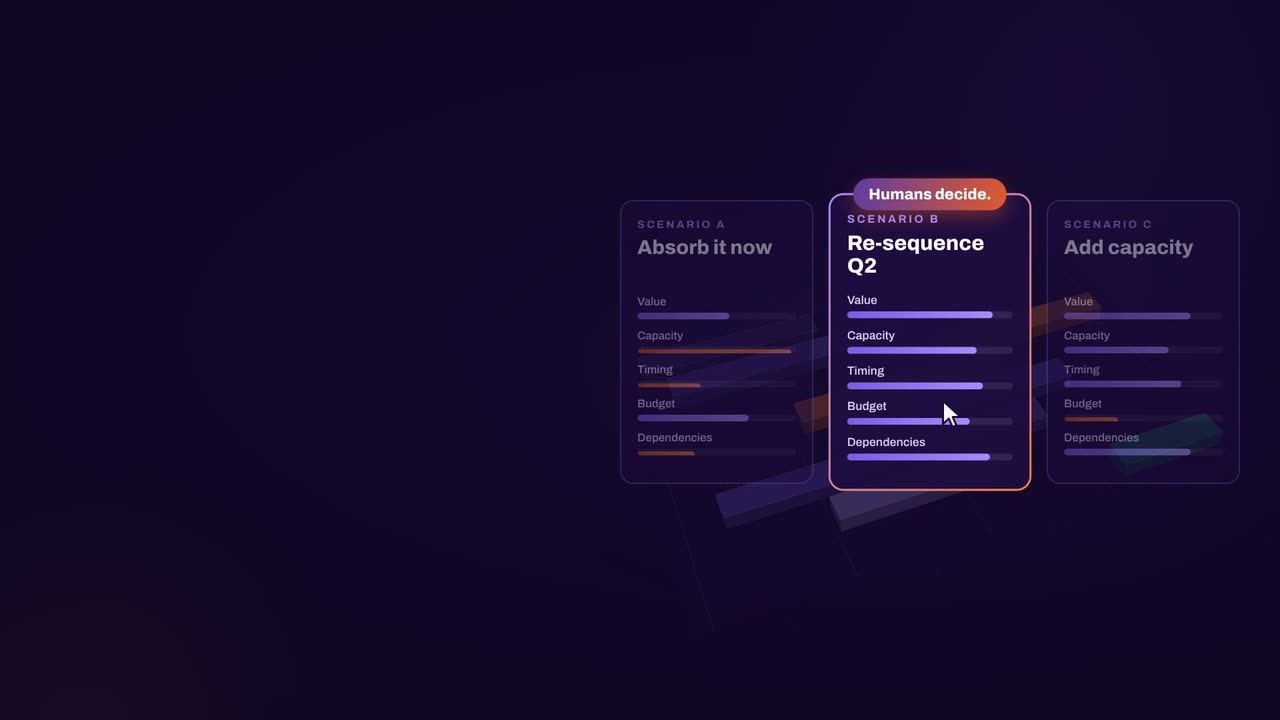
Bring the live portfolio into the strategy review. Shift budget toward a lagging objective, add capacity or stop an initiative that no longer earns its place, then compare scenarios side by side on value, capacity, budget and department impact.

In practice

An initiative selection round, start to finish

Scorecards often carry more initiatives than the organization can deliver. A selection round in aangine runs in one plan, from the long list to a funded, staffed set.

  1. Link to the map

    Connect every proposed initiative to the strategy map objective it serves. Initiatives that serve no objective become candidates to drop before anyone scores them.

  2. Score with several voices

    Evaluators from finance, operations and the business score each initiative through the same questionnaire, giving a ranking that reflects the whole leadership team.

  3. Load against capacity

    Load all demand against real capacity and budget. See what fits, what it would take to deliver everything, and which objectives lose out under each option.

  4. Decide and lock

    Leaders choose a scenario and lock the initiatives the scorecard can’t do without, so later replans work around them rather than through them.

How aangine works

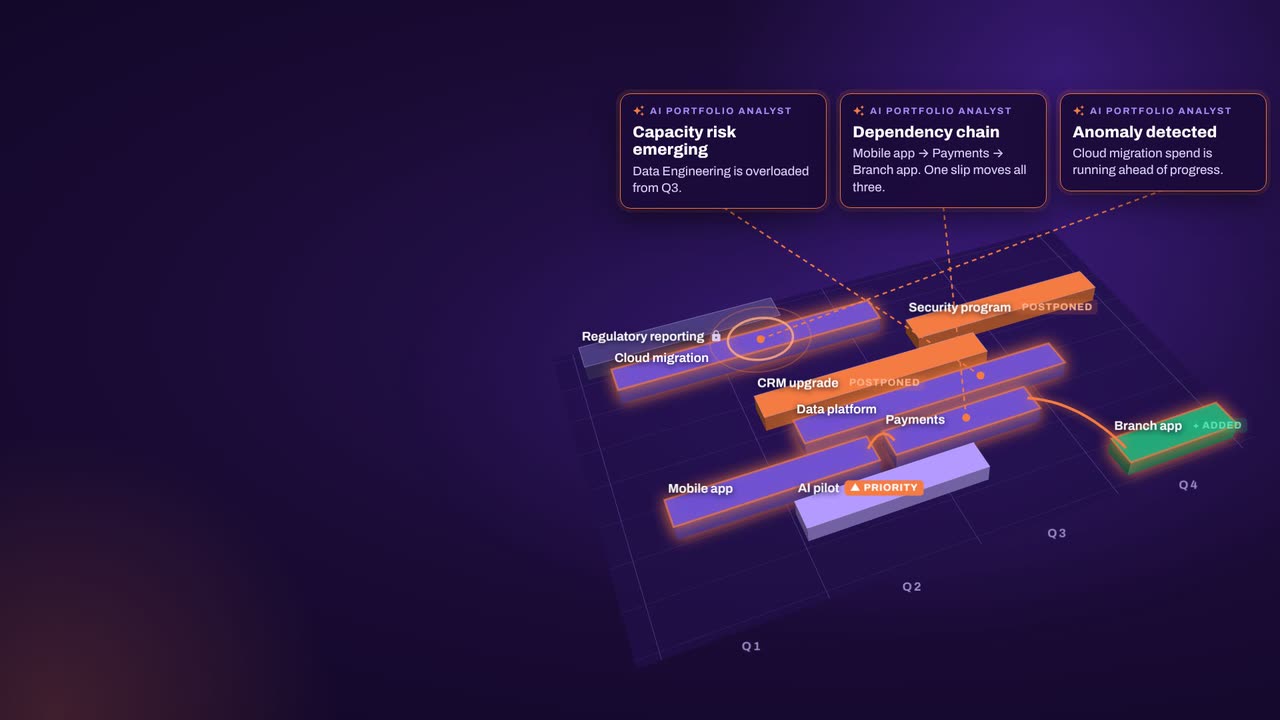
Algorithms calculate and optimize; AI discovers and highlights; humans decide.

aangine is the decision layer above the tools you already use. No rip & replace: it imports your plans, replans them in one click and pushes the approved plan back.

Algorithmscalculate and optimize
AIdiscovers and highlights
Humansdecide

The result: faster, clearer decisions when it matters most.

100xfaster portfolio decisions
9%budget savings
30%shorter product cycles
22%more strategic outcomes
80+%projects delivered on time

What our customers report in their case studies. Read the customer results

Keep exploring

Framework and method names are used to identify them only. aangine and Continuous Software are not affiliated with, or endorsed by, the owners of these frameworks and methods.

Book a demo

Bring your strategy map.Leave with the plan behind it.

Book a demo and bring your strategy map and initiative list. We’ll walk through your next strategy review and show which objectives are underfunded or blocked by capacity.

Every Plan Meets Changeaangine in a minute · 58 seconds · sound on · captions

Transcript

Your plan is perfect. For about five minutes. Then change crashes the party! The CEO wants a new project… That big milestone? Two months late. Your best team? Fighting fires. And priorities? Flipped! Cue days of rework, and yet another final-final deck. Now watch what aangine does. One click. Done! The whole plan just rebalanced. Next time the CEO asks, can we do it? You’ll know. In seconds. Algorithms calculate and optimize. AI discovers and highlights. Humans decide. The result: faster, clearer decisions when it matters most. aangine is the decision layer. Keep your tools. Even your spreadsheets! No rip and replace! A hundred times faster portfolio decisions. Nine percent budget savings. Five stars on Gartner Peer Insights. Change will come. Be ready to decide. Scan the code. See it live! aangine.

Book your assessment