Book a demo

Try “replan”, “SAFe”, “budget cuts” or “public sector”. Press / to search from any page.

  1. Home
  2. Frameworks
  3. Stage-Gate

Stage-Gate

A Go commits people and budget.See what it displaces first.

Gatekeepers judge each project’s readiness and value. The other half of the decision is the rest of the pipeline. With aangine, gatekeepers see what a Go commits and what it displaces, across real capacity, before they decide.

Book a demo

The planning gap

Nobody plans a crowded pipeline. It builds up one reasonable Go at a time.

In Stage-Gate, a Go is not applause. It commits people, budget and time to the next stage, and that is the strength of the model: gatekeepers decide Go, Kill, Hold or Recycle, and the resources follow the decision. What is hard to see in the gate meeting is the cost of a Go across the rest of the pipeline. If this project gets the formulation team, which other project waits? If it gets the test lab, which launch moves?

When nobody can answer, the default is to say Go to everything that passes. Stage-Gate portfolio management aims for value, balance, strategic alignment and the right number of projects for the resources available. That last goal is the hardest to keep. The same people also support launched products, fix quality issues and help sales. That work never appears in the pipeline, yet it uses the capacity, and every extra project slows the rest down.

Strategic buckets help leaders make forced choices first: how much effort goes to platforms, new products, improvements and maintenance, so projects compete within their bucket rather than against everything at once. The hard part is translation. Buckets are set in money, while bottlenecks are in people. A bucket can be fully funded and still unable to start its top project, because the lab is booked.


How aangine works with Stage-Gate

The portfolio side of every gate decision

Your gates, criteria, deliverables and scorecards stay exactly where they are; aangine does not run the gate workflow. It plans the portfolio around the decisions those gates make, against real capacity and budget.

Price the Go before deciding

Load the next stage into the plan and the algorithms show what fits within capacity by team, role or skill, what has to move, and which team or budget runs out. Compare Go now with Hold for a quarter, side by side, while the gatekeepers are still in the room.

The right number, made visible

Load all active and proposed projects, plan capacity with support and operations work included, and see which projects fit, which wait and which bottleneck departments set the pace. Gate scores can feed prioritization, so the sequence follows the criteria your gatekeepers already use.

Buckets with capacity behind them

Each strategic bucket can be modeled as a budget line or strategic priority with its target split. Rank projects within each bucket, compare the actual split with the target over time, and treat any change in the split as a scenario: which projects start, which wait, and what happens to value timing.

Keeping pace with Agile-Stage-Gate

Where sprints run inside the stages, learning arrives every few weeks and so do the decisions that follow: a pivot that needs a different skill, a gate reached early, a project worth stopping sooner. Dedicated teams can be planned as capacity pools and stages as portfolio items, replanned when the learning arrives.

In practice

A portfolio review with live scenarios

Gates look at one project at a time. Portfolio reviews look at all of them together, and that is where the hardest trade-offs land. Picture a competitor launch that makes one mid-pipeline project urgent.

  1. Pull the project forward

    Leadership wants the project in market sooner. Move it forward in the room, and the plan replans in one click with dependencies and locked work held.

  2. See who pays for it

    Pulling it forward takes the same test and regulatory people that other projects need. The plan shows which projects move and whether the bucket split still holds.

  3. Weigh the options

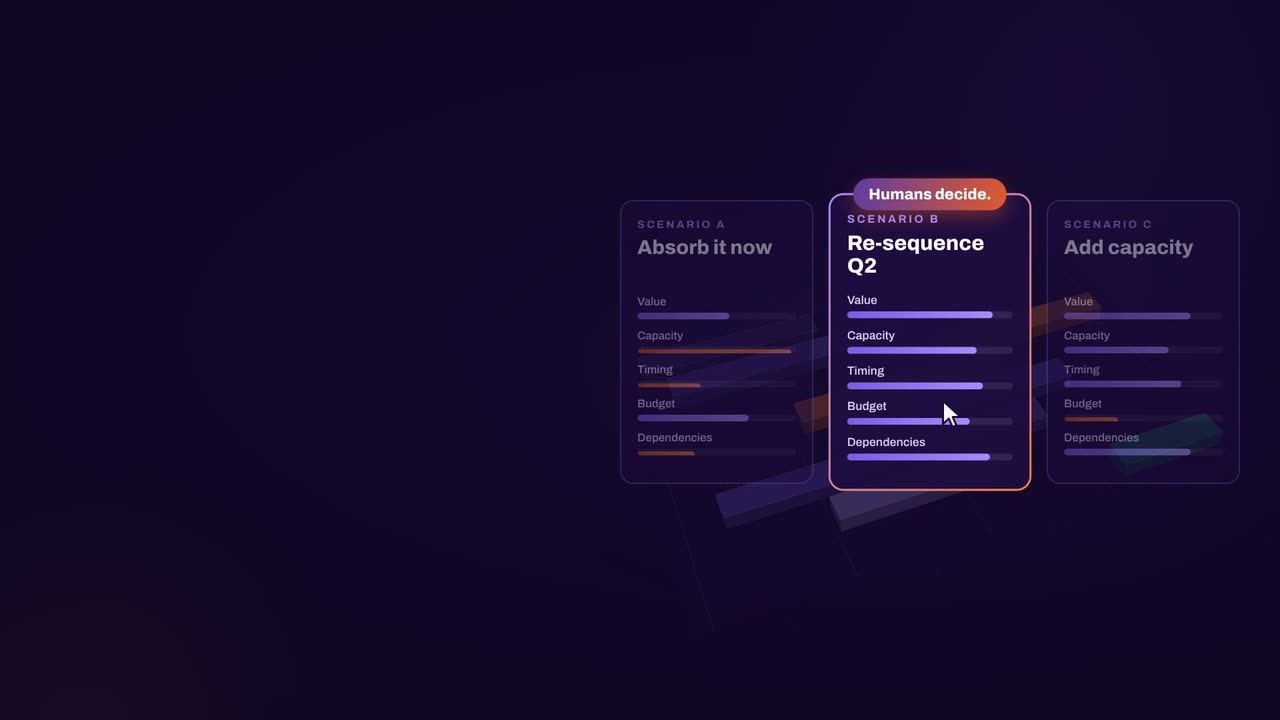
    Delay other projects, add capacity, or drop the lowest-value one. See each option side by side on cost, capacity, value and timing.

  4. Decide, then carry on

    Leadership chooses before the meeting ends. The gate process and its scorecards carry on as before, now working from a plan that matches the decision.

How aangine works

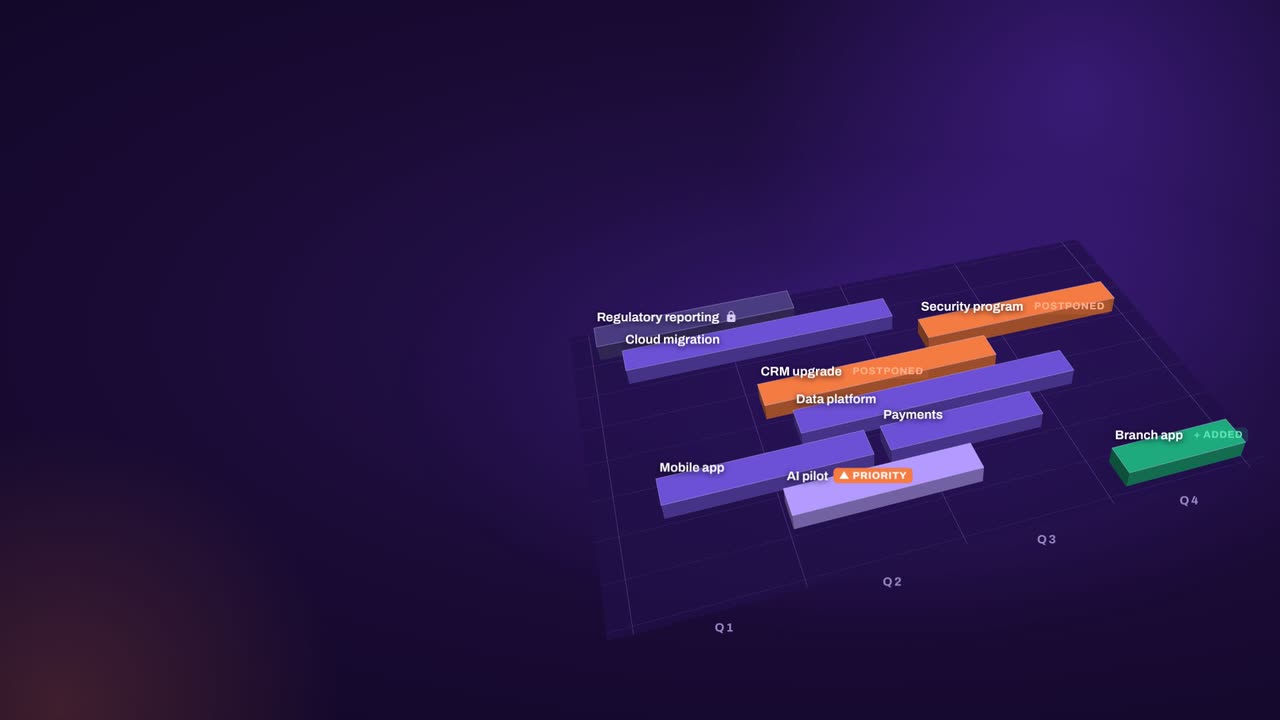
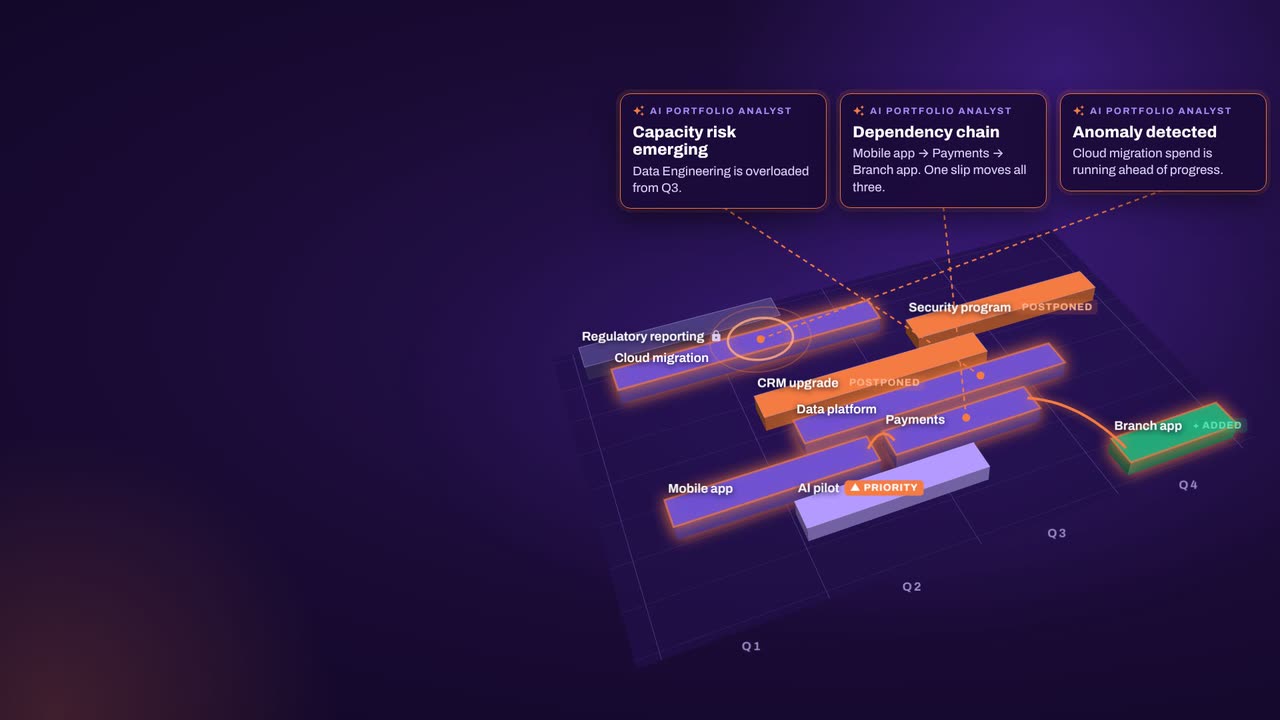
Algorithms calculate and optimize; AI discovers and highlights; humans decide.

aangine is the decision layer above the tools you already use. No rip & replace: it imports your plans, replans them in one click and pushes the approved plan back.

Algorithmscalculate and optimize
AIdiscovers and highlights
Humansdecide

The result: faster, clearer decisions when it matters most.

100xfaster portfolio decisions
9%budget savings
30%shorter product cycles
22%more strategic outcomes
80+%projects delivered on time

What our customers report in their case studies. Read the customer results

Keep exploring

Stage-Gate is a registered trademark of Stage-Gate Inc. Framework and method names are used to identify them only. aangine and Continuous Software are not affiliated with, or endorsed by, the owners of these frameworks and methods.

Book a demo

Fewer projects, moving faster.Decided with capacity in view.

Book a demo and bring your gate pipeline, your strategic buckets and the projects waiting for a Go. We’ll show what each decision commits and displaces in your portfolio.

Every Plan Meets Changeaangine in a minute · 58 seconds · sound on · captions

Transcript

Your plan is perfect. For about five minutes. Then change crashes the party! The CEO wants a new project… That big milestone? Two months late. Your best team? Fighting fires. And priorities? Flipped! Cue days of rework, and yet another final-final deck. Now watch what aangine does. One click. Done! The whole plan just rebalanced. Next time the CEO asks, can we do it? You’ll know. In seconds. Algorithms calculate and optimize. AI discovers and highlights. Humans decide. The result: faster, clearer decisions when it matters most. aangine is the decision layer. Keep your tools. Even your spreadsheets! No rip and replace! A hundred times faster portfolio decisions. Nine percent budget savings. Five stars on Gartner Peer Insights. Change will come. Be ready to decide. Scan the code. See it live! aangine.

Book your assessment