Book a demo

Try “replan”, “SAFe”, “budget cuts” or “public sector”. Press / to search from any page.

  1. Home
  2. Initiatives
  3. Project to product & agile at scale

Project to product

Your teams went agile.Your board still asks when.

Agile changes how teams deliver, not the questions leadership asks: which investments, which teams, which quarter, what trade-offs. Plan at team and roadmap level above Jira, Azure DevOps and Rally, without pulling project-style detail back onto product teams.

Explainer · 1:02Project to product: your teams went agileMore on aangine TV

The challenge

The questions stayed. The answers moved.

Teams now work in product lines and value streams, with their own backlogs and their own rhythm. The board still asks fair questions: what will we deliver this year, what will it cost, what happens if we add this initiative, and in which quarter? A new way of delivering does not make those questions go away. It changes where the answers have to come from.

Product funding does not remove trade-offs either; it moves them. Instead of choosing projects, leaders decide how much capacity each product line gets each quarter, and what gives way when a mandate arrives mid-cycle. That is still a portfolio decision, and it still needs demand, capacity, dependencies and budget in one view. Product teams, meanwhile, worry that the view will mean dragging their tasks back into a Gantt chart.

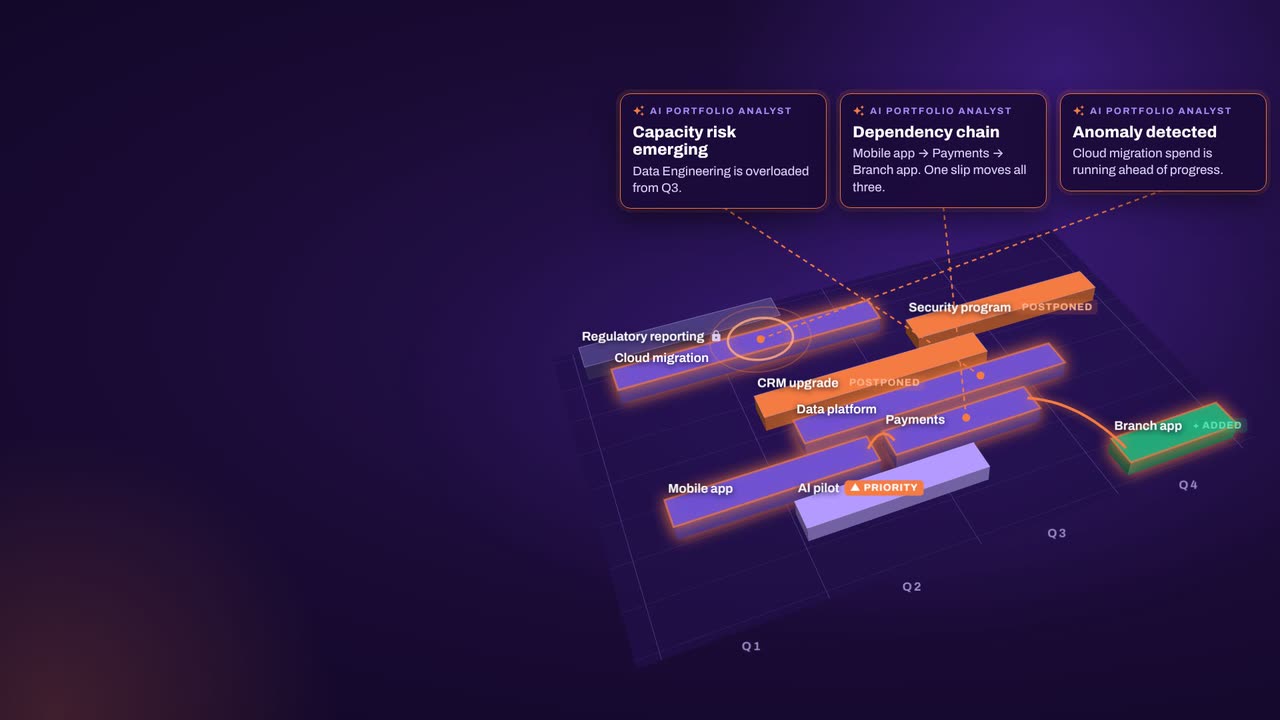
Most delays in a product organization happen between teams, not inside them. One team needs an API from another, which is waiting on a platform change from a third, which has just been pulled into an incident. A single late milestone ripples down the chain, and without a cross-team plan the ripple is noticed only when it reaches the customer.


How aangine helps

A leadership layer above the team tools

The teams already have strong delivery tools. What leaders need is a planning layer above them: aangine adds it, then pushes approved roadmaps back to Jira, Azure DevOps and Rally.

Team roadmaps, not task lists

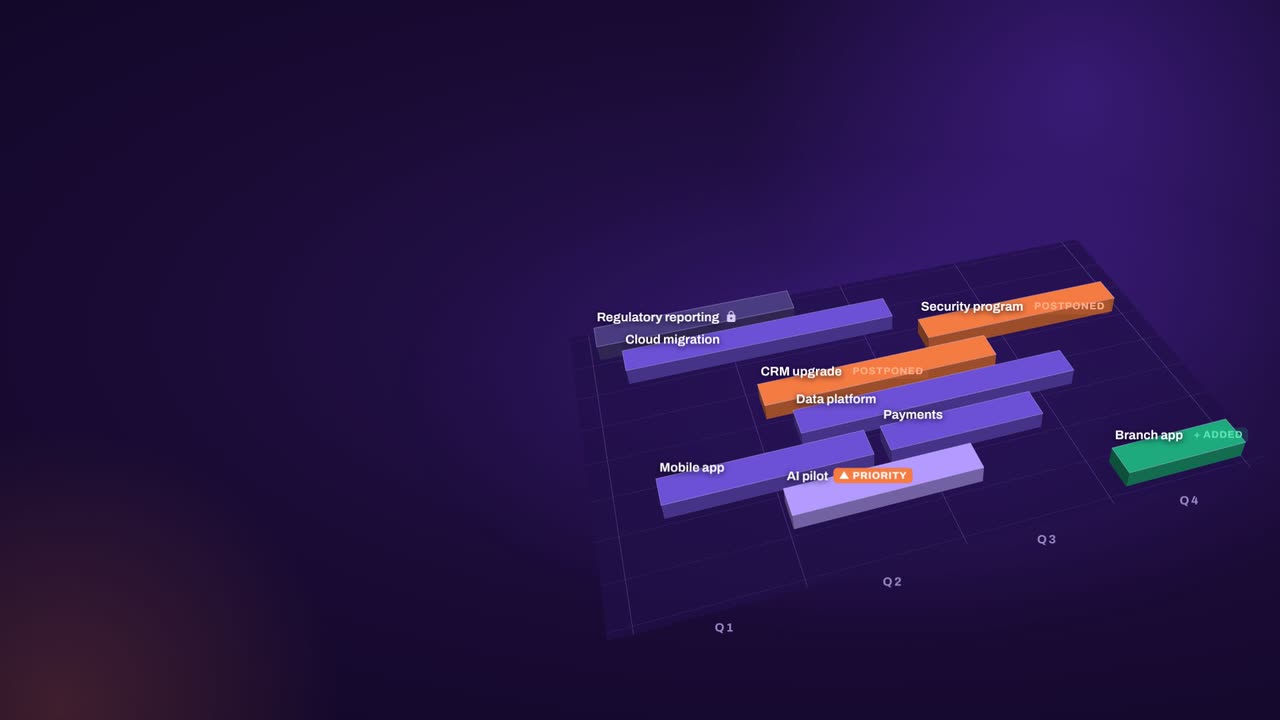
Leaders need to know which teams work on which investments, when capacity frees up and what a new priority would displace. Plan initiatives and work packages against teams, roles and skills by quarter. Product teams keep their backlogs and their way of working.

Fund product lines, see trade-offs

Allocate capacity and budget by product line, including the run and support work every team carries. When a mandate lands or priorities move, replan in one click and see what moved, which team ran out and what no longer fits this quarter.

Dependencies never broken

Dependencies and deadlines are planned across teams and never broken when the plan changes. Portfolio Journey maps what matters most, period by period, with the AI Portfolio Analyst flagging the critical dependency chain and teams heading for overload, so the ripple shows up in planning instead of at the customer.

Agility at the leadership level

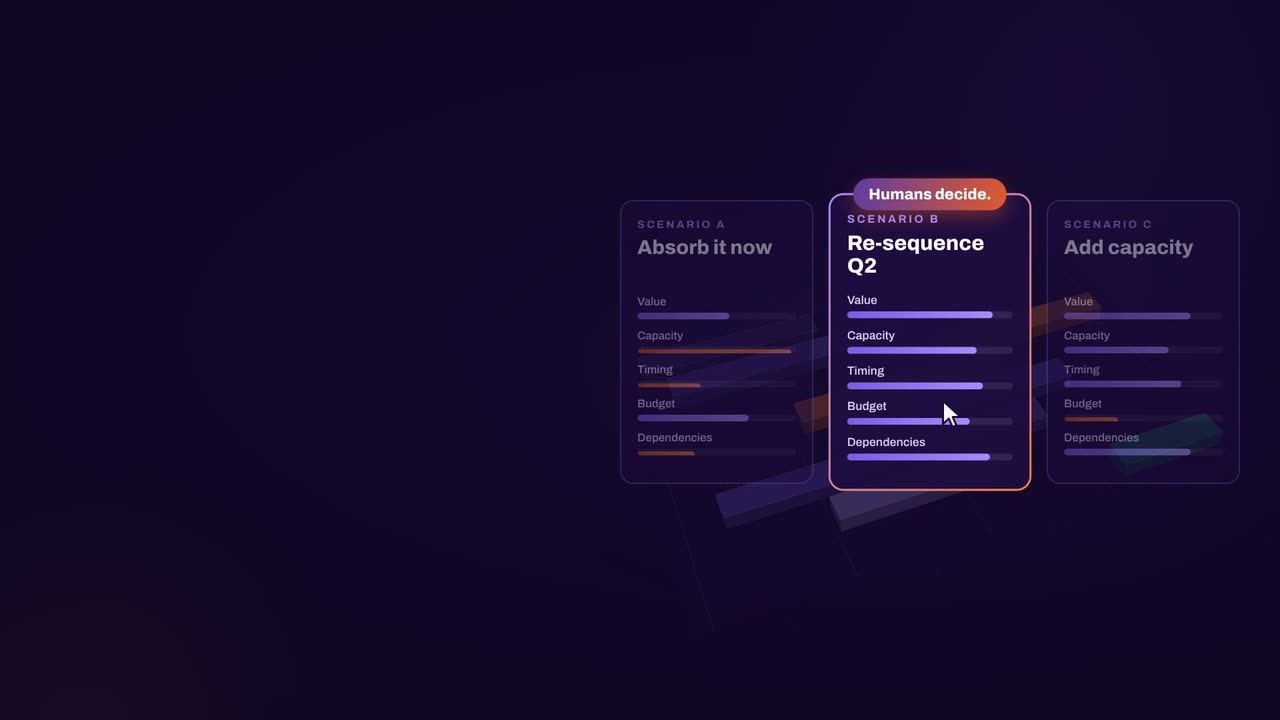
A new priority, a team reassigned, a shift in the market: compare scenarios side by side, decide in the room and push the decision down to the teams. Seeing cross-team capacity before committing helps leaders start fewer things at once and finish more of them.

In practice

A quarterly rhythm for product leaders

Leaders do not need task-level detail to plan well. Start with team capacity and roadmap-level estimates, and let the plan get sharper every quarter.

  1. Import teams and roadmaps

    Pull teams, initiatives and roadmap items from Jira, Azure DevOps and Rally, plus the spreadsheets where roadmaps often live. Rough sizing is enough to start.

  2. Set capacity by product line

    Decide how much team capacity each product line gets this quarter, including run and support work, and link each roadmap to objectives and priorities.

  3. Test the what-ifs

    Add a new initiative or mandate as a scenario. Compare it side by side with the current plan on cost, capacity, value and timing, and see which roadmaps move.

  4. Push the decision down

    Approve the scenario, set a baseline and send the updated roadmap back to the team tools. Review plan against actual next quarter, then replan.

How aangine works

Algorithms calculate and optimize; AI discovers and highlights; humans decide.

aangine is the decision layer above the tools you already use. No rip & replace: it imports your plans, replans them in one click and pushes the approved plan back.

Algorithmscalculate and optimize
AIdiscovers and highlights
Humansdecide

The result: faster, clearer decisions when it matters most.

100xfaster portfolio decisions
9%budget savings
30%shorter product cycles
22%more strategic outcomes
80+%projects delivered on time

What our customers report in their case studies. Read the customer results

Book a demo

Keep team autonomy.Give leadership the view.

Book a demo and bring your product lines, your team structure and the roadmap questions your board keeps asking. We will talk through how your leaders can plan above your teams’ tools.

Every Plan Meets Changeaangine in a minute · 58 seconds · sound on · captions

Transcript

Your plan is perfect. For about five minutes. Then change crashes the party! The CEO wants a new project… That big milestone? Two months late. Your best team? Fighting fires. And priorities? Flipped! Cue days of rework, and yet another final-final deck. Now watch what aangine does. One click. Done! The whole plan just rebalanced. Next time the CEO asks, can we do it? You’ll know. In seconds. Algorithms calculate and optimize. AI discovers and highlights. Humans decide. The result: faster, clearer decisions when it matters most. aangine is the decision layer. Keep your tools. Even your spreadsheets! No rip and replace! A hundred times faster portfolio decisions. Nine percent budget savings. Five stars on Gartner Peer Insights. Change will come. Be ready to decide. Scan the code. See it live! aangine.

Book your assessment