Book a demo

Try “replan”, “SAFe”, “budget cuts” or “public sector”. Press / to search from any page.

  1. Home
  2. Frameworks
  3. Hybrid delivery (agile and predictive together)

Hybrid delivery

Sprints and phase gates.One portfolio plan across both.

Agile teams and predictive projects draw on the same people, budget and release calendar. With aangine, a team’s epics or increments and a project’s phases sit in one plan against the same capacity and budgets, while every team keeps its own tool.

Book a demo

The planning gap

Hybrid gives teams freedom. It gives the portfolio two languages.

Teams choose the approach that fits the work, and that is healthy. The agile teams talk in sprints, increments and backlogs. The predictive projects talk in phases, milestones and gates. Both draw on the same architects, the same budget and the same release calendar. When leadership asks whether the organization can take something on, someone has to translate both into one answer, usually a PMO analyst who then spends a week on a spreadsheet.

The seams are where hybrid delivery gets tested. Picture a customer app team working in sprints, with integration work that a predictive core system replacement needs for its next phase gate and a regulatory go-live. A security fix jumps the backlog and the integration work moves out several sprints. Perfectly reasonable at team level. At portfolio level, the gate is at risk, the vendor’s team is booked and other projects waiting on the core system move too.

Funding adds a second seam. Many hybrid portfolios fund persistent teams for a period and projects for a scope, and count them in different places. The tools differ too: agile teams in Jira, Azure DevOps or Rally, predictive projects in Planview, Broadcom Clarity, OpenText PPM, ServiceNow SPM or MS Project, and somewhere an Excel file. Each tool is right for its team. None of them alone answers what the organization can take on next.


How aangine works with hybrid delivery

One plan above every method and tool

Nobody changes how their team works: aangine does not run sprints, backlogs, boards or schedules. It plans the portfolio above them, compares scenarios and shows the trade-offs across both ways of working.

Plan each at its own level

Plan a team as a team, a project as a project, and a role where people are shared. Epics or quarterly increments and predictive phases sit in one plan against the same capacity pools and budget lines. A project type and an effort estimate are enough to start.

Every consequence across both worlds

When a sprint decision moves work that a phase gate depends on, every dependent project and shared team it affects is visible. One click replans the portfolio, holding deadlines and locked work, and the options sit side by side: protect the gate with capacity, accept the slip or move something else.

Two funding models, one plan

Persistent teams funded for a period and projects funded for a scope live in one plan, with budget lines, CAPEX, OPEX and labor cost rates for both. When a project needs engineers from a persistent team, the impact on that team’s roadmap is visible before anyone agrees to it.

Keep your tools, both ways

Teams keep their backlogs in Jira, Azure DevOps or Rally. The PMO keeps its PPM, and plans flow both ways: aangine imports work, capacity and actuals, then pushes the approved plan back. No rip & replace, and no consolidation project.

In practice

Persistent teams and projects in one capacity plan

Planning breaks when the two funding models are counted in different places. This is a practical way to bring them together in aangine.

  1. Model teams as pools

    Plan persistent teams as capacity pools, with their epics or quarterly objectives as portfolio items against that capacity, in the same plan as projects.

  2. Resource projects by role

    Plan project demand by role or skill, including the specialists who serve both worlds, and split operations and service work from change work, period by period.

  3. Put budgets in one place

    Budget lines, CAPEX, OPEX and labor cost rates sit together for teams and projects alike, so cost and capacity are read from the same plan.

  4. Compare funding scenarios

    Ask what it takes to deliver more of the demand, or all of it, and see which teams or roles are short before anyone commits.

How aangine works

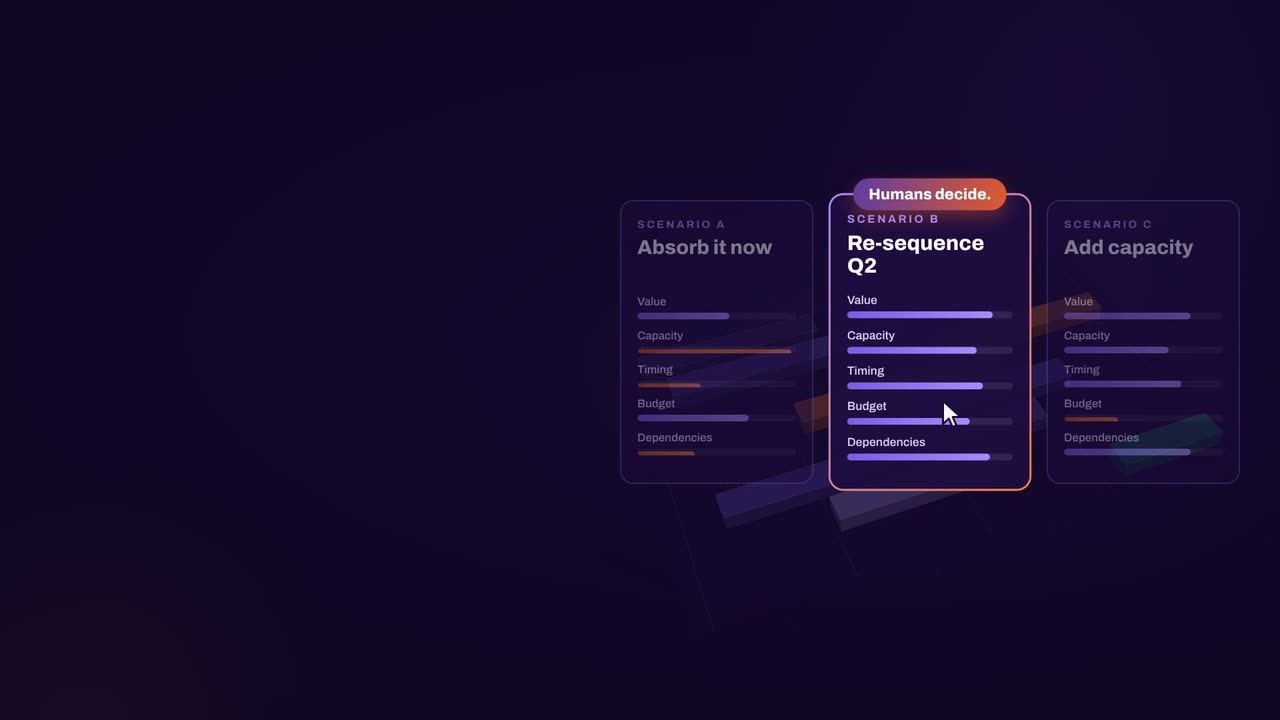
Algorithms calculate and optimize; AI discovers and highlights; humans decide.

aangine is the decision layer above the tools you already use. No rip & replace: it imports your plans, replans them in one click and pushes the approved plan back.

Algorithmscalculate and optimize
AIdiscovers and highlights
Humansdecide

The result: faster, clearer decisions when it matters most.

100xfaster portfolio decisions
9%budget savings
30%shorter product cycles
22%more strategic outcomes
80+%projects delivered on time

What our customers report in their case studies. Read the customer results

Keep exploring

Framework and method names are used to identify them only. aangine and Continuous Software are not affiliated with, or endorsed by, the owners of these frameworks and methods.

Book a demo

Different methods.One plan for the portfolio.

Book a demo and bring your team roadmaps and project phases, from whichever tools hold them. We’ll show both in one plan, against your real capacity and budgets.

Every Plan Meets Changeaangine in a minute · 58 seconds · sound on · captions

Transcript

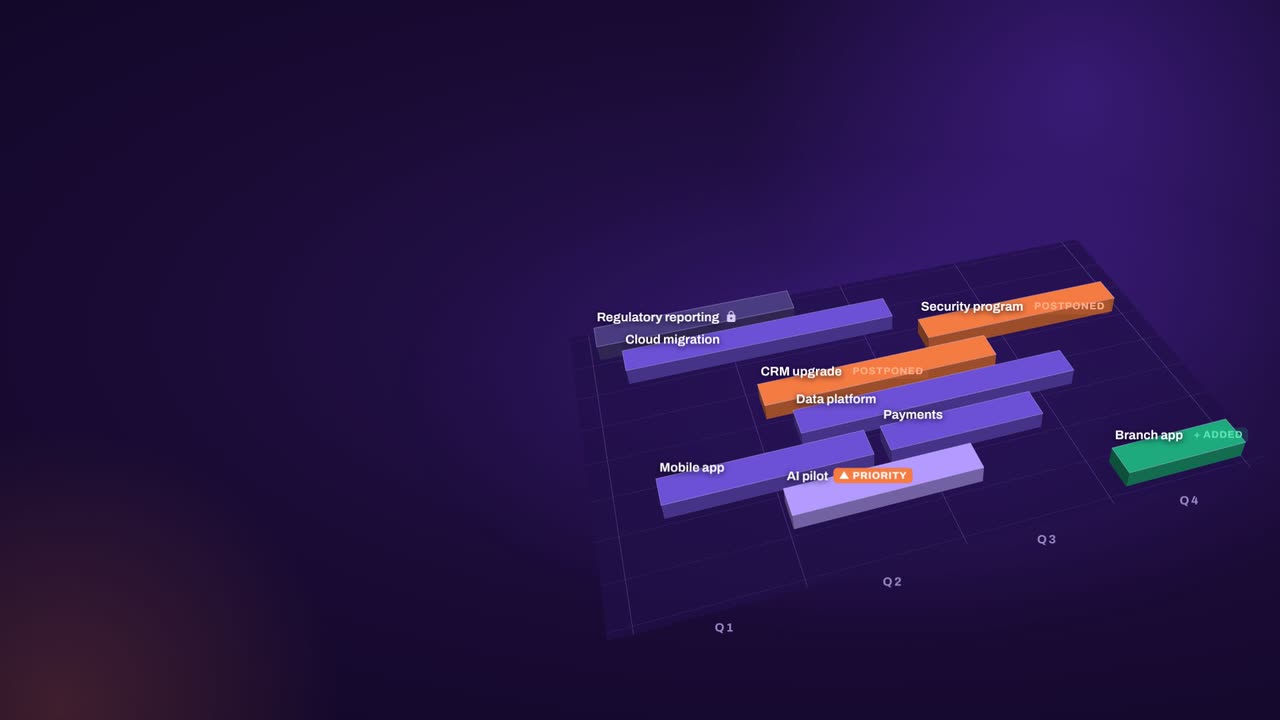
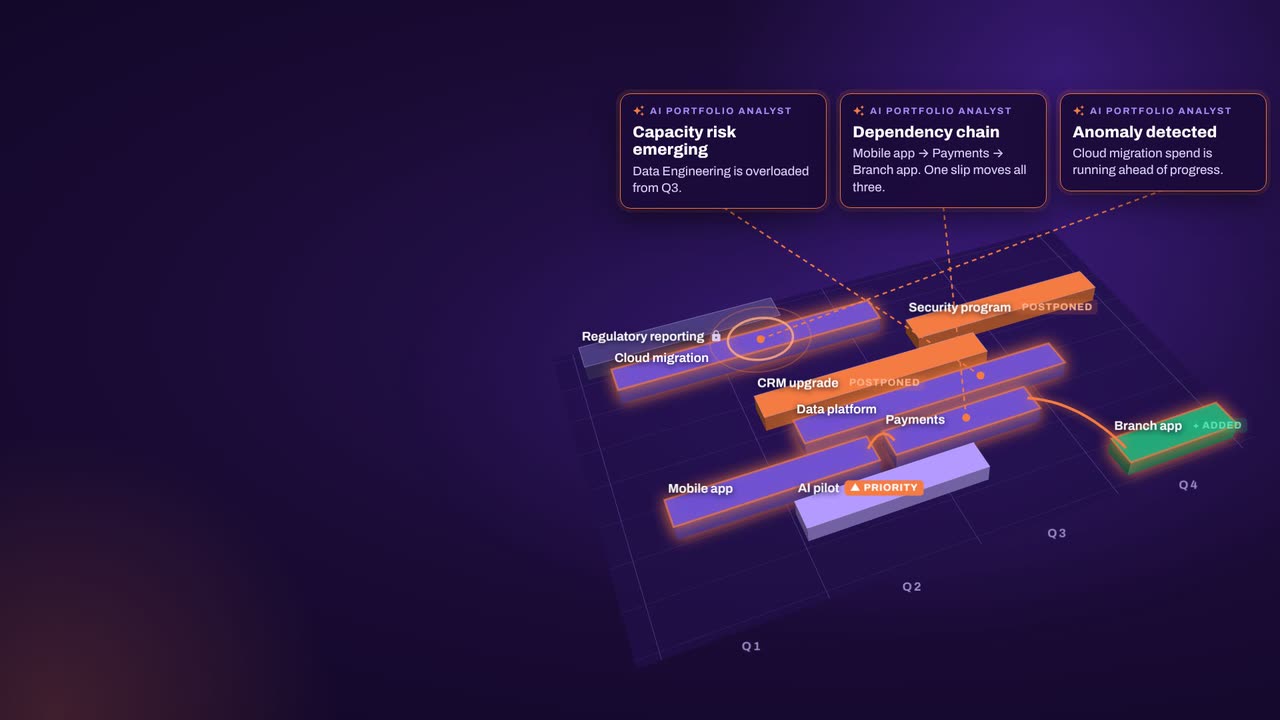
Your plan is perfect. For about five minutes. Then change crashes the party! The CEO wants a new project… That big milestone? Two months late. Your best team? Fighting fires. And priorities? Flipped! Cue days of rework, and yet another final-final deck. Now watch what aangine does. One click. Done! The whole plan just rebalanced. Next time the CEO asks, can we do it? You’ll know. In seconds. Algorithms calculate and optimize. AI discovers and highlights. Humans decide. The result: faster, clearer decisions when it matters most. aangine is the decision layer. Keep your tools. Even your spreadsheets! No rip and replace! A hundred times faster portfolio decisions. Nine percent budget savings. Five stars on Gartner Peer Insights. Change will come. Be ready to decide. Scan the code. See it live! aangine.

Book your assessment