Book a demo

Try “replan”, “SAFe”, “budget cuts” or “public sector”. Press / to search from any page.

  1. Home
  2. Initiatives
  3. Market shocks & rapid response

Market shocks

The market moved.Decide while the window is open.

A sudden shift in costs, demand or competition, and leadership wants a new plan within days. With one live plan, every what-if gets answered in the room, and the decision is made while it still matters.

Explainer · 1:02Market shocks: a new plan by MondayMore on aangine TV

The situation

Leadership needs a plan by Monday. Building one takes weeks.

Business isn’t chess: the board doesn’t stay still while you think. Costs change overnight, a competitor launches early, demand falls in one region and rises in another. Leadership needs a new plan within days, but rebuilding one by hand takes the organization weeks. That gap is where options are lost, because every what-if that takes days to answer arrives after the moment to act has passed.

The hardest part is seeing how far one change travels. A supplier can’t deliver, so a product launch slips. The launch team can’t move on to its next initiative, marketing budget shifts into another quarter, a dependent project in another business unit waits and a customer commitment comes under pressure. The chain crosses projects, budgets, teams and timelines, so nobody sees all of it in time.

Under time pressure, most leadership teams end up debating one plan: the one somebody had time to build. Prediction rarely helps, since few shocks are foreseen. What helps is readiness: a plan that is live rather than a document, options that can be compared honestly, and a decision made while it still counts.


“…any possible changes can be made directly at the meeting with our business stakeholders.”

Gartner Peer Insights — 5-Star Review
Project Portfolio Manager, Telecommunications

How aangine helps

Answer the executive team’s questions in the room

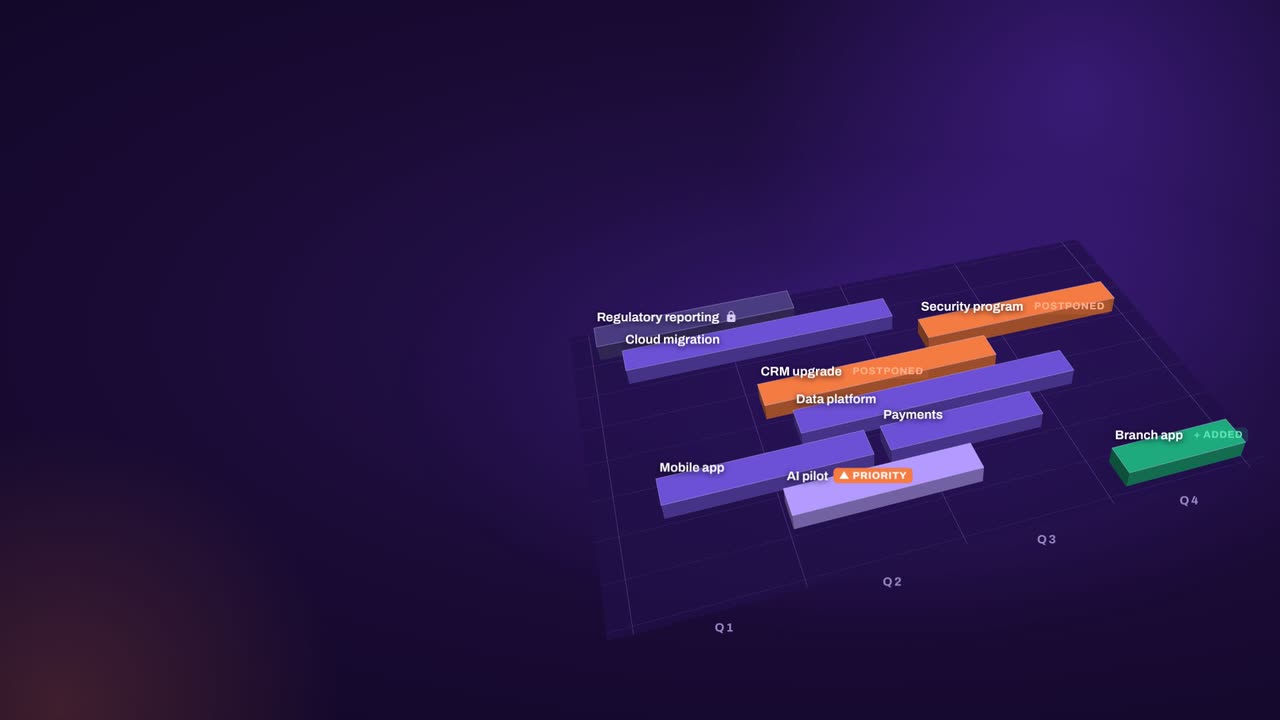
One live plan connects demand, capacity, budgets and strategy, imported from the PPM and delivery tools you already use, such as Planview, OnePlan, Jira or Excel. When the market moves, the plan moves with it, and the approved version goes back to those tools.

The shock as a scenario

Pause, accelerate or swap work and see the result right away. What capacity frees up if non-essential projects pause? What slips if the cost program speeds up? Which investments should stop if demand drops in one region? Each question becomes a scenario, not a request for analysis.

The ripple, calculated

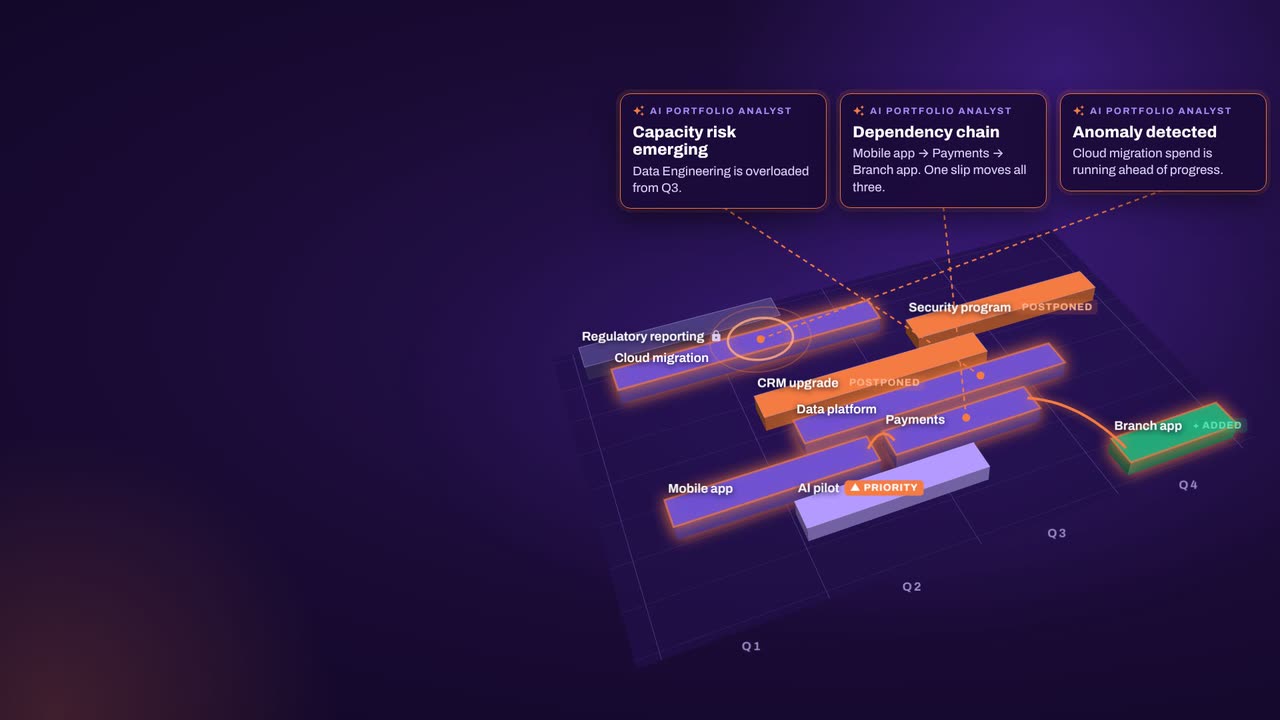
When a change enters the plan, the algorithms calculate its effect across the portfolio and show every affected team, budget and dependency. Locked and fixed-date commitments stay where they are, dependencies hold, and the plan names the team or budget that ran out.

Options side by side

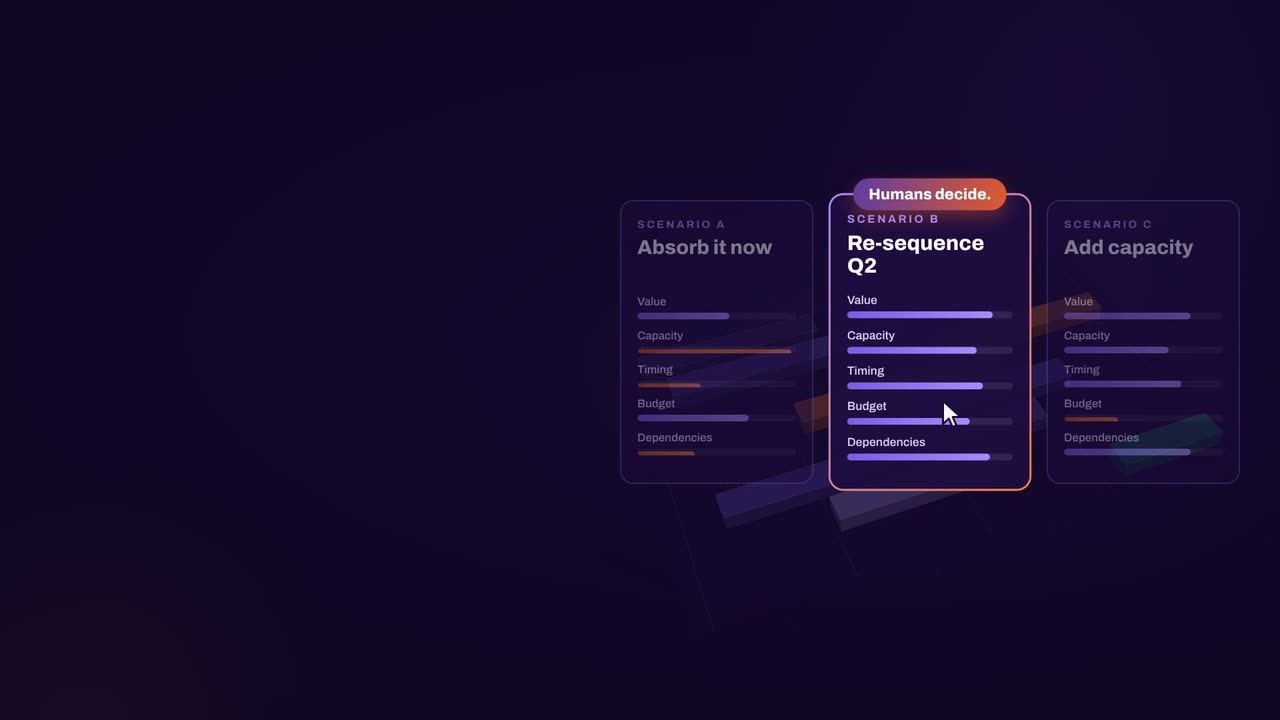
Compare scenarios on cost, capacity, value and timing in the same meeting, instead of debating the only plan someone had time to build. Once leadership picks one, it is ready to execute the same day and goes back to the delivery tools.

Signals worth a second look

The AI Portfolio Analyst highlights the risks, anomalies and connections a shock creates, writes the summary for the executive team and ranks recommendations. Charts and numbers come from aangine’s algorithms and real data. People make the call.

In practice

Three scenarios, one meeting

When the market shifts, put three options on the table instead of one, each built from the same live plan and ready to compare before the meeting ends.

  1. Defend the core

    Protect core revenue and pause discretionary work. See what capacity and budget that frees, and which commitments stay locked.

  2. Adapt to the shift

    Redirect capacity to the new opportunity or the shifted demand. See which teams move, what slips elsewhere and when the new work can start.

  3. Accelerate the bets

    Push strategic bets forward while others hold back. See the extra load on teams and budgets, and the dependencies that set the pace.

  4. Decide the same day

    Compare the three on cost, capacity, value and timing. Leadership picks one, the plan is saved as a baseline and goes to delivery that day.

How aangine works

Algorithms calculate and optimize; AI discovers and highlights; humans decide.

aangine is the decision layer above the tools you already use. No rip & replace: it imports your plans, replans them in one click and pushes the approved plan back.

Algorithmscalculate and optimize
AIdiscovers and highlights
Humansdecide

The result: faster, clearer decisions when it matters most.

100xfaster portfolio decisions
9%budget savings
30%shorter product cycles
22%more strategic outcomes
80+%projects delivered on time

What our customers report in their case studies. Read the customer results

Book a demo

Change will come.Be ready to decide.

Book a demo and bring the shift you are facing, or the one you want to be ready for, with the options your leadership team is weighing. We’ll model them as live scenarios.

Every Plan Meets Changeaangine in a minute · 58 seconds · sound on · captions

Transcript

Your plan is perfect. For about five minutes. Then change crashes the party! The CEO wants a new project… That big milestone? Two months late. Your best team? Fighting fires. And priorities? Flipped! Cue days of rework, and yet another final-final deck. Now watch what aangine does. One click. Done! The whole plan just rebalanced. Next time the CEO asks, can we do it? You’ll know. In seconds. Algorithms calculate and optimize. AI discovers and highlights. Humans decide. The result: faster, clearer decisions when it matters most. aangine is the decision layer. Keep your tools. Even your spreadsheets! No rip and replace! A hundred times faster portfolio decisions. Nine percent budget savings. Five stars on Gartner Peer Insights. Change will come. Be ready to decide. Scan the code. See it live! aangine.

Book your assessment