Book a demo

Try “replan”, “SAFe”, “budget cuts” or “public sector”. Press / to search from any page.

  1. Home
  2. Frameworks
  3. PMI standards: PMBOK Guide, program and portfolio management

PMI standards

The standards define the decisions.The plan shows what they cost.

For PMOs and governance boards that follow PMI’s portfolio, program and project standards, aangine is the planning layer for the decisions they describe: what to fund, start, pause or stop, tested against real capacity and budget first.

Explainer · 1:02PMI standards: governance meets on a cadenceMore on aangine TV

The planning gap

The board meets on a cadence. Change arrives every week.

PMI’s Standard for Portfolio Management sets out portfolio governance: who decides what gets funded, what starts, what pauses and what stops. The structure is sound. The pressure comes from timing. A new mandate lands, a program slips a phase, a shared platform team is pulled into an incident, and by the time the board meets, the pack describes a portfolio that no longer exists. The first half hour goes on agreeing what is true.

Capacity and capability management asks a simple question: can the people we have deliver the work we have approved, in the order we approved it? In many organizations the answer still lives in a spreadsheet that one person understands, and it rarely counts the day job. Operations and service work take their share every period, so a plan that ignores them is overloaded before it starts.

The hardest moments come at phase gates and in programs. A gate can judge the project in front of it, but the real question is about everything else: who builds the next phase, what has to wait, whether the budget still holds. In a program, one slipped project can delay a dependent platform, a process change and the first benefits, and leave a shared team double-booked across programs.


How aangine works with PMI standards

A planning layer for the decisions the standards describe

Your lifecycle, gate criteria and project practices stay as they are, in your PPM and delivery tools. Above them, one live plan holds projects, programs and phases with capacity, budget and strategy, and approved plans flow back.

Governance from the live plan

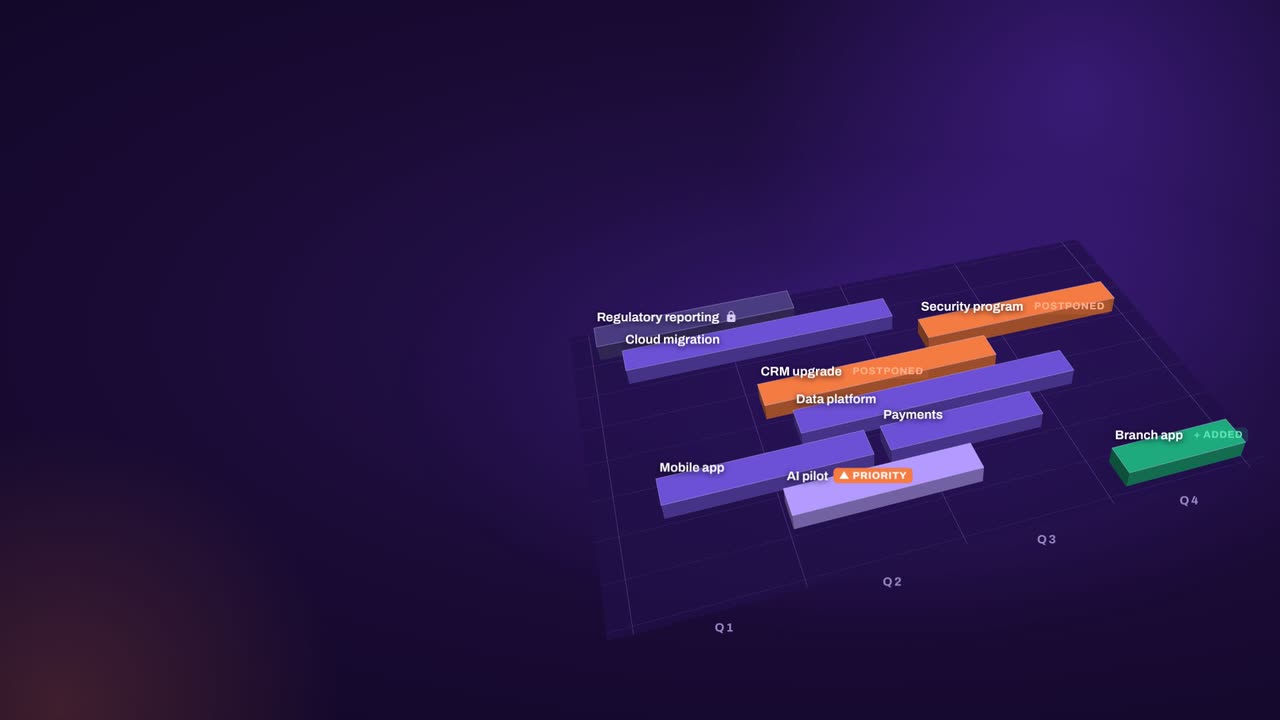
Every project, program and phase sits in one plan against capacity by team, role or person, and against budget. Ask “what if we approve this?” and the plan replans in one click: overloads cleared, dependencies and deadlines kept, locked and mandatory work untouched, and the team or budget line that ran out named.

Capacity and capability, kept current

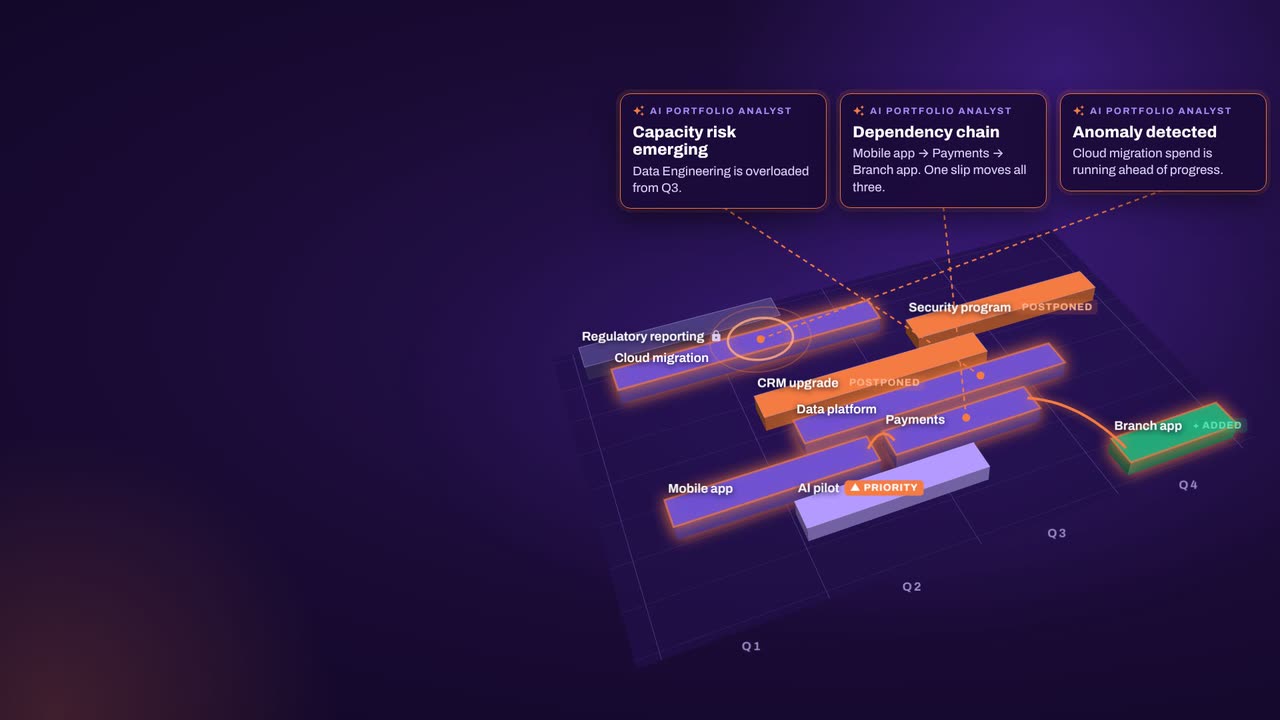
Plan at the level you can trust: teams in some areas, roles or skills in others, named people only where it matters. Operations and service work are counted period by period, so over-utilized pools show across the timeline before they become missed milestones, and the AI Portfolio Analyst highlights them in plain language.

Value decided before money is spent

Strategy connects to delivery: priorities, objectives and key results, then the initiatives and projects that serve them. Rank demand by business unit or score it with several evaluators, let the algorithms build the plan that fits, and drill into why an initiative cannot start: capacity, budget or a dependency.

Benefits protected in the portfolio

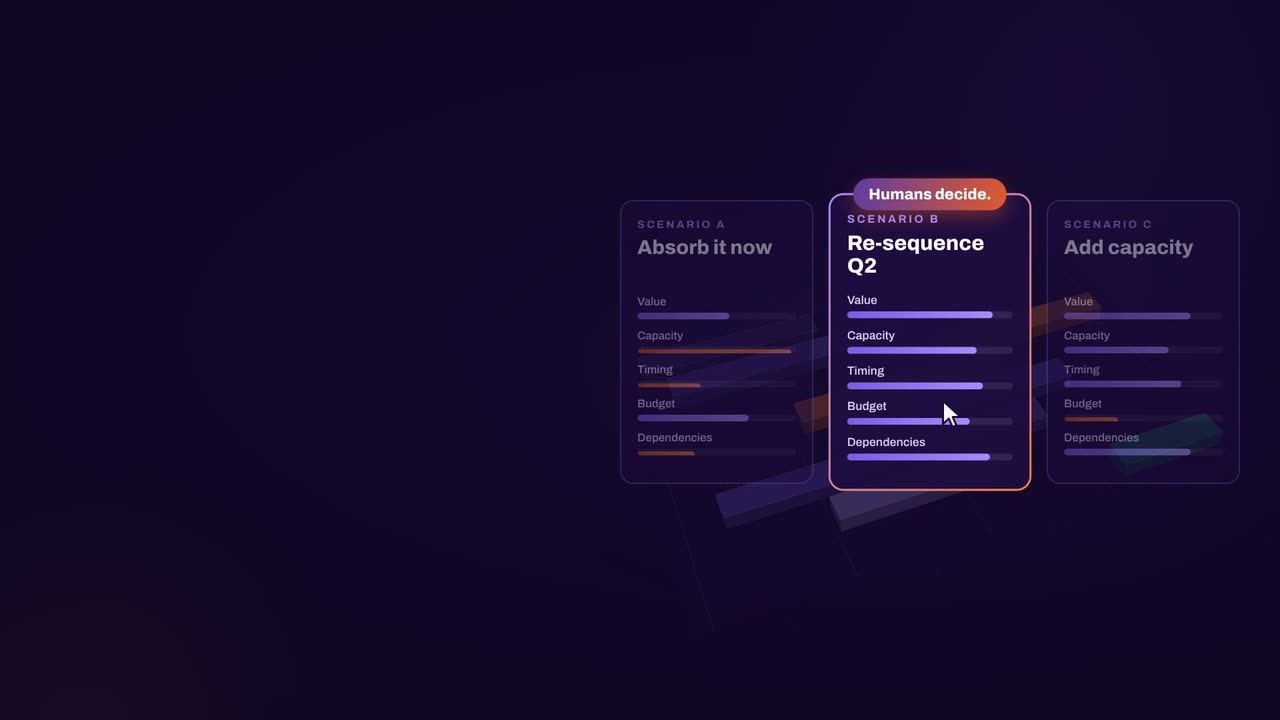
PMI’s Standard for Program Management puts benefits at the center. Put a slip into the live plan and every dependent project, shared team and program milestone it touches shows at once. Compare re-sequencing with adding capacity, side by side, and take the sponsor a clear ask: to keep the benefits date, this is what it takes.

In practice

A phase gate with its consequences attached

The lifecycle tells the board when to decide. The plan should tell it what the decision costs. This is how a gate review runs with aangine.

  1. Load the next phase

    Before the gate, put the next phase into the live plan with the estimates you have. Data quality improves as you plan, so rough effort by role is enough to start.

  2. See what it displaces

    Replan in one click. See which projects move, which team or budget line runs out, and whether the portfolio still fits this year’s budget.

  3. Set out the options

    Put the options side by side and compare them on cost, capacity, value and timing, so the board weighs the whole portfolio, not one project.

  4. Decide and push back

    The board decides. Save the agreed plan as a baseline, track plan against actual, and push the approved plan back to your PPM and delivery tools.

How aangine works

Algorithms calculate and optimize; AI discovers and highlights; humans decide.

aangine is the decision layer above the tools you already use. No rip & replace: it imports your plans, replans them in one click and pushes the approved plan back.

Algorithmscalculate and optimize
AIdiscovers and highlights
Humansdecide

The result: faster, clearer decisions when it matters most.

100xfaster portfolio decisions
9%budget savings
30%shorter product cycles
22%more strategic outcomes
80+%projects delivered on time

What our customers report in their case studies. Read the customer results

Keep exploring

PMI and PMBOK are registered marks of the Project Management Institute, Inc. Framework and method names are used to identify them only. aangine and Continuous Software are not affiliated with, or endorsed by, the owners of these frameworks and methods.

Book a demo

Bring your next governance pack.Leave with a tested decision.

Book a demo and bring your phase-gate pipeline, your capacity and capability picture and the decision on the next board agenda. We’ll work through your portfolio, not a generic one.

Every Plan Meets Changeaangine in a minute · 58 seconds · sound on · captions

Transcript

Your plan is perfect. For about five minutes. Then change crashes the party! The CEO wants a new project… That big milestone? Two months late. Your best team? Fighting fires. And priorities? Flipped! Cue days of rework, and yet another final-final deck. Now watch what aangine does. One click. Done! The whole plan just rebalanced. Next time the CEO asks, can we do it? You’ll know. In seconds. Algorithms calculate and optimize. AI discovers and highlights. Humans decide. The result: faster, clearer decisions when it matters most. aangine is the decision layer. Keep your tools. Even your spreadsheets! No rip and replace! A hundred times faster portfolio decisions. Nine percent budget savings. Five stars on Gartner Peer Insights. Change will come. Be ready to decide. Scan the code. See it live! aangine.

Book your assessment