Book a demo

Try “replan”, “SAFe”, “budget cuts” or “public sector”. Press / to search from any page.

  1. Home
  2. Roles
  3. Chief Technology Officer

For the Chief Technology Officer

Roadmap commitmentsengineering can stand behind.

Plan at team and roadmap level, above Jira, Azure DevOps and Rally: capacity by team and skill, cross-team dependencies, and the balance between features, platform work and tech debt. Engineers keep their way of working.

Book a demo

The challenge

Honest estimates, and the date still slips

The business asks for a date, each team gives an honest estimate, and the date slips anyway. Usually the estimates weren’t the problem. The dependencies were: one team waits for an API from another, which needs a platform change from a third, which just lost a week to an incident. No single backlog shows that chain, so no one sees it until it breaks.

Platform work loses most prioritization debates. It matters as much as any feature, but it is invisible next to a request with a sponsor, so debt grows and delivery slows. Migrations compete for the same architects and testers as the roadmap around them. And every AI initiative now wants the same data engineers, ML specialists and architects, who end up assigned to whoever asks first.

Engineering also reorganizes more often than most functions. Platform teams split, stream-aligned teams form, squads merge. The roadmap rarely follows for months: commitments still point at teams that no longer exist, and capacity numbers stop meaning anything. The usual fix, more status reporting from engineers, pulls teams away from the tools they work in and still leaves leadership guessing.


How aangine helps

Plan at the level leadership needs, not the level engineers work at

Plan at portfolio, project or phase level, with teams, roles or people chosen per scenario. Backlogs stay in your delivery tools, and approved plans flow back to them. No rip & replace.

Dependencies that hold

Plan dependencies and deadlines across teams in one place. When the plan rebalances, they are never broken, and when work doesn’t fit, aangine explains why: which team ran out, which budget fell short. A date becomes a commitment you can defend.

A protected line for platform work

Give platform and tech-debt work its own allocation or work category, and lock what can’t move. The allocation is respected every time the plan rebalances, and the business sees exactly what a new feature request would push out, platform work included.

Scarce skills, planned openly

AI initiatives are planned like any other demand: value, priority, skills, budget and dependencies, in the same plan as everything else. See what scaling a pilot would take in data engineers and architects, and what it would push out, before you choose which ones scale.

Reorganize without losing the roadmap

When team topology changes, re-map the work onto the new teams and skills and replan in one click. Overloads, gaps and at-risk dates appear immediately, while there is still time to adjust the reorganization or the roadmap.

In practice

Lock the migration, replan the rest

A platform migration rarely fails on its own. It fails by starving everything around it, or by being starved. A cleaner sequence keeps both in view.

  1. Put it in the plan

    Bring the migration into the same plan as the rest of the portfolio, imported from the tools where its work is tracked today.

  2. Lock the milestones

    Lock the migration’s milestones so no replan can move them, and model its phases by role: analysis, build and test need different people at different times.

  3. Replan around it

    Replan everything else in one click and see which teams are squeezed in which quarter, and what else needs the same architects and testers.

  4. Replan again when it slips

    When the migration moves, replan again. Dependencies hold, the knock-on effects are visible, and the approved plan goes back to Jira, Azure DevOps or Rally.

How aangine works

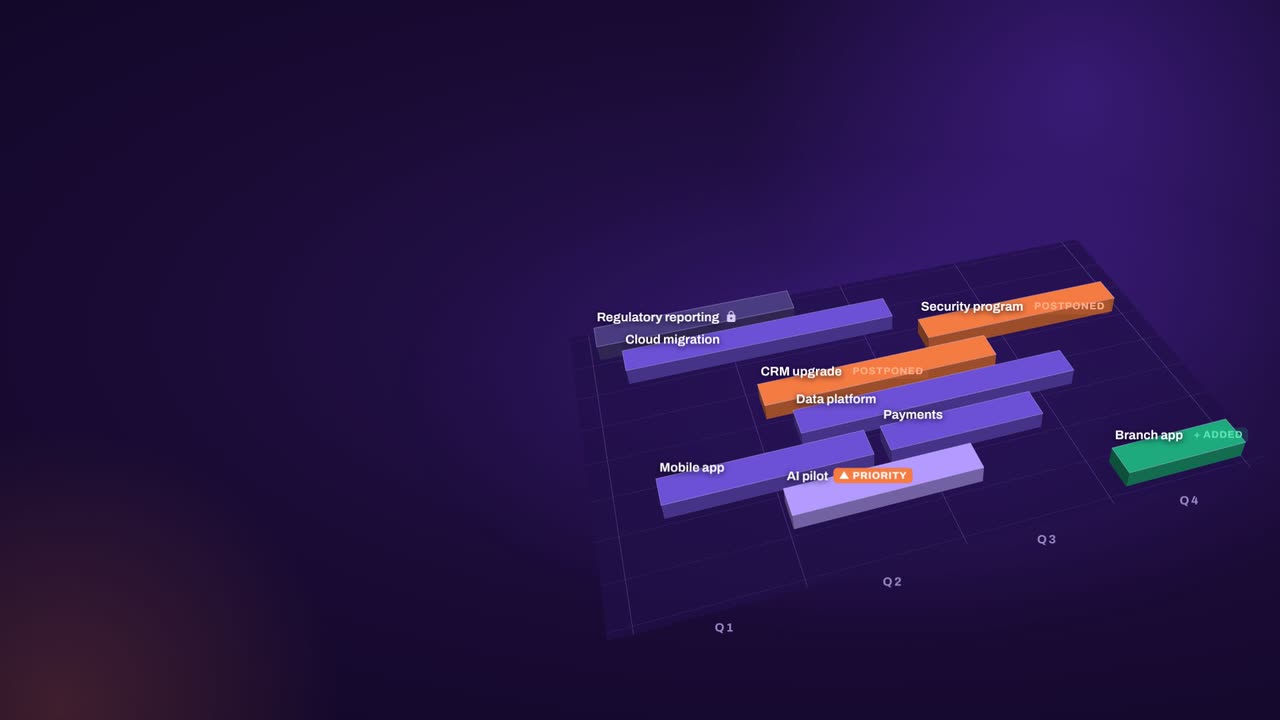
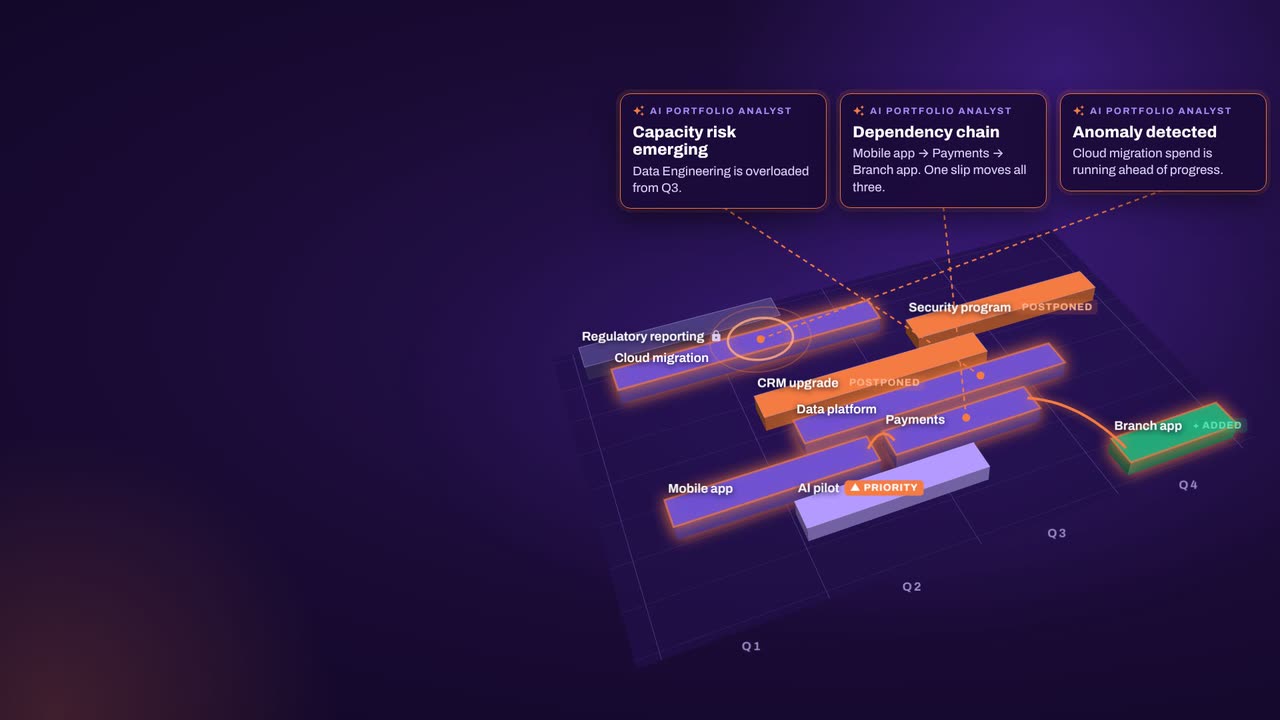
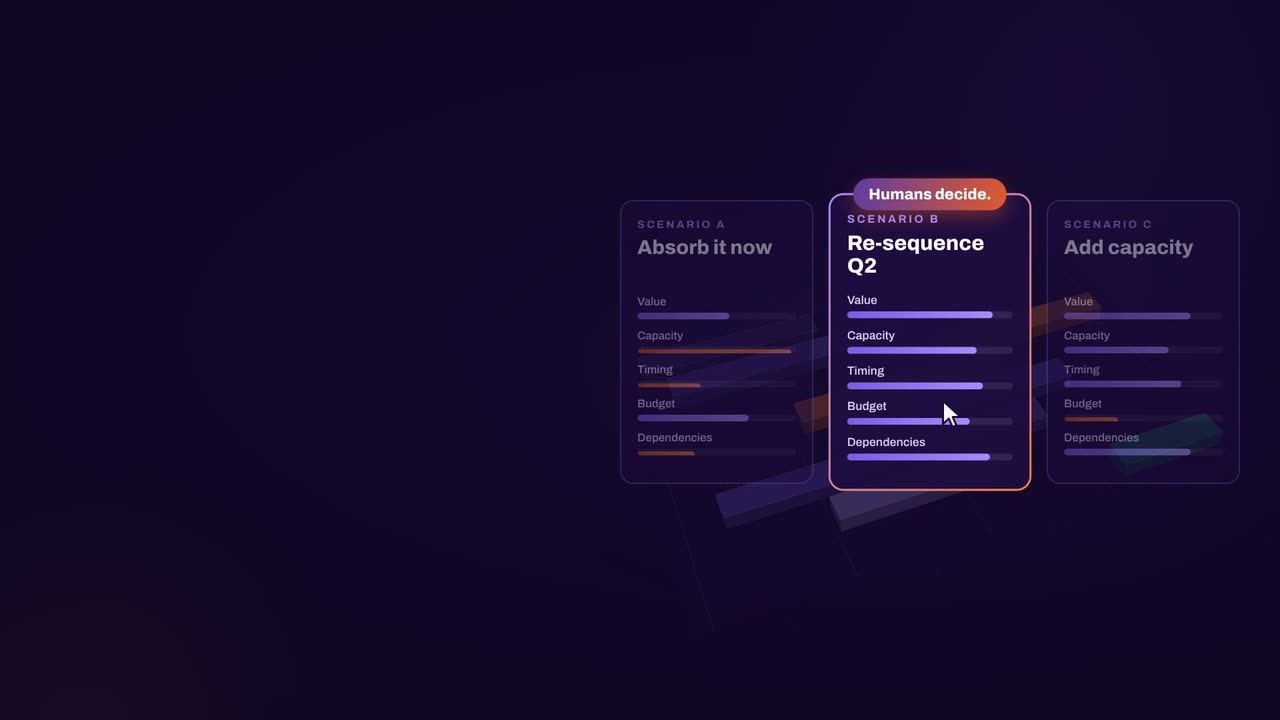
Algorithms calculate and optimize; AI discovers and highlights; humans decide.

aangine is the decision layer above the tools you already use. No rip & replace: it imports your plans, replans them in one click and pushes the approved plan back.

Algorithmscalculate and optimize
AIdiscovers and highlights
Humansdecide

The result: faster, clearer decisions when it matters most.

100xfaster portfolio decisions
9%budget savings
30%shorter product cycles
22%more strategic outcomes
80+%projects delivered on time

What our customers report in their case studies. Read the customer results

Book a demo

Your next roadmap commitment,tested before you make it.

Book a demo to talk through your roadmap, the platform work competing with it and the scarce skills everyone wants, and see the trade-offs at team and roadmap level.

Every Plan Meets Changeaangine in a minute · 58 seconds · sound on · captions

Transcript

Your plan is perfect. For about five minutes. Then change crashes the party! The CEO wants a new project… That big milestone? Two months late. Your best team? Fighting fires. And priorities? Flipped! Cue days of rework, and yet another final-final deck. Now watch what aangine does. One click. Done! The whole plan just rebalanced. Next time the CEO asks, can we do it? You’ll know. In seconds. Algorithms calculate and optimize. AI discovers and highlights. Humans decide. The result: faster, clearer decisions when it matters most. aangine is the decision layer. Keep your tools. Even your spreadsheets! No rip and replace! A hundred times faster portfolio decisions. Nine percent budget savings. Five stars on Gartner Peer Insights. Change will come. Be ready to decide. Scan the code. See it live! aangine.

Book your assessment