The challenge
Fewer fixed numbers means more decisions
Beyond Budgeting starts from a point we share: the world does not hold still for an annual plan. A traditional budget tries to do three jobs with one number: set targets, forecast and allocate resources. Separating them lets each do its job. Targets can stretch, forecasts can stay honest, and resources are made available when they are needed, with no annual envelope to defend and no use-it-or-lose-it spending at year end.
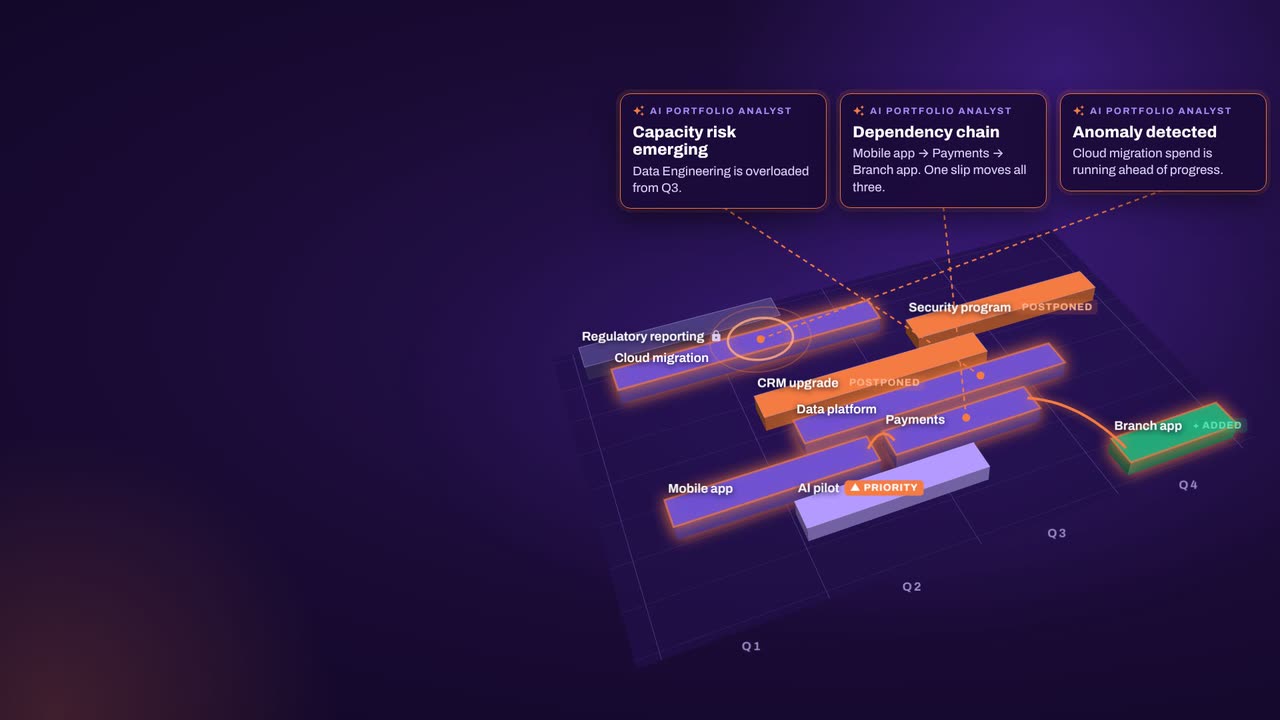
The principles also ask more of the plan underneath them. A project can come forward in any month, and whether it goes ahead depends on its quality and on the capacity available at that moment. Money is easy to check. People are not. A strong case can still land on teams that are already full, and without a fixed budget to point at, every decision needs a quick, credible view of what else is in flight.
The rolling forecast depends on the same view. Finance can roll it forward every quarter, always looking the same distance ahead, but if the project portfolio is still the plan approved at the start of the year, the forecast rolls forward on stale assumptions. And when an event arrives, such as a major customer win, a supplier failure or a regulation that brings a deadline forward, a replan that takes weeks lets the spreadsheet set the rhythm instead of the business.