Why the roadmap breaks
Programs share people, budgets and dependencies. So do their slips.
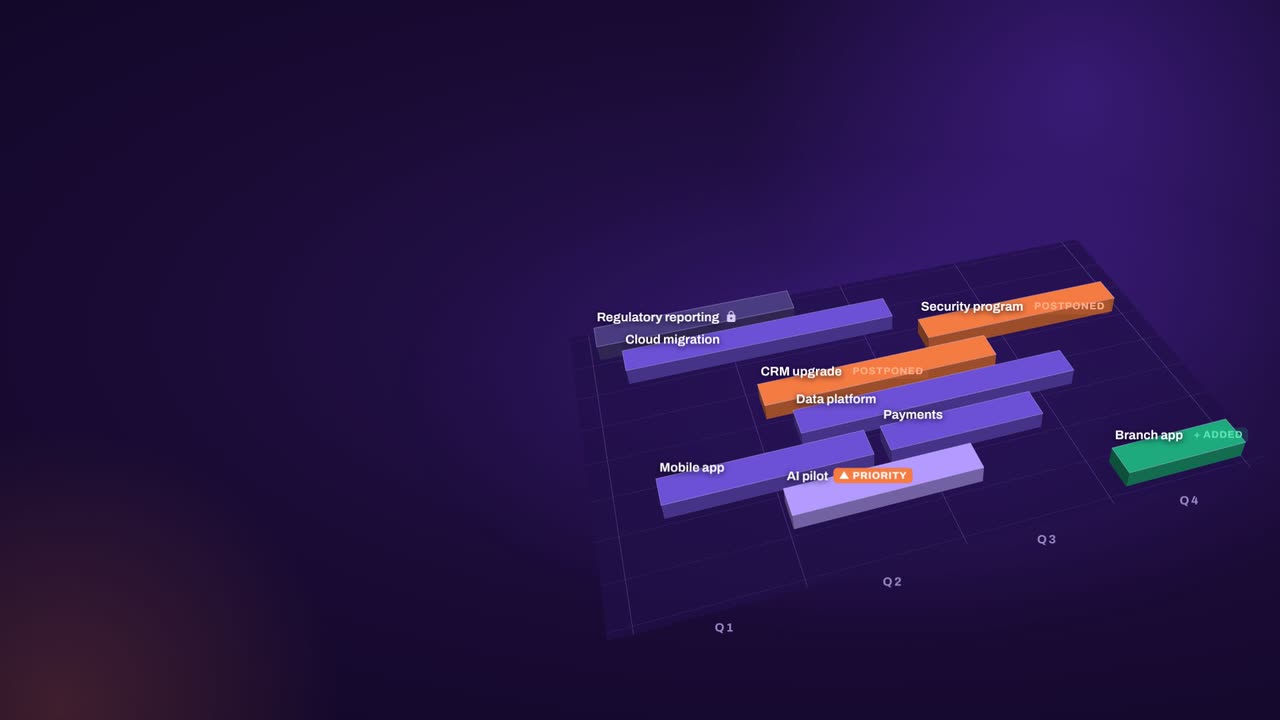
Transformations are usually presented as a roadmap to execute. In practice they are a long run of replans: every slip, every new mandate and every team that moves changes the plan. Yet many transformation offices still work from a roadmap slide and a set of spreadsheets, each workstream with its own assumptions. When something shifts, nobody can say quickly what it does to everything else.
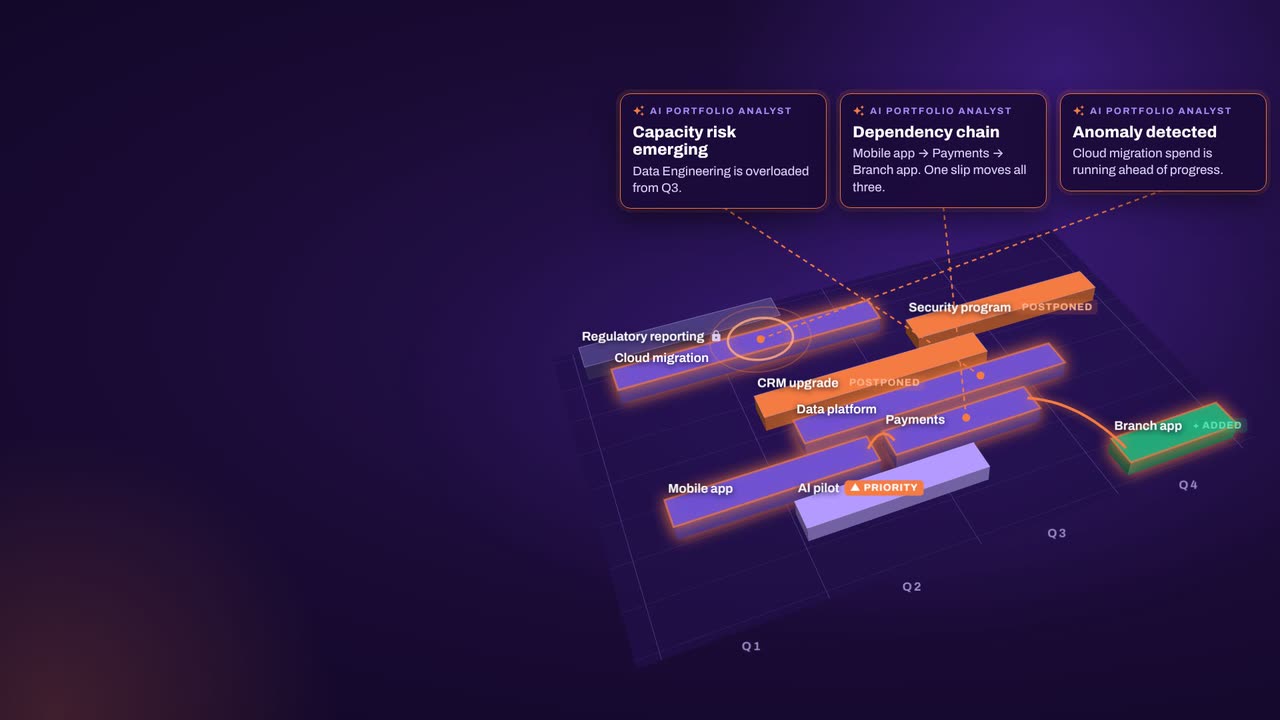
Because programs share people, budgets and dependencies, a slip is never one program’s problem. The data migration runs late, so the new operating model can’t go live, so training waits, and funding planned for one quarter moves into the next, where another program was counting on it. By the time that ripple has been traced by hand, the steering committee has already met.
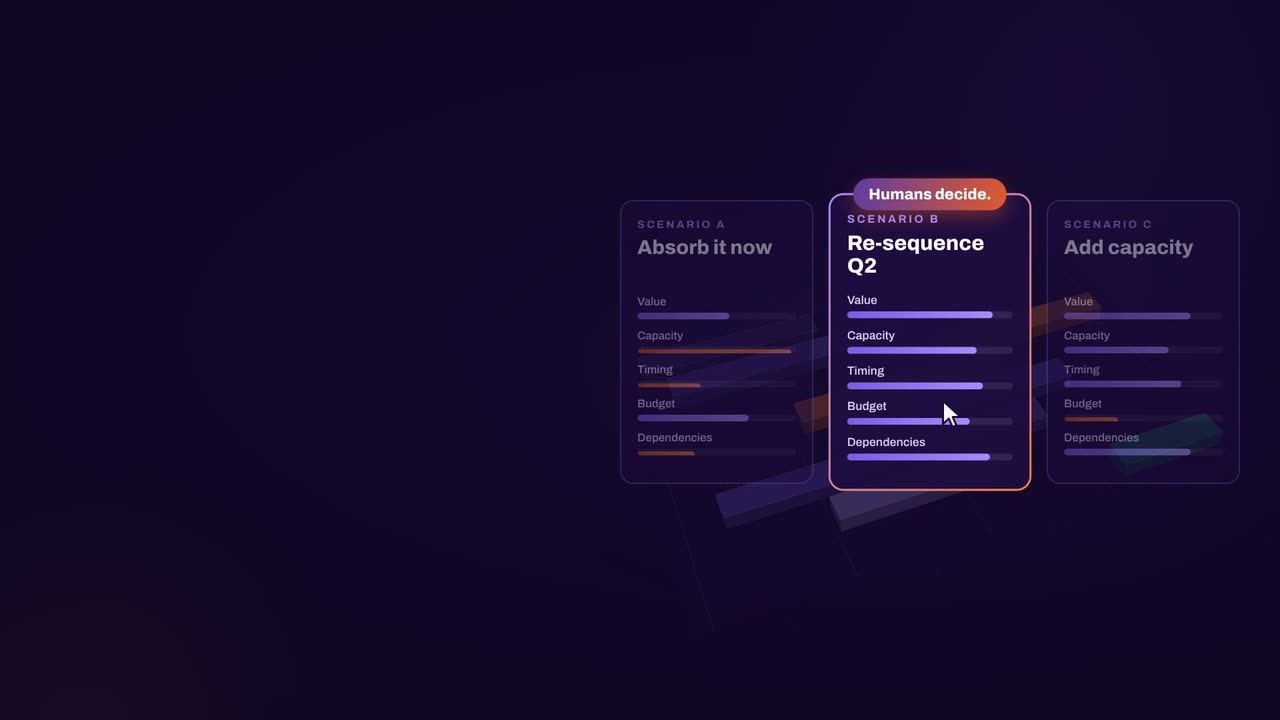
That is why so many steering committees end with “let’s take this offline.” The change on the table hasn’t been calculated, so nobody wants to commit. Funding reviews have a similar gap. They show what is committed and what is left, but not when the value lands, even though two options with the same cost can deliver value quarters apart.