Book a demo

Try “replan”, “SAFe”, “budget cuts” or “public sector”. Press / to search from any page.

  1. Home
  2. Frameworks
  3. Flight Levels

Flight Levels

Start fewer initiatives.Know which ones the flow can carry.

Flight Levels is a thinking model for business agility, not a framework. In its terms, aangine fits at the strategic level and its link to coordination: initiatives are tested against the capacity of the systems that deliver them, while team boards stay where they are.

Book a demo

Between the levels

Agile teams alone don’t move the whole organization

Flight Levels names a familiar pattern: teams can be very agile at Flight Level 1 while the organization as a whole barely moves. The answer isn’t faster teams. It is better coordination above them, up to Flight Level 3, where strategy turns into initiatives and leaders decide which ones start, which wait and which stop.

Making those initiatives visible is the first step. The harder question is whether the organization can deliver them, and that answer lives at Flight Level 2, in the coordination systems that do the work and in their real capacity. A strategic initiative nobody can trace to coordinated work is a wish, not a plan. The levels are there to show flow, not to become a stack of linked boards with status flowing up.

Creating focus is where it gets hard. Too many active initiatives at the strategic level spread every coordination flow thin, and teams feel it as constant context switching. Most leadership teams agree. Choosing what to pause is the difficult part, and the interaction where that choice should happen often ends with “we’ll analyze it and come back.”


How aangine works with Flight Levels

Strategic decisions that show their consequences first

Strategic initiatives are planned as portfolio items linked to priorities and objectives, and the coordination systems or value streams that deliver them as capacity pools. This is not another board: operational and coordination boards stay in Jira, Azure DevOps or whichever tools teams chose.

Initiatives against flow capacity

Plan each coordination flow as a capacity pool, by team or by role and skill, with its run work included. Start an initiative and see, month by month, what it asks of each flow, which flows overload and what would have to move.

Focus that holds

One-click replan moves work to clear overloads while locked and mandatory work, dependencies and deadlines stay fixed. When demand exceeds capacity, the plan shows what doesn’t fit and which flow or budget ran out, so a WIP limit becomes a visible trade-off rather than an opinion.

Interactions that end in decisions

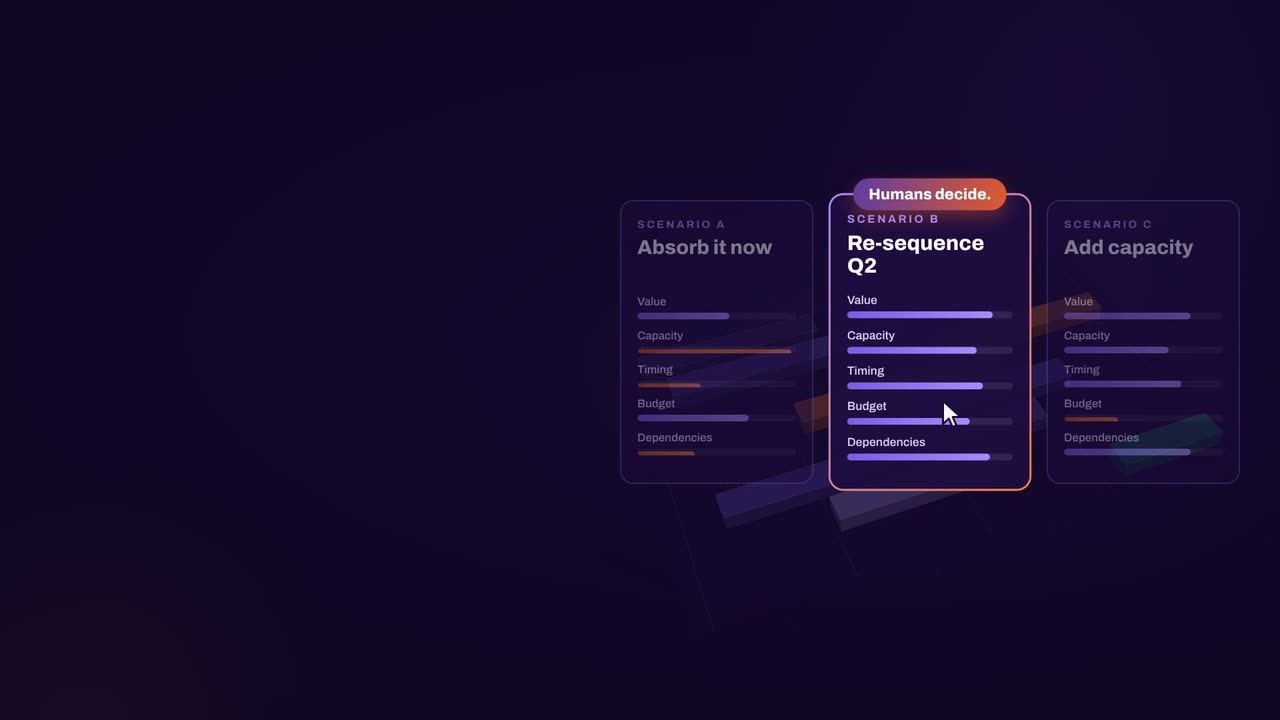
In the strategic interaction, any what-if is answered in the room. Compare pulling an initiative forward with keeping the current order, side by side on cost, capacity, value and timing, and leave with a decision or a costed ask.

Prepared before the meeting

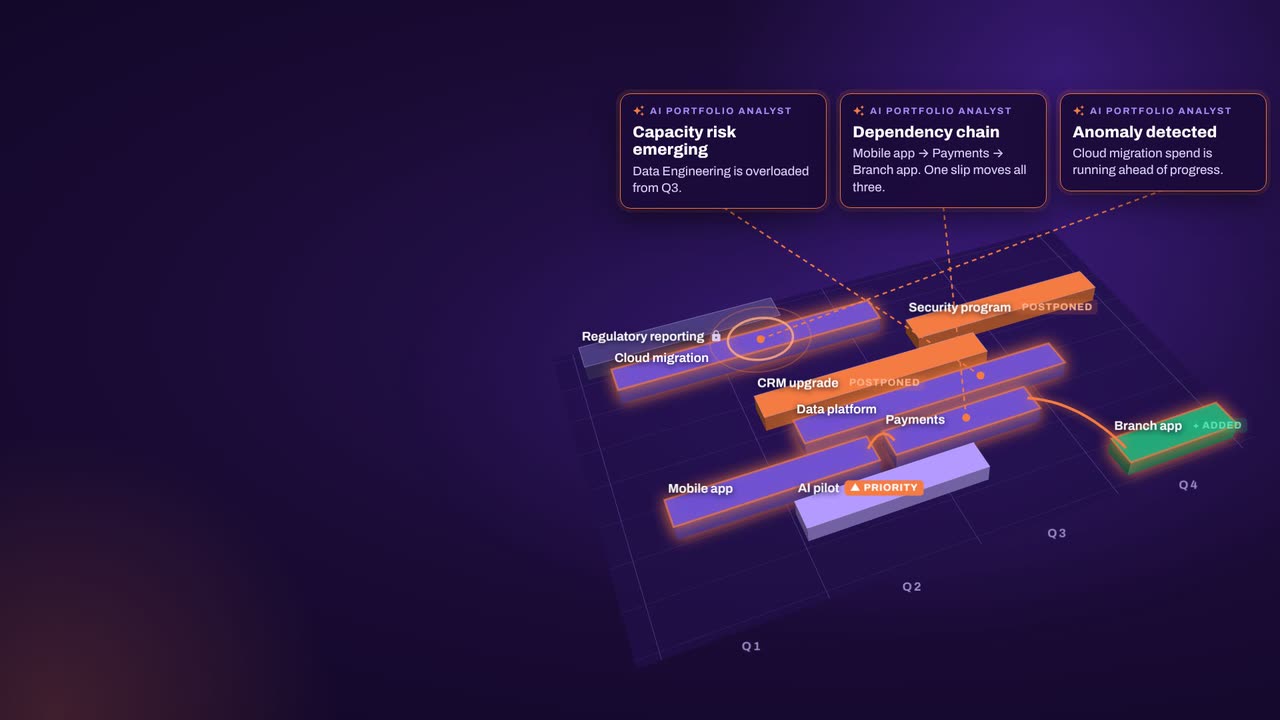
The AI Portfolio Analyst highlights risks, dependencies under pressure and overloaded flows, writes the summary and ranks recommendations. Charts and numbers come from aangine’s algorithms working on real data. People decide what starts, waits or stops.

In practice

Connecting strategy to coordination

A practical way to connect the strategic level to the coordination level, starting with the data you already have rather than waiting for better data.

  1. Name the coordination systems

    Identify the flows or value streams that deliver strategic work and plan each one as a capacity pool, by team or by role and skill.

  2. Estimate every initiative

    Give each strategic initiative a first estimate; its type and total effort are enough. Data quality improves as you plan, not before.

  3. Map the load

    See, period by period, what the initiatives ask of each coordination flow, next to the run work it already carries.

  4. Replan when strategy moves

    When an initiative starts, stops or changes priority, replan in one click and see which flow absorbs the change and what moves.

How aangine works

Algorithms calculate and optimize; AI discovers and highlights; humans decide.

aangine is the decision layer above the tools you already use. No rip & replace: it imports your plans, replans them in one click and pushes the approved plan back.

Algorithmscalculate and optimize
AIdiscovers and highlights
Humansdecide

The result: faster, clearer decisions when it matters most.

100xfaster portfolio decisions
9%budget savings
30%shorter product cycles
22%more strategic outcomes
80+%projects delivered on time

What our customers report in their case studies. Read the customer results

Keep exploring

Flight Levels is a registered trademark of its respective owner. Framework and method names are used to identify them only. aangine and Continuous Software are not affiliated with, or endorsed by, the owners of these frameworks and methods.

Book a demo

Bring your strategic portfolio.See what your flows can carry.

Book a demo and bring your strategic initiatives and the coordination flows that deliver them. We’ll show your next start, pause or stop decision with its consequences in view.

Every Plan Meets Changeaangine in a minute · 58 seconds · sound on · captions

Transcript

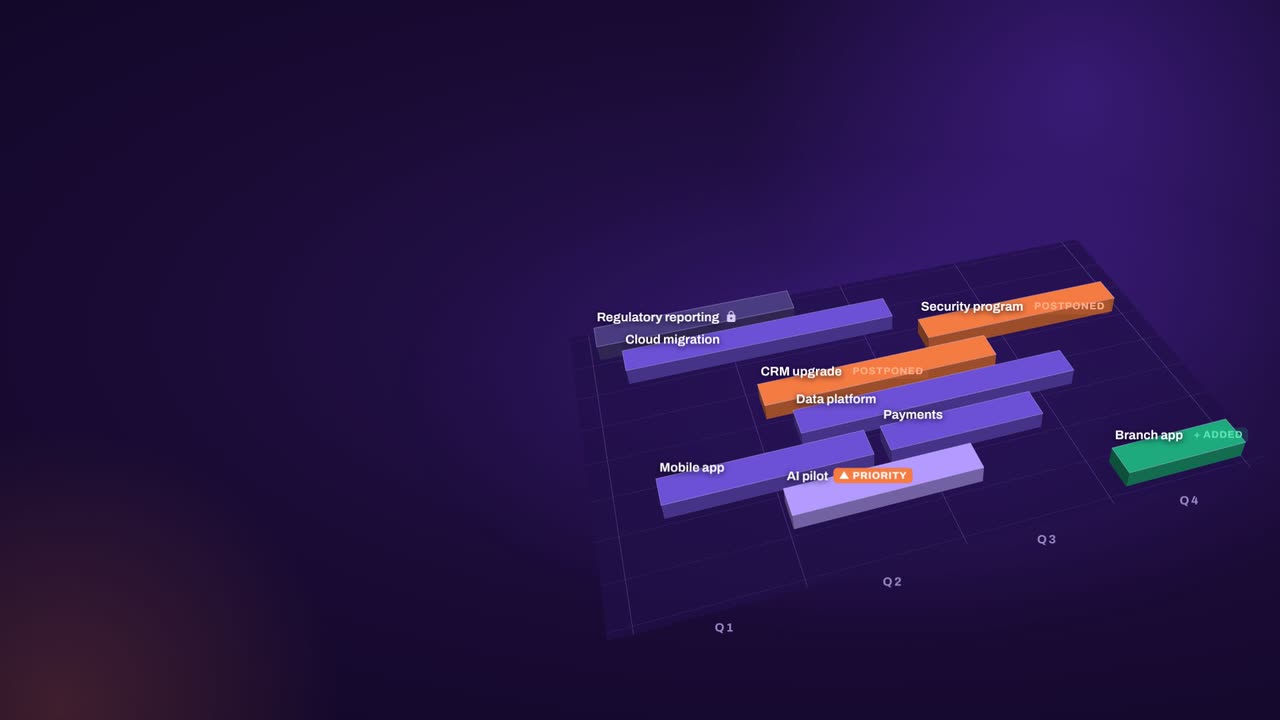
Your plan is perfect. For about five minutes. Then change crashes the party! The CEO wants a new project… That big milestone? Two months late. Your best team? Fighting fires. And priorities? Flipped! Cue days of rework, and yet another final-final deck. Now watch what aangine does. One click. Done! The whole plan just rebalanced. Next time the CEO asks, can we do it? You’ll know. In seconds. Algorithms calculate and optimize. AI discovers and highlights. Humans decide. The result: faster, clearer decisions when it matters most. aangine is the decision layer. Keep your tools. Even your spreadsheets! No rip and replace! A hundred times faster portfolio decisions. Nine percent budget savings. Five stars on Gartner Peer Insights. Change will come. Be ready to decide. Scan the code. See it live! aangine.

Book your assessment