Book a demo

Try “replan”, “SAFe”, “budget cuts” or “public sector”. Press / to search from any page.

  1. Home
  2. Frameworks
  3. Value Stream Management (VSM)

Value Stream Management

Flow metrics show where work waits.The portfolio decides what enters.

Value stream management shows how work flows from idea to customer and helps improve that flow. The other half of the loop is deciding what enters each stream, in what mix, and what moves when priorities change. That half is what aangine plans.

Book a demo

Flow and the portfolio

Load and mix are portfolio choices.

Value stream management starts with a useful shift: look past individual projects to the whole path from an idea to value in a customer’s hands, across every team and tool on the way. Work is organized around long-lived value streams, and flow is measured end to end. Flow metrics such as flow time, flow efficiency and flow load show how long work takes, how much of that time is spent waiting and how much is in progress at once.

What flow metrics leave to the organization is how much work should enter each stream in the first place. When flow time keeps growing, the cause is often less about slow teams than about too much started at once. Every new item competes with everything already in the stream, and past a point, adding work makes all of it finish later. Flow load is largely set by how much work is allowed to start.

The mix of work raises a similar question. A common way to describe it is features, defects, risks and debt, and seeing how a stream’s work splits between them often surprises leaders: a stream seen as a feature engine may spend much of its time fixing and maintaining. Neither kind of work is wrong, but the mix should be chosen rather than inherited. That choice, like the load, belongs to portfolio planning.


How aangine works with VSM

The portfolio half of the loop

Demand, capacity and budgets come in from the tools and spreadsheets you already use, and the approved plan goes back. Teams keep Jira or Azure DevOps, and flow measurement stays where it is: aangine does not measure flow. It plans what goes into the flow.

Value streams as capacity pools

Plan each value stream as a capacity pool with its own budget line: its teams and roles, with the share that goes to run and support work counted. The plan shows what each stream can really carry, period by period, before new work is approved.

Load only what fits

Rank all the demand for each stream, mandatory work first, and load only what fits. The rest waits in plain sight instead of starting in parallel. Check the load again each time new work is approved; when something doesn’t fit, the plan names the team or budget that ran out.

The work mix, decided

Set how much of each stream’s capacity goes to features, defects, risks and debt, as work categories by period. Compare scenarios to see what a different mix does to the roadmap: what moves, what slips and when the debt paydown actually lands. Your flow measurement then shows whether delivery follows it.

Replan across every stream

When flow slows or priorities change, one click replans the portfolio across all value streams around capacity, dependencies, budgets and priorities. Locked and mandatory work stays put, dependencies between streams hold, and everyone sees what moves before anyone commits.

In practice

When one value stream slows down

An illustration: the flow report turns amber. Flow time in one stream has risen sharply after a key team was pulled into a major incident, and large features now wait behind it.

  1. Read the signal

    The flow report shows where the problem is. The portfolio question is what to do about it, and which commitments in other streams depend on the answer.

  2. Build three options

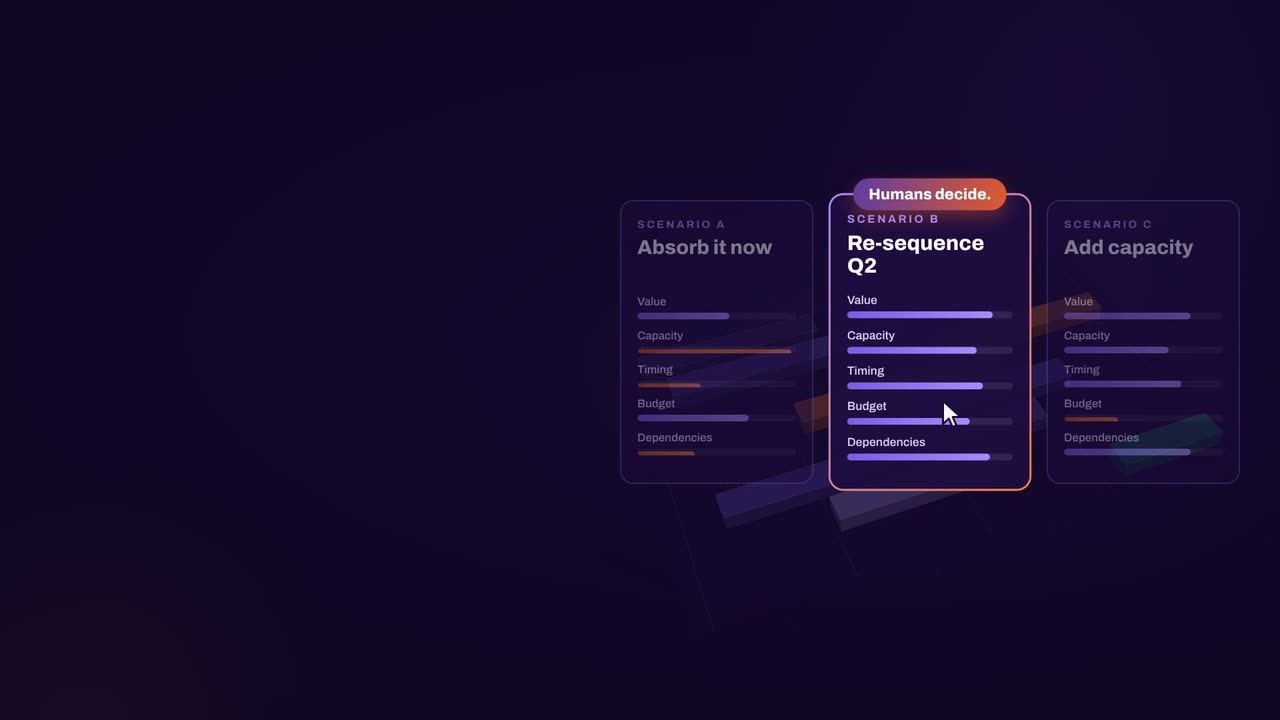
    Scenario A holds the plan and accepts later dates. Scenario B moves capacity in from a neighboring stream. Scenario C pauses the lowest-value work until the stream recovers.

  3. Compare them in the review

    Each option is a live scenario on the same portfolio: which commitments move, which dependencies in other streams are affected and what each costs. Locked and mandatory work stays where it is.

  4. Decide, then measure

    Leaders agree on an option, save a baseline and push the approved plan back to the delivery tools. The next flow report shows whether it worked.

How aangine works

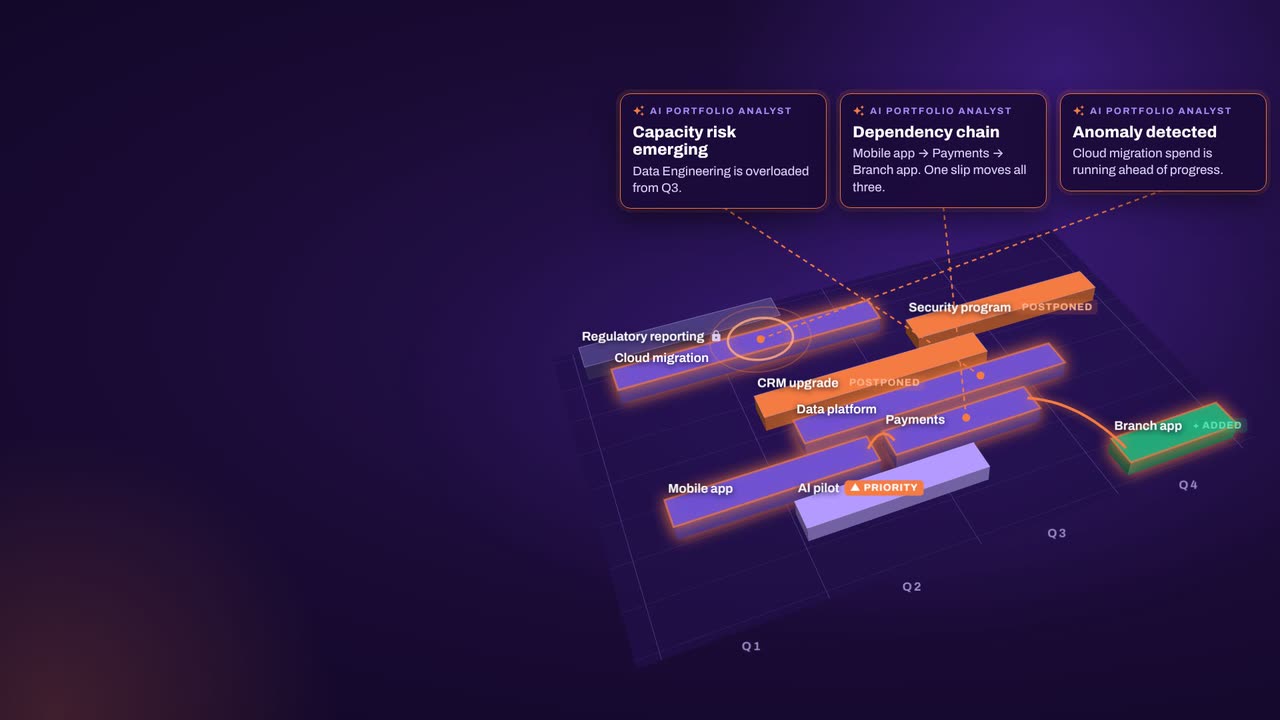
Algorithms calculate and optimize; AI discovers and highlights; humans decide.

aangine is the decision layer above the tools you already use. No rip & replace: it imports your plans, replans them in one click and pushes the approved plan back.

Algorithmscalculate and optimize
AIdiscovers and highlights
Humansdecide

The result: faster, clearer decisions when it matters most.

100xfaster portfolio decisions
9%budget savings
30%shorter product cycles
22%more strategic outcomes
80+%projects delivered on time

What our customers report in their case studies. Read the customer results

Keep exploring

Framework and method names are used to identify them only. aangine and Continuous Software are not affiliated with, or endorsed by, the owners of these frameworks and methods.

Book a demo

Bring your value streams.Plan what flows into them.

Book a demo and bring your value streams, the teams behind them and the demand waiting to enter. We’ll show how your next portfolio review could set load and mix on purpose.

Every Plan Meets Changeaangine in a minute · 58 seconds · sound on · captions

Transcript

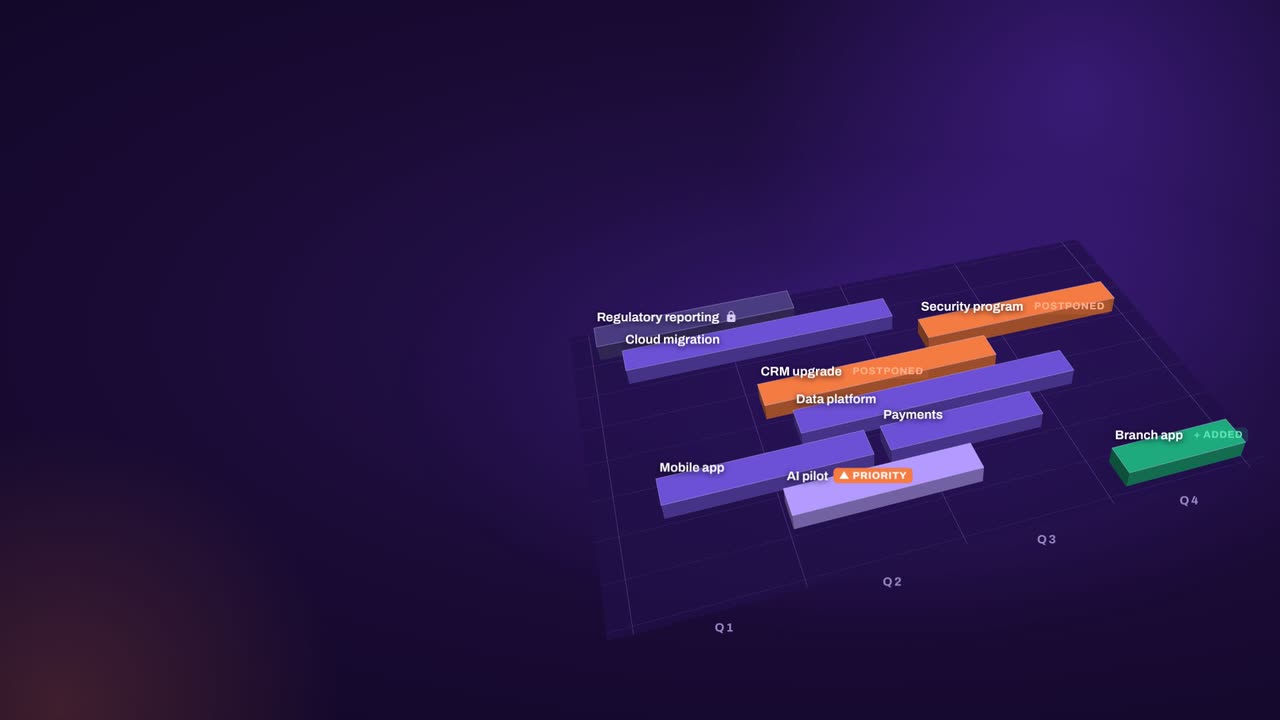
Your plan is perfect. For about five minutes. Then change crashes the party! The CEO wants a new project… That big milestone? Two months late. Your best team? Fighting fires. And priorities? Flipped! Cue days of rework, and yet another final-final deck. Now watch what aangine does. One click. Done! The whole plan just rebalanced. Next time the CEO asks, can we do it? You’ll know. In seconds. Algorithms calculate and optimize. AI discovers and highlights. Humans decide. The result: faster, clearer decisions when it matters most. aangine is the decision layer. Keep your tools. Even your spreadsheets! No rip and replace! A hundred times faster portfolio decisions. Nine percent budget savings. Five stars on Gartner Peer Insights. Change will come. Be ready to decide. Scan the code. See it live! aangine.

Book your assessment